
Catalogue Search | MBRL


Are you sure you want to remove the book from the shelf?

{{itemTitle}}
1,061
result(s) for
"norman lear"
Sort by:

Broadcasting Hollywood
Broadcasting Hollywood: The Struggle Over Feature Films on
Early Television uses extensive archival research into the
files of studios, networks, advertising agencies, unions and
guilds, theatre associations, the FCC, and key legal cases to
analyze the tensions and synergies between the film and television
industries in the early years of television. This analysis of the
case study of the struggle over Hollywood's feature films appearing
on television in the 1940s and 1950s illustrates that the notion of
an industry misunderstands the complex array of
stakeholders who work in and profit from a media sector, and models
a variegated examination of the history of media industries.
Ultimately, it draws a parallel to the contemporary period and the
introduction of digital media to highlight the fact that history
repeats itself and can therefore play a key role in helping media
industry scholars and practitioners to understand and navigate
contemporary industrial phenomena.
eBook
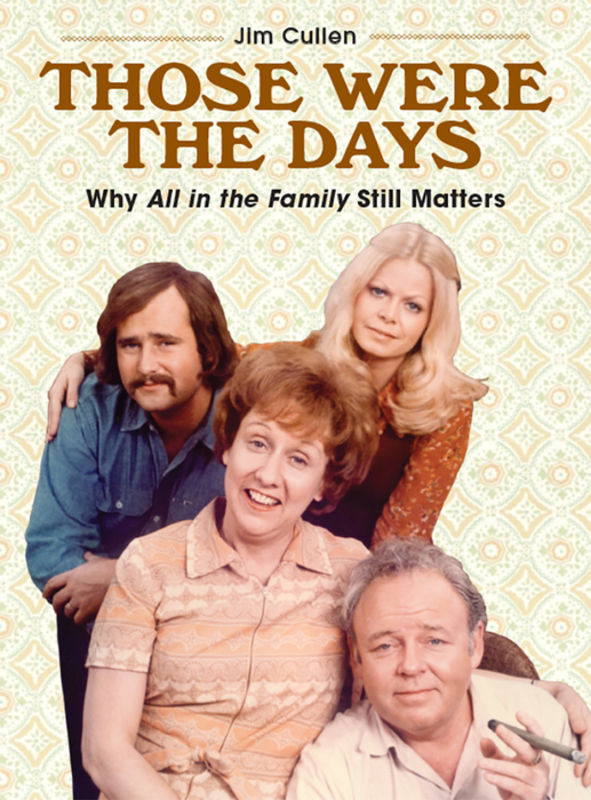
Those Were the Days
Between 1971 and 1979, All in the Family was more than just a wildly popular television sitcom that routinely drew 50 million viewers weekly. It was also a touchstone of American life, so much so that the living room chairs of the two main characters have spent the last 40 years on display at the Smithsonian. How did a show this controversial and boundary-breaking manage to become so widely beloved?Those Were the Days is the first full-length study of this remarkable television program. Created by Norman Lear and produced by Bud Yorkin, All in the Family dared to address such taboo topics as rape, abortion, menopause, homosexuality, and racial prejudice in a way that no other sitcom had before. Through a close analysis of the sitcom's four main characters-boorish bigot Archie Bunker, his devoted wife Edith, their feminist daughter Gloria, and her outspoken liberal husband Mike-Jim Cullen demonstrates how All in the Family was able to bridge the generation gap and appeal to a broad spectrum of American viewers in an age when a network broadcast model of television created a shared national culture.Locating All in the Family within the larger history of American television, this book shows how it transformed the medium, not only spawning spinoffs like Maude and The Jeffersons, but also helping to inspire programs like Roseanne, Married... with Children, and The Simpsons. And it raises the question: could a show this edgy ever air on broadcast television today?
eBook

All in the Family: Waldo and His Ghosts
Waldo says Jimmy was the pigeon racing champion of Polish Hill, which was what this part of the Slopes was called back in the day; the term Slopes didn't come into vogue until the 1990s when the South Side Neighborhood Development Corporation tried to rebrand it as a destination neighborhood, distinct from the Flats. Rumor has it that numbers running officially hit Pittsburgh around 1927 when Gus Greenlee, the owner of the Crawford Grill jazz club and the Pittsburgh Crawfords negro league baseball team, shifted from rum running to number running. [...]the pink house sits empty, which is still surprising because Waldo had been the center of our daily lives for some time, a constant presence over there across the street, the knower of facts and teller of stories, the giver of dog treats, the demander of beer, whiskey, cigarettes, and a numbers run down to the Polish Falcons club. At night, Gil would come over from down the street; they'd eat pie and ice cream and watch old Westerns and other TV shows on the flat-screen TV that my husband Rick won in a raffle the day before Waldo's old TV died.
Journal Article
Conversation With Producer Norman Lear
This rooting, tooting, flag-waving celebration of America, was produced in 1982, less than 10 years after the end of the Vietnam War, a war that nearly tore this country apart. That's Norman Lear, arguably the most successful producer of situation comedies in television. Norman has always been committed to the promotion of free speech. Indeed, his political action group, People for the American Way, produced the special. Somehow Norman even found a way to have the late John Wayne, who supported the war, and Jane Fonda, who very publicly opposed it, kind of, sort of make nice on nationwide TV.
Transcript
