
Catalogue Search | MBRL


Are you sure you want to remove the book from the shelf?

{{itemTitle}}
17,472
result(s) for
"nursing model"
Sort by:

Impact of Ahmadi Continuing Nursing Model on self-care ability, stoma complications and quality of life of colostomy patients
Objective
To analyze the effects of Ahmadi Continuing Nursing Model (ACNM) on the self-care ability, stoma complications and life quality in colostomy patients.
Methods
The clinical data of 120 patients who underwent postoperative colostomy in our hospital from June 2020 to June 2023 were retrospectively analyzed. The patients were divided into control group (
n
= 60, treated with routine nursing) and observation group (
n
= 60, treated with the ACNM on the basis of routine nursing) according to different nursing methods. Postoperative recovery of gastrointestinal function, ostomy adaptability, self-care ability, and life quality before and after nursing were compared. The probability of complications before and after nursing was recorded between the two groups.
Results
The time of first exhaust was 3.65 ± 0.82 d, the time of first meal was 1.83 ± 0.65 d, and the first bowel sound recovery was 1.47 ± 0.53 d in the observation group, which were shorter than those in the control group (4.38 ± 1.20 d, 3.12 ± 1.15 d, 2.39 ± 1.06 d,
P
< 0.001). After intervention, the positive emotions in the ostomy adaptation score were 32.09 ± 5.03 points, negative emotions were 31.41 ± 5.70 points, social life adaptation were 27.12 ± 4.98 points, and the total score was 90.78 ± 5.98 points in the observation group, which were significantly higher than those in the control group (26.32 ± 4.52 points, 24.25 ± 6.02 points, 20.25 ± 4.02 points, 67.25 ± 6.09 points,
P
< 0.001). The self-willingness was 34.18 ± 4.02 points, self-care skill was 10.57 ± 2.23 points, self-care knowledge was 18.59 ± 3.10 points, and the total score was 63.18 ± 4.98 points in the observation group, which were significantly higher than those in the control group (25.25 ± 3.08 points, 8.72 ± 2.13 points, 15.26 ± 2.70 points, 45.69 ± 4.09 points,
P
< 0.001). The physical function was 79.74 ± 2.81 points, psychological function was 76.71 ± 3.05 points, social function was 78.11 ± 3.50 points, and material life status was 60.06 ± 2.98 points in the quality of life in the observation group, which were significantly higher than those in the control group (75.36 ± 2.68 points, 69.72 ± 2.93 points, 72.33 ± 3.42 points, 51.23 ± 3.08 points,
P
< 0.001).
Conclusion
ACNM effectively promoted the recovery of gastrointestinal function after surgery in colostomy patients by improving patients’ stoma adaptability, self-care ability and life quality and reducing the occurrence of complications, which was worthy of promotion.
Journal Article
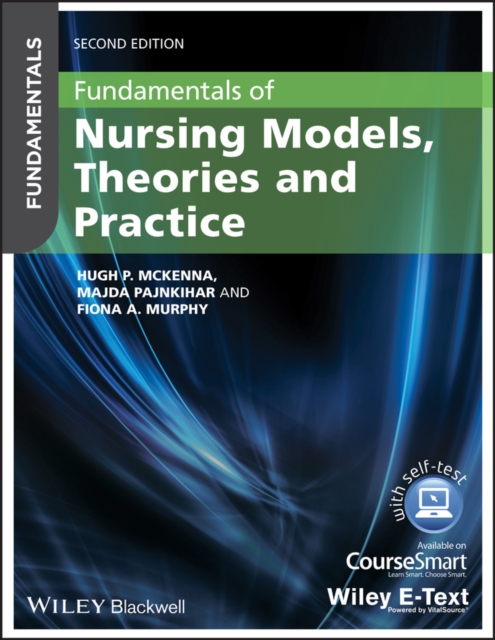
Fundamentals of nursing models, theories and practice
A concise, accessible introduction to the development, application and evaluation of nursing theories, this new edition of Fundamentals of Nursing Models, Theories & Practice provides a thorough overview of the body of knowledge on the topic, and a clear outline of their relevance to everyday nursing practice. Linking the development of theory to practice, this full-updated text features learning outcomes, key concept summaries and reflective exercises to aid the study of this key element of all modern nursing courses.
Special Features
* Clearly examines the relationship between nursing theory, clinical practice and nursing roles
* Accessible and user-friendly with a range of features to help study, including key concepts, learning objectives and reflective exercises
* Useful for all pre-registration nursing students, as well as newly qualified nurses
* Accompanied by an online resource centre featuring case studies, multiple choice questions, exercises and activities
eBook

Health Care System Transformation for Nursing and Health Care Leaders
\"The authors' approach to creating a transforming culture through use of foundations laid in the theoretical development of \"Nursing As Caring\" offers a solid foundation upon which to recalibrate and reconfigure toward a caring organizational health system.\" -Tim Porter-O'Grady , DM, EdD, APRN, FAAN, FACCWS Associate Professor, Leadership.
eBook

Development of a Professional Practice Nursing Model for a University Nursing School and Teaching Hospital: A nursing methodology research
Aim The aim of the study was to describe the process of developing a Professional Practice Model by a Nursing School and Nursing Department of University Hospital. Design and Method (s) This is a descriptive nursing methodology research, developed along three stages: preliminary, empirical and validation. The empirical phase used qualitative and quantitative methodology. 28 teachers from the nursing school and nurses from the hospital participated. We defined the elements of the nursing meta‐paradigm from narratives and focus group. Then, we extracted propositions regarding the nature of nursing from the relationship between the meta‐paradigm elements, which concluded in the core elements. Results The core elements of this nursing professional practice model are nursing seeks the well‐being of the person, family or group; nursing is total and global, person‐centred; nursing is compassionate; nursing entails up‐to‐date, quality scientific, technical and human competencies; nursing is delivered in a teaching hospital environment, with a Christian ethical perspective.
Journal Article

Rising to the Challenge
By the 1920s, Lillian Wald’s model of care, with nurses working side by side with social workers at the intersection of medicine and society, had become an important component of the U.S. health care system. Over subsequent decades, however, a confluence of historic forces resulted in its marginalization. Today, people are recognizing that medical cures alone, although important, will not reduce the epidemic of diseases of despair or the growing challenges involved in achieving health equity. Wald’s approach, extended to a broader range of settings in which nurses work today, could be the missing ingredient.
To provide background for the National Academy of Medicine Committee on the Future of Nursing 2020-2030, as it develops its follow-up to the Institute of Medicine’s 2010 Future of Nursing: Leading Change, Advancing Health, the Robert Wood Johnson Foundation commissioned a report on nursing’s historic role in advancing health. This article summarizes that report, which can be found in its entirety at www.rwjf.org/content/dam/farm/reports/reports/2019/rwjf452706.
Journal Article

Structural Equation Modeling of Cultural Competence of Nurses Caring for Foreign Patients
This study aimed to construct and test a hypothetical model including factors related to the cultural competence of nurses caring for foreign patients. The transcultural nursing immersion experience model and anxiety/uncertainty management theory were used to verify the paths between the variables. The exogenous variables were multicultural experience, ethnocentric attitude, and organizational cultural competence support. The endogenous variables were intercultural anxiety, intercultural uncertainty, coping strategy, and cultural competence. Method Participants were 275 nurses working in general hospitals in Seoul and Kyung-Gi Do, Korea. Each nurse in this study had experience of caring for over 10 foreign patients. Data were collected using a structured questionnaire and analyzed with SPSS statistical software with the added AMOS module. Results The overall fitness indices of the hypothetical model were a good fit. Multicultural experience, ethnocentric attitude, organizational cultural competence support, and intercultural uncertainty were found to have a direct and indirect effect on the cultural competence of nurses while coping strategy only had a direct effect. Intercultural anxiety did not have a significant effect on cultural competence. This model explained 59.1% of the variance in the nurses' cultural competence when caring for foreign patients. Conclusion Nurses' cultural competence can be developed by offering multicultural nursing education, increasing direct/indirect multicultural experience, and sharing problem-solving experience to promote the coping ability of nurses. Organizational support can be achieved by preparing relevant personnel and resources. Subsequently, the quality of nursing care for foreign patients' will be ultimately improved.
Journal Article

Nephrology Nursing Scope and Standards of Practice: Take Pride in Practice
The Nephrology Nursing Scope and Standards of Practice, 9th Edition, published by the American Nephrology Nurses Association, defines the scope of nephrology nursing and provides standards of practice, standards of professional performance, and competencies for registered nurses and graduate-level prepared registered nurses (e.g., advanced practice registered nurses, clinical nurse specialists) in an approach consistent with the American Nurses Association's Nursing Scope and Standards of Practice, published in 2021. Discussions addressing respect, equity, inclusion, and social justice have been included in the 9th edition. A new section related to altered/crisis standards has been added to assist nephrology nurses in developing strategies for implementing those standards. The section on how to use the standards has been updated with forms that organizations can download and individualize. This article provides an overview of the scope, standards, competencies, and strategies for implementing them in clinical practice.
Journal Article

Professional practice models used by nurses in Portuguese hospitals
ABSTRACT Objective: To analyze the professional practice models used by nurses in the hospital context. Method: A descriptive study with a qualitative approach was carried out in 19 hospitals with 56 nurses. Data collection was carried out by means of a semi-structured interview. Results: The following categories emerged from analysis: a practice focused on the management of signs and symptoms, where the biomedical model, prevention of complications, and early detection of signs and symptoms of clinical worsening stood out, and a practice based on patients' human responses, emphasizing health promotion, self-care promotion, autonomy reconstruction, functional rehabilitation, patients' training, preparation to return home, and facilitation of transitions. Final considerations: In spite of the evolution seen in some contexts, a distance between the models practiced and those presented is still found, which indicates the need for changes ensuring structuring and systematization of the professional practice. RESUMEN Objetivo: Analizar los modelos de ejercicio profesional aplicados por los enfermeros en el ámbito hospitalario. Método: Estudio descriptivo de abordaje cualitativo, realizado en 19 hospitales, con la participación de 56 enfermeros. Datos recolectados mediante entrevista semiestructurada. Resultados: Del análisis surgieron las categorías: práctica enfocada en la gestión de signos y síntomas, donde se destacaron el modelo biomédico, la prevención de complicaciones y la detección precoz de signos y síntomas de agravamiento clínico; y práctica enfocada en la respuesta humana de los pacientes, evidenciándose la promoción de salud, promoción del autocuidado, reconstrucción de la autonomía, readaptación funcional, capacitación de los pacientes, preparación para volver a casa y facilitación de las transiciones. Consideraciones finales: A pesar de la evolución notada, en ciertos contextos existe aún distancia entre los modelos practicados y los expuestos, expresándose la necesidad de cambios que aseguren la estructuración y sistematización de la acción profesional. RESUMO Objetivo: Analisar os modelos de exercício profissional usados pelos enfermeiros no contexto hospitalar. Método: Estudo descritivo com abordagem qualitativa, realizado em 19 instituições hospitalares, com a participação de 56 enfermeiros. Para a coleta de dados, foi utilizada a entrevista semiestruturada. Resultados: Da análise, emergiram como categorias: prática centrada na gestão de sinais e sintomas, em que se destacaram o modelo biomédico, a prevenção de complicações e a deteção precoce de sinais e sintomas de agravamento clínico e prática centrada nas respostas humanas dos clientes evidenciando a promoção da saúde, a promoção do autocuidado, a reconstrução da autonomia, a readaptação funcional, a capacitação dos clientes, a preparação do regresso a casa e a facilitação das transições. Considerações finais: Apesar da evolução notada em alguns contextos, ainda há um distanciamento entre os modelos praticados e os expostos, apontando para a necessidade de mudanças que garantam a estruturação e sistematização da ação profissional.
Journal Article

The PEACE Model Evidence-Based Practice Guide for Clinical Nurses
New York-Presbyterian Hospital, one of the nation's most comprehensive academic healthcare delivery systems, uses the evidence-based practice PEACE model to prepare all its nurses and position them as essential to improving patient and family-centered care. Not surprisingly, the healthcare network has continuously delivered high quality care and improved patient outcomes. Now, nurses everywhere can replicate this highly successful model. In The PEACE Model Evidence-Based Practice Guide for Clinical Nurses, authors Reynaldo R. Rivera and Joyce J. Fitzpatrick provide a road map to model implementation. Readers will learn to formulate and address clinical questions and disseminate findings, ultimately helping nurses integrate evidence at the bedside and through quality research. After reading this book, you will be able to: Apply the components of evidence-based practice (EBP) in your day- to-day nursing practice Differentiate between EBP, research, and quality improvement Discuss the PEACE model process, from problem identification to dissemination of findings Identify resources to support nurses in EBP, quality improvement, and research
eBook

Implementation of the Robocare nursing model for patients undergoing da Vinci robot-assisted radical gastrectomy for gastric cancer
This study aimed to assess the safety and feasibility of the Robocare nursing model in patients undergoing da Vinci robot-assisted radical gastrectomy for gastric cancer. A total of 68 patients who underwent da Vinci robot-assisted radical gastrectomy for gastric cancer in our department from January 2022 to June 2022 were enrolled in this study and were assigned to a control group (
n
= 34) and an intervention group (
n
= 34). The control group received standard perioperative nursing care, while the intervention group received the Robocare model along with standard care. We compared the differences in postoperative hospital stay length, the incidence of postoperative complications, readmission rates within one month after discharge, and satisfaction with nursing care between the two groups. Compared to the control group, patients in the intervention group exhibited a significantly shorter postoperative hospital stay (mean 8.94 days vs. 9.76 days,
P
< 0.05) without an increase in the incidence of postoperative complications (26.5% vs. 29.4%,
P
> 0.05). In addition, there was no significant difference in readmission rates within 1 month after discharge between the two groups (14.7% vs. 5.9%,
P
> 0.05). Patient satisfaction was significantly higher in the intervention group compared to the control group (96.34% vs. 91.96%,
P
< 0.05). The implementation of the Robocare nursing model for patients undergoing da Vinci robot-assisted radical gastrectomy for gastric cancer may reduce the length of postoperative hospital stays without increasing the incidence of postoperative complications, while also enhancing patient satisfaction with nursing care.
Journal Article