
Catalogue Search | MBRL


Are you sure you want to remove the book from the shelf?

{{itemTitle}}
952
result(s) for
"optometry practice"
Sort by:

Assessment of knowledge, attitude, and practice of glaucoma among different cadres of optometrists
Purpose:
To assess the level of knowledge, attitude, and clinical practice of glaucoma among optometry students and optometry practitioners with different years of clinical experience and academic background.
Methods:
A survey with 20 questions on knowledge, attitude, and practice (KAP) of glaucoma was prepared and self-administered to optometry students and optometry practitioners practicing in an eye hospital/clinic/optical with varied years of clinical experience and education qualification.
Results:
Among the 558 participants, 57% were optometry practitioners and 43% were students. The knowledge scores among optometry practitioners increased significantly with an increase in the years of clinical experience (P < 0.001). Participants with master's degrees scored higher than participants with bachelor's degrees (P = 0.12). There was no statistically significant difference in knowledge scores based on the type of clinical practice - hospital, private practice, or optical (P = 0.39). Practicing optometrists who performed slit-lamp examination, gonioscopy, IOP measurements, and disc evaluation for the detection of glaucoma had significantly higher knowledge scores than those who did not perform these tests in their practice (P < 0.05). A positive attitude toward glaucoma learning through workshops and hands-on training was reported by optometrists and students.
Conclusion:
Knowledge about glaucoma was good among optometrists and optometry students and was better among those who handled the diagnostics. All the optometrists had a positive attitude toward enhancing their practice through proper training.
Journal Article

Perspectives of Eye Health Professionals on Integrating Health Promotion into Optometry Education in South Africa
The evolution of health promotion has greatly served as an essential function for equitable health improvement aimed at addressing social determinants to improve health outcomes. This study seeks to determine the perspectives of eye health professionals on the use of health promotion interventions for the prevention and early diagnosis of eye diseases, with a specific focus on their views regarding the integration of health promotion into optometry education in South Africa.
A quantitative cross-sectional study was conducted among 68 respondents employing a convenience sample. A self-administered questionnaire was distributed electronically to all respondents. Descriptive frequencies and percentages summarized categorical data, with bivariate comparisons using the chi-square test.
The findings reveal a considerable disagreement among respondents regarding the integration and emphasis of health promotion within optometry education, with minimal agreement highlighting a perceived lack of opportunities to explore health promotion as a core component of the curriculum.
Integrating health promotion into optometry education is not only relevant but necessary for addressing the increasing opportunity to integrate health promotion to reduce preventable vision loss in South Africa, where public health needs are pressing. The lack of early and consistent exposure to health promotion, as well as the insufficient focus on policy-related education, highlights the need for a more integrated approach.
Journal Article

Creating a Value Proposition in the Optometry Industry: Perceptions of Customers
The highly competitive environment in the optometry healthcare industry, the over-serviced urban market, and the cost of keeping a business operating with little knowledge of how a profitable business operates often lead to (mostly independent) owners employing inadequate tactics to manage business situations. Thus, a qualitative research approach was employed and a questionnaire was used to collect data from participants through physical interviews under Covid-19 protocols and telephonic interviews. The qualitative data analysis employed content and thematic analyses, focusing on key elements such as the importance of creating a value proposition, developing a value proposition process, and the challenges associated with its creation. The study aimed to create a value proposition for the optometry industry in South Africa. The data analysis identified five building blocks for creating a value proposition: visibility, service and product, price and value, reputation management, and communication. The main findings are multiple service providers under one roof, affordability of quality healthcare services or products, knowledgeable management and staff, and short turnaround time for finished products ordered. The key recommendations are 24-hour online access to a website, quality of services or products, full standard optometry service, affordable health care products or services, a short turnaround time for complete products, and acquired management skills to grow and generate sales.
Journal Article

Improvement or Worsening of Human Contrast Sensitivity Due to Blue Light Attenuation at 450 nm
The work was aimed at comparing contrast sensitivity performance in an indoor environment with two filters, which differ only in the presence of a band at 450±20 nm in the transmittance spectrum.
Thirty-nine subjects participated. The filters were the Standard (ST) and Professional (PRO) Drive lenses (Hoya, Japan), the latter showing the attenuation band at 450 nm. Photopic contrast sensitivity (CS) was measured at different spatial frequencies from 1.5 to 18 cpd through Functional Acuity Contrast Test with both lenses (LogCS
and LogCS
, respectively). The areas under the curves of LogCS
and LogCS
as a function of the spatial frequency were also considered.
In the range of the measured values of LogCS
for the thirty-nine participants, at each spatial frequency and also for the areas, the difference Δ = LogCS
- LogCS
was found to decrease and change sign from positive to negative as a function of LogCS
, thus allowing to deduce a threshold (LogCS
) for LogCS
corresponding to Δ=0. Significant CS worsening was found with the PRO compared to the ST lens for the subjects showing LogCS
> LogCS
. Vice versa, CS improvement was found when LogCS
< LogCS
.
In the choice of a blue-filtering lens, practitioners should take into consideration that the attenuation of light in the range 420-470 nm is expected to produce a CS worsening in subjects showing a relatively high initial CS (higher than a threshold CS). For these subjects, the general reduction of transmitted light intensity prevails on possible advantages. On the contrary, subjects showing a relatively low initial CS are expected to show a CS improvement because the attenuation of light in the range 420-470 nm is expected to reduce intraocular scattering and to mimic the effect as an optical filter of the human macular pigment, advantages which prevail on the reduction of the transmitted light intensity.
Journal Article

DATABASES USED IN CRM WITHIN AN OPTOMETRIC BUSINESS
In his/her efforts to identify the most valuable customers and to gain their loyalty through long term interactive relations, the optometrist may benefit of a valuable tool: a database of customers and orders. Properly designed and used, it allows inferring extremely useful conclusions about the profile of the customers of the optometry practice, of their specific interests and preferred products, allowing the development of personalized offers for various categories of patients. The paper synthetizes the main characteristics and advantages of implementing a customer database in an optometry practice. The conceptual model of such a solution is also presented.
Journal Article
Issues in Ophthalmic Practice: Current and Future Challenges
Ophthalmic nurse practitioners face many challenges today, owing to the effects of demographic change, advancing technology and research, and increasing government legislation. This book contains a wealth of information related to the nursing management of people with various ophthalmic conditions. At the same time, it encourages ophthalmic nurses and allied healthcare professionals to think critically about the wider political and professional issues impacting on their everyday practice. The last three decades have seen major advances in the care of people with ophthalmic conditions in all age groups, and ophthalmic nursing has become correspondingly more complex. This timely book reflects the most current, evidence-based practice in ophthalmic nursing while highlighting the need for ophthalmic nurses to develop habits of critical thought as a way of maintaining their position within a wider community of practice.
eBook

Current practices of diagnostic techniques requir- ing the use of ophthalmic drugs among KwaZulu- Natal optometrists
In anendeavour to improve the quality of optometric eye care services in South Africa, the scope of practice was expanded to include the use of ocular diagnostic procedures such as goniosco-py that require the use of ophthalmic drugs. The purpose of this study was to assess the practices of specific diagnostic techniques (contact tonometry, 78 D/90 D lens fundus examination, binocular indirect ophthalmoscopy and gonioscopy) requiring the use of ophthalmic drugs among optometrists in KwaZulu-Natal (KZN) province. These specific techniques are referred to as diagnostic procedures in this article. A questionnaire containing information on demography and practice of these specific techniques was sent to all 213 KwaZulu-Natal registered optometrists who owned private practices. One hundred and thirty two completed questionnaires were received, a response rate of 62%. One hundred and seventeen (55%) of the questionnaires were included in the analysis of which 55% of the respondents were females and 45% were males. Sixty two optometrists (53%) were certified in di-agnostic procedures but many procedures were not being practiced. These procedures and the percentage respondents were: Contact tonometry (60%), 78 D/90 D lens fundus examination (60%), binocular indirect ophthalmoscopy (84%) and gonioscopy (78%). Also, among these certified respondents (62 optometrists), a significant proportion (60%) disagreed when asked if they were confident and proficient in performing the relevant diagnostic procedures. Many, (61%) agreed that lack of incentives discouraged them from routinely performing the procedures. More than half (58%), agreed that chair time was an important factor in deciding whether or not to perform these diagnostic procedures. Of the total respondents (117), 86% agreed that they were confident about the accuracy of their referrals and less than half (45%) disagreed that diagnostic procedures should be the sole responsibility of ophthalmologists. Less than half (48%) agreed that diagnostic procedures should be incorporated into routine eye examinations. This study indicatesthat the performance of these diagnostic procedures was limited despite many optometrists having the necessary educational certification. It is recom-mended that initiatives that can be translated into practical action such as CPD workshops should pay greater attention to the improvement of diagnosticskills and practice. In addition, further education or opportunities emphasizing the importance of per-forming these diagnostic procedures over financialgains and time constraints are warranted.
Journal Article
Current practices of diagnostic techniques requiring the use of ophthalmic drugs among KwaZulu- Natal optometrists
In anendeavour to improve the quality of optometric eye care services in South Africa, the scope of practice was expanded to include the use of ocular diagnostic procedures such as gonioscopy that require the use of ophthalmic drugs. The purpose of this study was to assess the practices of specific diagnostic techniques (contact tonometry, 78 D/90 D lens fundus examination, binocular indirect ophthalmoscopy and gonioscopy) requiring the use of ophthalmic drugs among optometrists in KwaZulu-Natal (KZN) province. These specific techniques are referred to as diagnostic procedures in this article. A questionnaire containing information on demography and practice of these specific techniques was sent to all 213 KwaZulu-Natal registered optometrists who owned private practices. One hundred and thirty two completed questionnaires were received, a response rate of 62%. One hundred and seventeen (55%) of the questionnaires were included in the analysis of which 55% of the respondents were females and 45% were males. Sixty two optometrists (53%) were certified in di-agnostic procedures but many procedures were not being practiced. These procedures and the percentage respondents were: Contact tonometry (60%), 78 D/90 D lens fundus examination (60%), binocular indirect ophthalmoscopy (84%) and gonioscopy (78%). Also, among these certified respondents (62 optometrists), a significant proportion (60%) disagreed when asked if they were confident and proficient in performing the relevant diagnostic procedures. Many, (61%) agreed that lack of incentives discouraged them from routinely performing the procedures. More than half (58%), agreed that chair time was an important factor in deciding whether or not to perform these diagnostic procedures. Of
the total respondents (117), 86% agreed that they were confident about the accuracy of their referrals and less than half (45%) disagreed that diagnostic procedures should be the sole responsibility of ophthalmologists. Less than half (48%) agreed
that diagnostic procedures should be incorporated into routine eye examinations. This study indicates that the performance of these diagnostic procedures was limited despite many optometrists having the necessary educational certification. It is recommended that initiatives that can be translated into practical action such as CPD workshops should pay greater attention to the improvement of diagnostic skills and practice. In addition, further education or opportunities emphasizing the importance of performing these diagnostic procedures over financial gains and time constraints are warranted.
Journal Article

Scope of optometry practice in the Eastern Mediterranean Region
Background: Optometry regulation and practice vary by country in the Eastern Mediterranean Region, therefore, understanding the disparities is crucial for optimizing eye care services in the region. Aim: To evaluate the professional regulations, clinical practices and barriers to providing specialized optometry services in the Eastern Mediterranean Region. Methods: Between April and September 2024, this cross-sectional survey collected data on professional regulations, clinical practices and barriers to specialized optometry services from 383 optometrists in the Eastern Mediterranean Region countries that recognize optometry as a profession. The data were analysed using SPSS version 29 and descriptive analysis was conducted. Results: Eighty percent of the respondents said there was national legislation and mandatory registration to obtain a practicing license in their countries. Almost all the optometrists said they had authority to prescribe spectacles (97.9%) and dispense contact lenses (94.3%), while only 29.2% said they were licensed to prescribe therapeutic drugs. Almost all the respondents (95.6%) assessed visual acuity, while only 18.1% performed contact tonometry. Insufficient training (33.6%) and lack of equipment (29.3%) were the main barriers to providing specialized optometry services. Conclusion: There are significant variations in the scope of optometry practice in the Eastern Mediterranean Region countries and optometrists primarily provide basic eye care services. There is a need to widen the scope of optometry practice in the region and provide more comprehensive training and equipment support to enable optometrists to meet the diverse and evolving eye care needs.
Journal Article
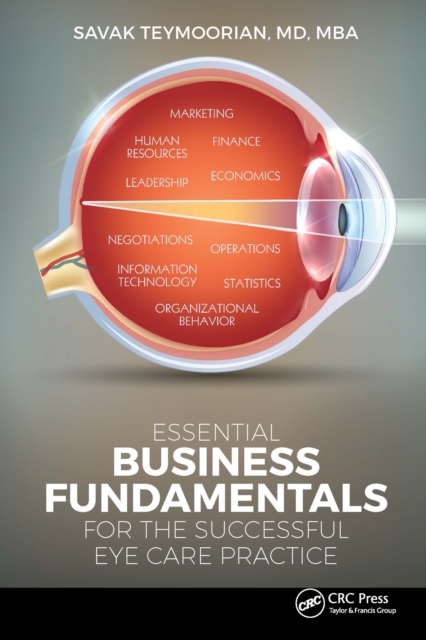
Essential Business Fundamentals for the Successful Eye Care Practice
A compact business education that strategically incorporates 500 keywords to lay the foundation and over 50 action items to initiate meaningful advances and excel in your eye care practice today.
Medical training is a difficult journey with enormous amounts of information to absorb over a short time period. The intense time commitment required during this process leaves little opportunity to study any other discipline. However, even the most intelligent and well-intentioned provider cannot care for patients if the front door of the building is closed. Simply put: A fundamental background in business is required to effectively practice medicine. Eye care professionals, which includes their ophthalmic staff, can now fill the critical gap in their education with
Essential Business Fundamentals for the Successful Eye Care Practice
, providing them the necessary basic tools to make and execute winning practice management decisions.
Writing in a high-density format that medical professionals will be familiar with, Dr. Savak Teymoorian combines his physician training and experience as a successful ophthalmologist at Harvard Eye Associates with the knowledge acquired earning his MBA. This unique perspective allows him to provide the proper theory and execution in the business of eye care and present it in an efficient manner like that used in medical education.
Each chapter is dedicated to a different subject that would routinely be taught in a masters of business administration degree, tailored specifically for eye care professionals and distilled into the most critical information for a strong foundation. Each section is further enhanced with real life examples seen in ophthalmic care showing how to properly apply business strategies and tactics to obtain the best results.
Chapter topics include:
Marketing
Leadership
Negotiations
Operations
Finance
Ophthalmologists, optometrists, and eye care staff will appreciate
Essential Business Fundamentals for the Successful Eye Care Practice
for its efficient and relevant information to running an eye care practice, whether they are currently in training and want to set themselves up for success or they are already practicing and want to fill in a deficiency in their knowledge.
eBook