
Catalogue Search | MBRL


Are you sure you want to remove the book from the shelf?

{{itemTitle}}
56,134
result(s) for
"organic farming"
Sort by:


Organic information: influential authors and organizations in the Midwestern and Northeastern United States organic and sustainable agriculture community
As organic food increases in popularity, there has been increased interest in the history of organic farming. Previous scholarship has done excellent work documenting the social and political aspects of organic and sustainable agriculture, but less research has been done on the history of organic farming methods. The purpose of this study was to address this deficiency by surveying the organic and sustainable farming community in the midwestern and northeastern United States to identify influential authors, publications and organizations. Information about influences on farming practices was created using an anonymous online survey, distributed through organic and sustainable agriculture organizations in the target region. Out of the 224 respondents who completed the survey, 171 (76%) listed books, 169 (75%) listed organizations and 123 (55%) listed influential individuals. A total of 218 authors were identified, with Eliot Coleman receiving the most mentions, followed by Rodale publications, Wendell Berry, Acres U.S.A. magazine, Masanobu Fukuoka, Joel Salatin and Michael Pollan. 242 organizations were listed, with Marbleseed (MOSES), MOFGA, NOFA, PASA, OEFFA, LSP, SFA-MN and MOFFA most frequently mentioned. These results provide a useful starting point for future research on the development and dissemination of farming methods in this region. Research priorities include conducting oral histories with still-living authors of influential books and archiving organizational records before critical historical information is lost.
Journal Article
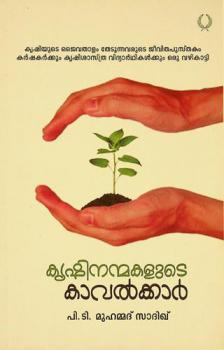
Kr̥ṣinanmakaḷuṭe kāvalkkār
Brief sekches of five Indian organic farmers and their farming practices; with partial reference to Kerala.

Organic Farming: Emerging Practices, Effect on Environment and Nutrition
The global population surge has escalated the demand for food production. While conventional farming meets consumer demands, it often compromises food quality and safety. This method of agriculture has significant adverse effects on health and the environment, relying heavily on chemical fertilizers, costly seeds, and machinery. Conventional farming contributes to environmental degradation, food-borne illnesses, and soil infertility. In response to these issues, organic agriculture has gained prominence worldwide. The rising demand for organic products is driven by their nutritional and environmental benefits. Numerous studies have explored the advantages and disadvantages of various farming methods, comparing organic and conventional practices. This paper reviews the emerging impacts of organic farming on the environment and climate change and examines the nutritional differences and consumer preferences for vegetables produced by these two farming methods.
Journal Article


Economic Impact of Organic Agriculture: Evidence from a Pan-India Survey
The demand for organic foods is increasing worldwide due to health and environmental benefits. However, there are several unanswered questions, such as: Do organic farmers generate higher profits? Will the cost of cultivation reduce to compensate for low yields? Can farmers practice as per the organic agriculture protocols and obtain certification? The literature on organic agriculture varies widely in terms of profitability, yields and costs of organic products. A few studies have researched site-specific organic agriculture, but none have compared organic with conventional agriculture at larger scale in India. The Indian government has promoted organic agriculture since 2015 through its pan-India scheme—Paramparagat Krishi Vikas Yojana (PKVY). Under this program, there were 13.9 million certified organic farmers in 29,859 organic clusters, covering 0.59 million hectares (about 0.4% of the cropped area in India). This study assessed the implementation process of PKVY and the impact at the farmer level using the Difference-in-Difference approach. An economic surplus model was employed to observe the macro scale using data from an all-India representative sample from 576 clusters for the crop year 2017. The results identified that organic farmers experienced 14–19 percent less costs and 12–18 percent lower yields than conventional farmers. The net result is a marginal increase in profitability compared to traditional agriculture. The economy-wide economic surplus model indicates that there will be a reduction in producer and consumer surplus due to reduced crop yields. However, if the shift from conventional to organic is confined to rainfed, hilly and tribal areas, there will be an increase in both consumer and producer surplus.
Journal Article


Using Digestate and Biochar as Fertilizers to Improve Processing Tomato Production Sustainability
The principal goal of the organic farming system (OFS) is to develop enterprises that are sustainable and harmonious with the environment. Unfortunately, the OFS yields fewer products per land than the non-organic farming system in many agricultural products. The objective of our study was to assess the effects of digestate and biochar fertilizers on yield and fruit quality of processing tomato produced under the OFS. The experiment was carried out in Po Valley, during the 2017 and 2018 growing seasons. Liquid digestate (LD), LD + biochar (LD + BC) and pelleted digestate (PD) were evaluated and compared to biochar (BC) application and unfertilized control. The results showed that plants fertilized with LD + BC recorded the maximum marketable yield (72 t ha−1), followed by BC (67 t ha−1), PD (64 t ha−1) and LD (59 t ha−1); while the lowest production (47 t ha−1) was recorded in unfertilized plants. Over the two cropping seasons, LD + BC, BC, PD, and LD, increased fruit number per plant (+15%), fruit weight (+24%), Brix t ha−1 (+41%) and reduced Bostwick index (−16%), if compared to the untreated control. Considering the overall agronomic performances, digestate and biochar can be useful options for increasing yield and quality of processing tomato production in the OFS. Hence, these fertilizers can be assessed in future research both on other crops and farming systems.
Journal Article

Organic food
In recent years, more and more people have taken an interest in finding out where their food comes from. As a result, demand for quality organic food has increased. Readers will learn what sets organic food apart from other food and what benefits it offers. They will also find out why organic food costs more and what other drawbacks there are to going organic.
Book

Combining SWOT analysis and neutrosophic cognitive maps for multi-criteria decision making: a case study of organic agriculture in India
The conventional agricultural system heavily depends on chemicals and inorganic fertilizers, which cause environmental issues. Organic agriculture impacts 6 of the 17 Sustainable Developmental Goals (SDGs) of the United Nations. Strategies to develop organic agriculture have used SWOT and MCDM techniques for analysis. However, the examination of the influence of one strategy over the other strategies has yet to be investigated. This paper proposes a model that combines the existing SWOT analysis with neutrosophic cognitive maps (NCM) models to analyze interconnections among the various strategies obtained from SWOT. This research deploys the proposed SWOT-NCM model to analyze the case study of developing organic farming in Tamil Nadu, India. It offers insights into the strategy's influence over other strategies so that the best is given maximum importance while implementing organic farming. The framework captures the interconnections and ranks the strategies by order of influence, providing fresh insights by taking the farmers' perspective while working with the strategies from the SWOT analysis to model an NCM. A comparative analysis of this SWOT-NCM model with other MCDM models that use SWOT to analyze the agriculture problem, and a sensitivity analysis of the proposed model, is performed. According to our study, the best possible strategy to encourage organic farming is minimum support price (MSP) and centralized procurement. This proposed model can analyze other MCDM problems that use SWOT analysis.
Journal Article