
Catalogue Search | MBRL


Are you sure you want to remove the book from the shelf?

{{itemTitle}}
8,572
result(s) for
"ottoman"
Sort by:

Istanbul exchanges : Ottomans, Orientalists, and nineteenth-century visual culture
\"A vibrant artistic milieu emerged in the late-nineteenth century Istanbul that was extremely heterogeneous, including Ottoman, Ottoman-Armenian, French, Italian, British, Polish and Ottoman-Greek artists. Roberts analyzes the ways artistic output intersected with the broader political agenda of a modernizing Ottoman state. She draws on extensive original research, bringing together sources in Turkey, England, France, Italy, Armenia, Poland and Denmark. Five chapters each address a particular issue related to transcultural exchange across the east-west divide that is focused on a particular case study of art, artistic patronage, and art exhibitions in nineteenth-century Istanbul\"--Provided by publisher.
Book

The Young Turks' crime against humanity : the Armenian genocide and ethnic cleansing in the Ottoman Empire
Introducing evidence from more than 600 secret Ottoman documents, this book demonstrates in unprecedented detail that the Armenian Genocide and the expulsion of Greeks from the late Ottoman Empire resulted from an official effort to rid the empire of its Christian subjects.
eBook


Germany and the Ottoman Empire, 1914-1918
Questioning whether the Germans were actually as influential or dominant in the Ottoman empire as most standard works suggest, the author attacks the myths surrounding Turkey's role in the war.
Originally published in 1968.
The Princeton Legacy Library uses the latest print-on-demand technology to again make available previously out-of-print books from the distinguished backlist of Princeton University Press. These editions preserve the original texts of these important books while presenting them in durable paperback and hardcover editions. The goal of the Princeton Legacy Library is to vastly increase access to the rich scholarly heritage found in the thousands of books published by Princeton University Press since its founding in 1905.
eBook


Against massacre
Against Massacre looks at the rise of humanitarian intervention in the nineteenth century, from the fall of Napoleon to the First World War. Examining the concept from a historical perspective, Davide Rodogno explores the understudied cases of European interventions and noninterventions in the Ottoman Empire and brings a new view to this international practice for the contemporary era.
eBook

A cultural history of the Ottomans : the imperial elite and its artefacts
The Ottoman Empire was more than a center of military and economic activity; it was a vivid and flourishing cultural realm. The artefacts and objects remaining from all corners of this vast empire tell us a great deal about the everyday concerns of the Ottomans. In this book, Faroqhi, a leading historian on the Ottoman Empire, has selected the most revealing, surprising and striking examples of the artefacts which illuminate the lesser-known cultural and artistic world of the Ottomans. Each image reproduced in full color is deftly linked to the latest historiography, and the social, political and economic implications of her selections are never forgotten. In Faroqhi's hands, the objects become ways to learn more about trade, gender and socio-political status. They open an enticing window onto the variety and color of everyday life; from the Sultan's court, to the peasantry and slavery. Amongst its luxuriant faiences and etchings, its sofras and carpets, \"A Cultural History of the Ottomans\" is essential reading for all students of the Ottoman Empire and its material culture.\"
BOOK

Society, Law, and Culture in the Middle East
Society, Law, and Culture in the Middle East: “Modernities” in the Making is an edited volume that seeks to deepen and broaden our understanding of various forms of change in Middle Eastern and North African societies during the Ottoman period. It offers an in-depth analysis of reforms and gradual change in the longue durée, challenging the current discourse on the relationship between society, culture, and law. The focus of the discussion shifts from an external to an internal perspective, as agency transitions from “the West” to local actors in the region. Highlighting the ongoing interaction between internal processes and external stimuli, and using primary sources in Arabic and Ottoman Turkish, the authors and editors bring out the variety of modernities that shaped south-eastern Mediterranean history. The first part of the volume interrogates the urban elite household, the main social, political, and economic unit of networking in Ottoman societies. The second part addresses the complex relationship between law and culture, looking at how the legal system, conceptually and practically, undergirded the socio-cultural aspects of life in the Middle East. Society, Law, and Culture in the Middle East consists of eleven chapters, written by well-established and younger scholars working in the field of Middle East and Islamic Studies. The editors, Dror Ze'evi and Ehud R. Toledano, are both leading historians, who have published extensively on Middle Eastern societies in the Ottoman and post-Ottoman periods.
eBook
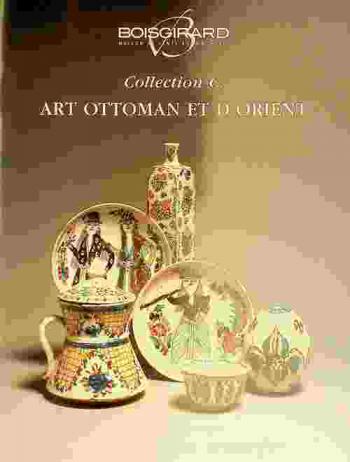

Bureaucratic reform in the ottoman empire
From the author's preface: Sublime Porte--there must be few terms more redolent, even today, of the fascination that the Islamic Middle East has long exercised over Western imaginations. Yet there must also be few Western minds that now know what this term refers to, or why it has any claim to attention. One present-day Middle East expert admits to having long interpreted the expression as a reference to Istambul's splendid natural harbor. This individual is probably not unique and could perhaps claim to be relatively well informed. When the Sublime Porte still existed, Westerners who spent time in Istanbul knew the term as a designation for the Ottoman government, but few knew why the name was used, or what aspect of the Ottoman government it properly designated. What was the real Sublime Porte? Was it an organization? A building? No more, literally, than a door or gateway? What about it was important enough to cause the name to be remembered?
In one sense, the purpose of this book is to answer these questions. Of course, it will also do much more and will, in the process, move quickly onto a plane quite different from the exoticism just invoked. For to study the bureaucratic complex properly known as the Sublime Porte, and to analyze its evolution and that of the body of men who staffed it, is to explore a problem of tremendous significance for the development of the administrative institutions of the Ottoman Empire, the Islamic lands in general, and in some senses the entire non-Westerrn world.
eBook