
Catalogue Search | MBRL


Are you sure you want to remove the book from the shelf?

{{itemTitle}}
83,356
result(s) for
"outcome assessment"
Sort by:


Quality of life : the assessment, analysis, and reporting of patient-reported outcomes
The assessment of patient reported outcomes and health-related quality of life continue to be rapidly evolving areas of research and this new edition reflects the development within the field from an emerging subject to one that is an essential part of the assessment of clinical trials and other clinical studies.
eBook


Medical nihilism
This book defends medical nihilism, which is the view that we should have little confidence in the effectiveness of medical interventions. If we consider the frequency of failed medical interventions, the extent of misleading evidence in medical research, the thin theoretical basis of many interventions, and the malleability of empirical methods in medicine, and if we employ our best inductive framework, then our confidence in the effectiveness of medical interventions ought to be low. Part I articulates theoretical and conceptual groundwork, which offers a defense of a hybrid theory of disease, which forms the basis of a novel account of effectiveness, and this is applied to pharmacological science and to issues such as medicalization. Part II critically examines details of medical research. Even the very best methods in medical research, such as randomized trials and meta-analyses, are malleable and suffer from various biases. Methods of measuring the effectiveness of medical interventions systematically overestimate benefits and underestimate harms. Part III summarizes the arguments for medical nihilism and what this position entails for medical research and practice. To evaluate medical nihilism with care, the argument is stated in formal terms. Medical nihilism suggests that medical research must be modified, that clinical practice should be less aggressive in its therapeutic approaches, and that regulatory standards should be enhanced.
eBook

Extreme intelligence : development, predicaments, implications
\"In this ambitious and highly original book, Sonja Falck explores the idea that a firm correlation has been demonstrated between higher intelligence and various successful life outcomes and achievements, alongside the contradictory documentation of extremely high intelligence being associated with various poor outcomes. Drawing on the author's own research interviews with the highly gifted, the book argues that understanding the dynamics of how extreme intelligence is cultivated, or hampered, interpersonally can facilitate better outcomes. It will be essential reading for anyone supporting or working with the highly gifted, as well as those researching the field of intelligence\"-- Provided by publisher.
Book
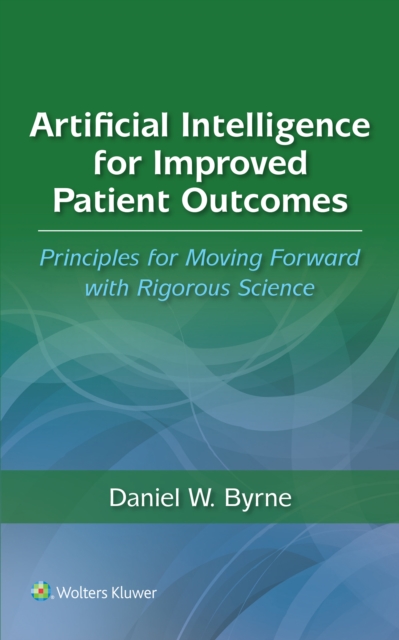
Artificial Intelligence for Improved Patient Outcomes
Artificial Intelligence for Improved Patient Outcomes provides new, relevant, and practical information on what AI can do in healthcare and how to assess whether AI is improving health outcomes. With clear insights and a balanced approach, this innovative book offers a one-stop guide on how to design and lead pragmatic real-world AI studies that yield rigorous scientific evidence-all in a manner that is safe and ethical. Daniel Byrne, Director of Artificial Intelligence Research at AVAIL (the Advanced Vanderbilt Artificial Intelligence Laboratory) and author of landmark pragmatic studies published in leading medical journals, shares four decades of experience as a biostatistician and AI researcher. Building on his first book, Publishing Your Medical Research, the author gives the reader the competitive advantage in creating reproducible AI research that will be accepted in prestigious high-impact medical journals.
eBook


Measurement in Medicine
The success of the Apgar score demonstrates the astounding power of an appropriate clinical instrument. This down-to-earth book provides practical advice, underpinned by theoretical principles, on developing and evaluating measurement instruments in all fields of medicine. It equips you to choose the most appropriate instrument for specific purposes. The book covers measurement theories, methods and criteria for evaluating and selecting instruments. It provides methods to assess measurement properties, such as reliability, validity and responsiveness, and interpret the results. Worked examples and end-of-chapter assignments use real data and well-known instruments to build your skills at implementation and interpretation through hands-on analysis of real-life cases. All data and solutions are available online. This is a perfect course book for students and a perfect companion for professionals/researchers in the medical and health sciences who care about the quality and meaning of the measurements they perform.
eBook


Global, regional, and national burden of suicide mortality 1990 to 2016: systematic analysis for the Global Burden of Disease Study 2016
AbstractObjectivesTo use the estimates from the Global Burden of Disease Study 2016 to describe patterns of suicide mortality globally, regionally, and for 195 countries and territories by age, sex, and Socio-demographic index, and to describe temporal trends between 1990 and 2016.DesignSystematic analysis.Main outcome measuresCrude and age standardised rates from suicide mortality and years of life lost were compared across regions and countries, and by age, sex, and Socio-demographic index (a composite measure of fertility, income, and education).ResultsThe total number of deaths from suicide increased by 6.7% (95% uncertainty interval 0.4% to 15.6%) globally over the 27 year study period to 817 000 (762 000 to 884 000) deaths in 2016. However, the age standardised mortality rate for suicide decreased by 32.7% (27.2% to 36.6%) worldwide between 1990 and 2016, similar to the decline in the global age standardised mortality rate of 30.6%. Suicide was the leading cause of age standardised years of life lost in the Global Burden of Disease region of high income Asia Pacific and was among the top 10 leading causes in eastern Europe, central Europe, western Europe, central Asia, Australasia, southern Latin America, and high income North America. Rates for men were higher than for women across regions, countries, and age groups, except for the 15 to 19 age group. There was variation in the female to male ratio, with higher ratios at lower levels of Socio-demographic index. Women experienced greater decreases in mortality rates (49.0%, 95% uncertainty interval 42.6% to 54.6%) than men (23.8%, 15.6% to 32.7%).ConclusionsAge standardised mortality rates for suicide have greatly reduced since 1990, but suicide remains an important contributor to mortality worldwide. Suicide mortality was variable across locations, between sexes, and between age groups. Suicide prevention strategies can be targeted towards vulnerable populations if they are informed by variations in mortality rates.
Journal Article