
Catalogue Search | MBRL


Are you sure you want to remove the book from the shelf?

{{itemTitle}}
33,852
result(s) for
"owl"
Sort by:

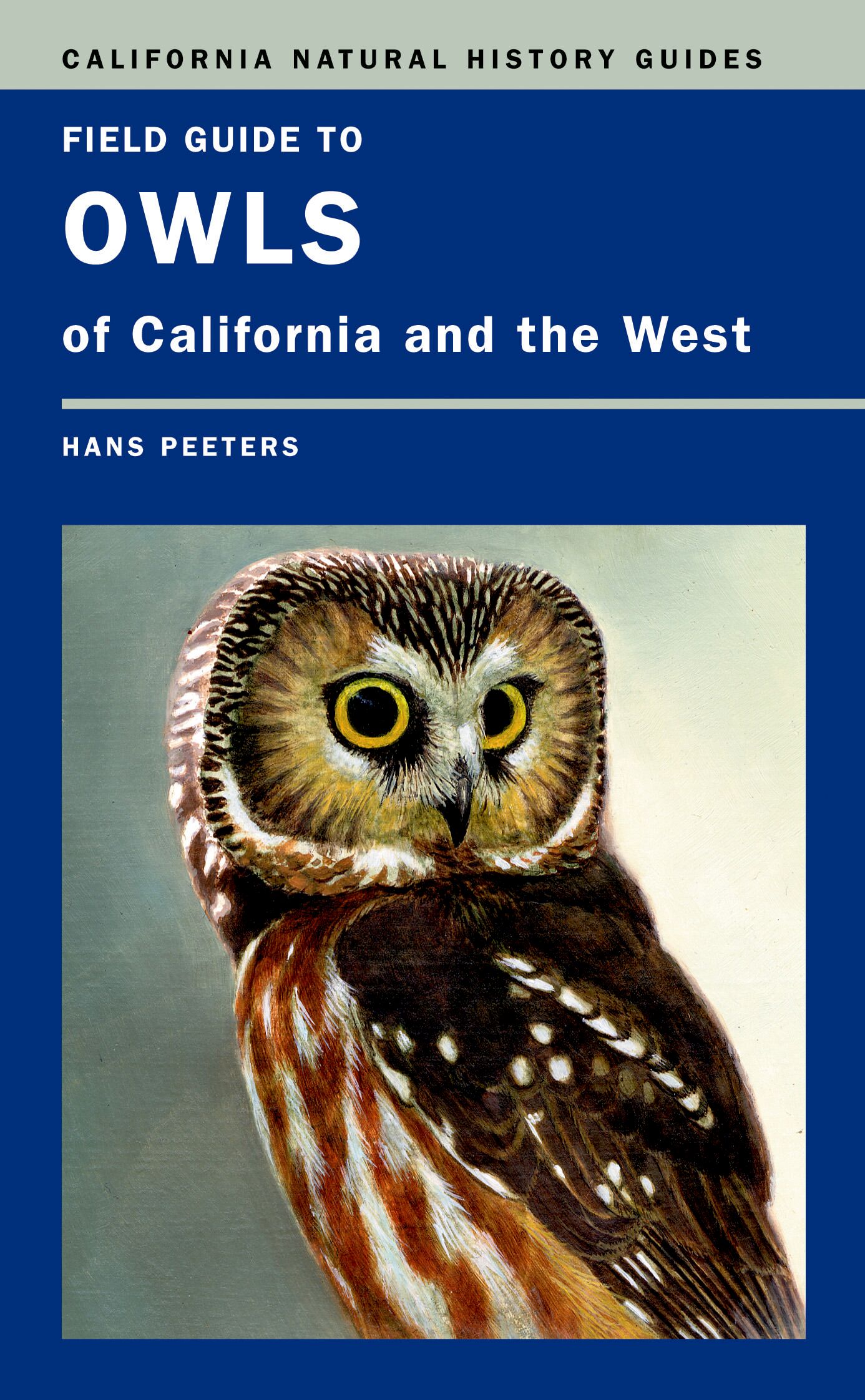
Field Guide to Owls of California and the West
Most owls are almost perfectly adapted to life in the dark. Their vaguely humanoid faces reflect the spectacular evolution of their hearing and vision, which has made flight, romance, and predation possible in the near absence of light. This accessible guide, full of intriguing anecdotes, covers all 19 species of owls occurring in North America. More than an identification guide, Field Guide to Owls of California and the West describes the biology and behavior of owls to make finding and identifying them easier and watching them more enjoyable. The guide also explores the conservation challenges that owls face and tells how owls provide insights to scientists working in fields from technology to health. * Color plates illustrate each species * Range maps show the western distribution of North America's owls, 14 of which occur in California * Offers tips for finding and watching owls * Gives information on how to design, place, and maintain nest boxes * Describes human attitudes toward owls through history, including in Native American cultures of the West
eBook

Ookpik : the travels of a snowy owl
Tells the story of Ookpik, a snowy owl, and its first year and struggle to survive.
Book


The barn owls
For at least 100 years, generations of barn owls have slept, hunted, called, raised their young, and glided silently above the wheat fields around an old barn.
Book

Notes on the natural history of Cloud-forest Pygmy-Owls in Ecuador/Notas sobre la historia natural del mochuelo Glaucidium nubicola en Ecuador
This study reports on findings about the natural history of the Cloud-forest Pygmy-Owl (Glaucidium nubicola). Recently described as a species, the general ecology of the Cloud-forest Pygmy-Owl remains poorly documented. Three banded individuals at a private reserve in the province of Pichincha, Ecuador, are used to describe its habitat use, diet items, and individual longevity. Our observations suggest this local population prefers wet primary cloud forest and appears to have a generalist diet. Multiple recaptures of a banded individual indicate a longevity record of 5 years. Additionally, ectoparasites were found on 2 out of 3 captured individuals. Received 10 April 2020. Accepted 22 July 2021.
Journal Article

Snowy owl invasion! : tracking an unusual migration
\"A historically large irruption of snowy owls during the winter of 2013-2014 brought them across the eastern US, and farther south than usual. Scientists used this opportunity to attach GPS tracking devices to some snowy owls to increase understanding of their winter behavior and migration.\"-- Provided by publisher.
Book
Hunting one owl species to save another
The federal government in August approved a plan to kill nearly half a million barred owls, an invasive species threatening the woods of Northern California.
Streaming Video

White owl, barn owl
A little girl and her grandfather watch and learn about the mysterious and beautiful owls that live near them.
Book

Differential landscape use by forest owls two years after a mixed‐severity wildfire
Owls are important avian predators in forested systems, but little is known about landscape use by most forest‐adapted owl species in environments impacted by mixed‐severity wildfire. To better understand species‐specific patterns of post‐wildfire landscape use within an owl guild, we used passive acoustic monitoring using autonomous recording units. The technology is effective for multi‐species surveys, especially if some species are rare, nocturnal, or difficult to detect by traditional means. In 2017, we surveyed the interior and adjacent unburned areas of a 10,700‐ha mixed‐severity wildfire that burned in 2015 in southwest Oregon. We used occupancy modeling to identify patterns of landscape use by five species of forest owls: barred owls (Strix varia), great horned owls (Bubo virginianus), western screech‐owls (Megascops kennicottii), northern pygmy‐owls (Glaucidium gnoma), and northern saw‐whet owls (Aegolius acadicus). Our results showed a positive relationship between increasing fire severity and probability of use by western screech‐owls and a similar but somewhat weaker relationship for northern pygmy‐owls. Barred owls were rarely detected in severely burned areas and their use decreased with increased fire severity. We observed generally low landscape use for great horned owls, which decreased with increased fire severity and at higher elevations. Thus, four out of the five species appeared to use recently burned forests at different levels, with only northern saw‐whet owls showing near‐complete avoidance of the burned area. These findings increase our understanding of the basic ecology of each species and highlight the varied use of burned areas within this community. These previously undocumented patterns of landscape use in burned landscapes should provide insights to managers and policymakers in the Pacific Northwest as climate shifts, and fires may increase in size, frequency, and severity.
Journal Article