
Catalogue Search | MBRL


Are you sure you want to remove the book from the shelf?

{{itemTitle}}
6,766
result(s) for
"pagan"
Sort by:

Bagan and the World
The archaeological site of Bagan and the kingdom which bore its name contains one of the greatest concentrations of ancient architecture and art in Asia. Much of what is visible today consists of ruins of Buddhist monasteries. While these monuments are a major tourist attraction, recent advances in archaeology and textual history have added considerable new understanding of this kingdom, which flourished between the 11th and 14th centuries. Bagan was not an isolated monastic site; its inhabitants participated actively in networks of Buddhist religious activity and commerce, abetted by the site's location near the junction where South Asia, China and Southeast Asia meet.
This volume presents the results of recent research by scholars from around the world, including indigenous Myanmar people, whose work deserves to be known among the international community. The perspective on Myanmar's role as an integral part of the intellectual, artistic and economic framework found in this volume yields a glimpse of new themes which future studies of Asian history will no doubt explore.
eBook

Myth and History in Celtic and Scandinavian Traditions
Myth and History in Celtic and Scandinavian Traditions explores the traditions of two fascinating and contiguous cultures in north-western Europe. History regularly brought these two peoples into contact, most prominently with the Viking invasion of Ireland. In the famous Second Battle of Moytura, gods such as Lug, Balor, and the Dagda participated in the conflict that distinguished this invasion. Pseudohistory, which consists of both secular and ecclesiastical fictions, arose in this nexus of peoples and myth and spilled over into other contexts such as chronological annals. Scandinavian gods such as Odin, Balder, Thor, and Loki feature in the Edda of Snorri Sturluson and the history of the Danes by Saxo Grammaticus. This volume explores such written works alongside archaeological evidence from earlier periods through fresh approaches that challenge entrenched views.
eBook

Ut in his reperias aliquam partem uasorum Dei: Jerome and the Pagan Culture in the CDan
The image of the vasa domus Dei, repeated on two occasions in the book of the prophet Daniel (Dan 1:2 and 5:4), enables Jerome to formulate an explicit judgement on pagan culture. Drawing extensively on a well-established repertoire, he highlights in one case its positive aspects and in the other its negative ones, and so in CDan 1,1,2b, he underlines the presence, at least in philosophy, of some truths drawn from the doctrine of God; in CDan 2,5,4, he discusses the wicked use the heretics make of the saeculares litterae.
Journal Article
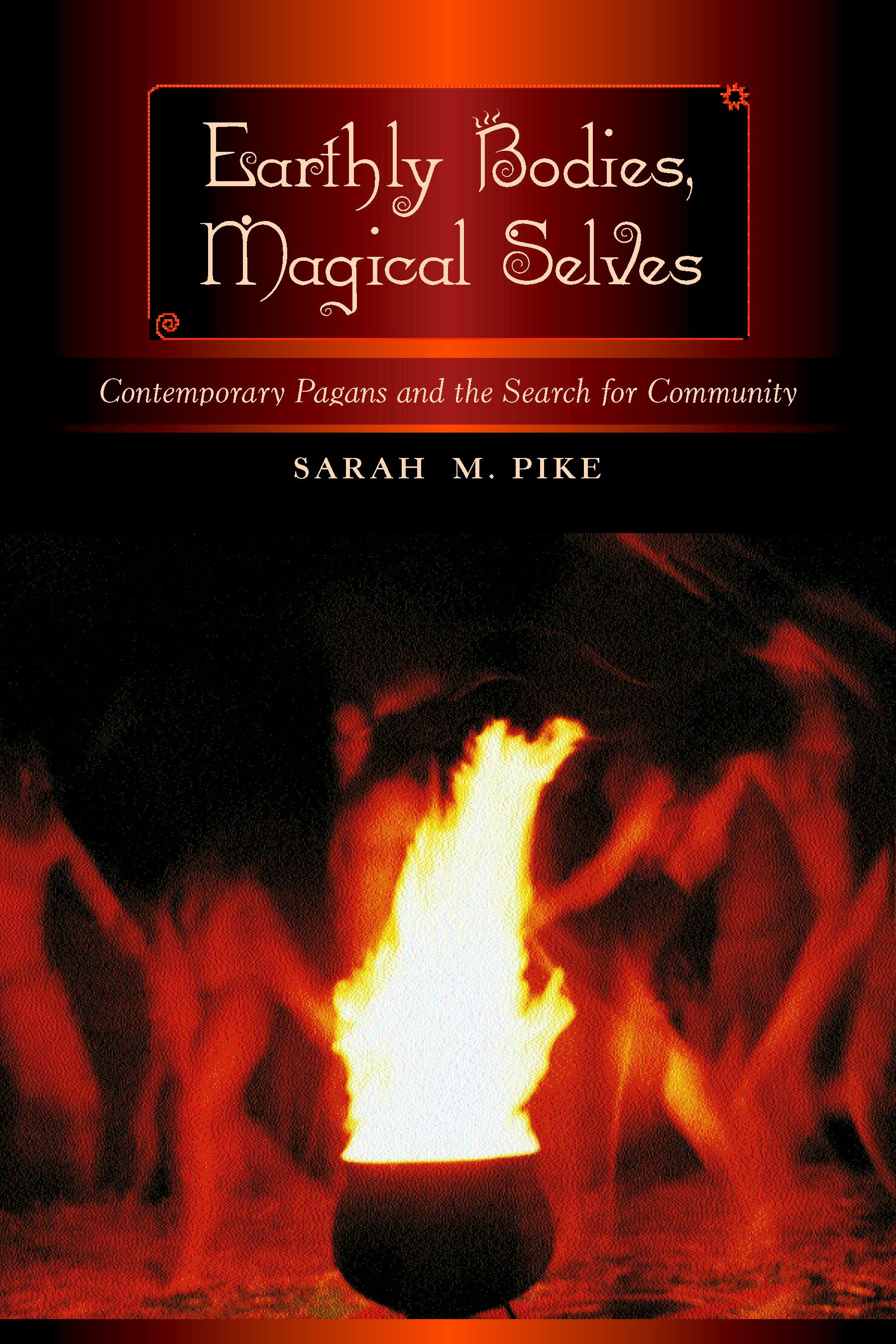
Earthly Bodies, Magical Selves
Recent decades have seen a revival of paganism, and every summer people gather across the United States to celebrate this increasingly popular religion. Sarah Pike's engrossing ethnography is the outcome of five years attending neo-pagan festivals, interviewing participants, and sometimes taking part in their ceremonies. Earthly Bodies, Magical Selves incorporates her personal experience and insightful scholarly work concerning ritual, sacred space, self-identity, and narrative. The result is a compelling portrait of this frequently misunderstood religious movement. Neo-paganism began emerging as a new religious movement in the late 1960s. In addition to bringing together followers for self-exploration and participation in group rituals, festivals might offer workshops on subjects such as astrology, tarot, mythology, herbal lore, and African drumming. But while they provide a sense of community for followers, Neo-Pagan festivals often provoke criticism from a variety of sources—among them conservative Christians, Native Americans, New Age spokespersons, and media representatives covering stories of rumored \"Satanism\" or \"witchcraft.\"Earthly Bodies, Magical Selves explores larger issues in the United States regarding the postmodern self, utopian communities, cultural improvisation, and contemporary spirituality. Pike's accessible writing style and her nonsensationalistic approach do much to demystify neo-paganism and its followers.
eBook

The final pagan generation
The Final Pagan Generationrecounts the fascinating story of the lives and fortunes of the last Romans born before the Emperor Constantine converted to Christianity. Edward J. Watts traces their experiences of living through the fourth century's dramatic religious and political changes, when heated confrontations saw the Christian establishment legislate against pagan practices as mobs attacked pagan holy sites and temples. The emperors who issued these laws, the imperial officials charged with implementing them, and the Christian perpetrators of religious violence were almost exclusively young men whose attitudes and actions contrasted markedly with those of the earlier generation, who shared neither their juniors' interest in creating sharply defined religious identities nor their propensity for violent conflict. Watts examines why the \"final pagan generation\"-born to the old ways and the old world in which it seemed to everyone that religious practices would continue as they had for the past two thousand years-proved both unable to anticipate the changes that imperially sponsored Christianity produced and unwilling to resist them. A compelling and provocative read, suitable for the general reader as well as students and scholars of the ancient world.
eBook

Developing a reliable predictive model for the biodegradability index in industrial complex effluent
The interaction between chemical oxygen demand (COD) and biological oxygen demand (BOD5) in wastewater from Tehran’s Paytakht and Nasirabad Industrial Parks is investigated in this work. Monitoring platforms of industrial parks were the base frame of monthly collection data for laboratory measurements (for BOD5 and COD) and in-situ measurements (for DO, EC and Temperature-T°C) with a frequency of 4-hour samples/day. Backward elimination regression analysis was employed as an integrated procedure to find out effective model removing ineffective independent variables. Multivariate Regression analysis showed a relatively strong linear relationship between COD and BOD, with independent variables with R²=0.64 and R²=0.59, respectively. A prediction model for BOD based on COD was found by analyzing important effluent quality variables using simple linear regression and a strong linear association (BOD = 0.433COD + 222) with R² = 0.94, MSE = 38,829, RMSE = 197.05 was obtained. In all of these regression analyses, model accuracy was assessed by conducting statistical tests on the residuals. To verify and improve the reliability and practicability of model, it is applied of industrial parks’ wastewater records of countries around the world such as Egypt, France, India, Pakistan and Malaysia. The extracted model applied on some of the mentioned countries’ records and the results of BOD prediction was matched by observations in 95% of reliability domain. Variation of BOD-COD ratio was least affected by pH and temperature; the results underline the requirement of localized validation resulting from industry-specific differences and promote cost-effective, quick wastewater evaluation, hence lowering reliance on laboratory-based BOD
5
testing. It defiantly provides the opportunity of analytical and applied researches in south countries toward sustainable industrial wastewater management.
Journal Article

The Cyborg Caribbean
Finalist for the Gordon K. and Sybil Lewis Award from the Caribbean Studies Association The Cyborg Caribbean examines a wide range of twenty-first-century Cuban, Dominican, and Puerto Rican science fiction texts, arguing that authors from Pedro Cabiya, Alexandra Pagan-Velez, and Vagabond Beaumont to Yasmin Silvia Portales, Erick Mota, and Yoss, Haris Durrani, and Rita Indiana Hernandez, among others, negotiate rhetorical legacies of historical techno-colonialism and techno-authoritarianism. The authors span the Hispanic Caribbean and their respective diasporas, reflecting how science fiction as a genre has the ability to manipulate political borders. As both a literary and historical study, the book traces four different technologies—electroconvulsive therapy, nuclear weapons, space exploration, and digital avatars—that have transformed understandings of corporality and humanity in the Caribbean. By recognizing the ways that increased technology may amplify the marginalization of bodies based on race, gender, sexuality, and other factors, the science fiction texts studied in this book challenge oppressive narratives that link technological and sociopolitical progress.
eBook

Solitary Pagans
Solitary Pagans is the first book to explore the growing phenomenon of contemporary Pagans who practice alone. Although the majority of Pagans in the United States have abandoned the tradition of practicing in groups, little is known about these individuals or their way of practice. Helen A. Berger fills that gap by building on a massive survey of contemporary practitioners. By examining the data, Berger describes solitary practitioners demographically and explores their spiritual practices, level of social engagement, and political activities. Contrasting the solitary Pagans with those who practice in groups and more generally with other non-Pagan Americans, she also compares contemporary U.S. Pagans with those in the United Kingdom, Australia, and Canada. Berger brings to light the new face of contemporary paganism by analyzing those who learn about the religion from books or the Internet and conduct rituals alone in their gardens, the woods, or their homes. Some observers believe this social isolation and political withdrawal has resulted in an increase in narcissism and a decline in morality, while others argue to the contrary that it has produced a new form of social integration and political activity. Berger posits the implications of her findings to reveal a better understanding of other metaphysical religions and those who shun traditional religious organizations.
eBook

O Sagrado está no Todo: Experiências de Praticantes do (Neo)Paganismo como Possibilidade de Encontro Holístico do Ser
This paper aims to understand the experiences of practitioners of Contemporary Paganism and the relationships they have with their spiritual practices, as well as to investigate how they understand and interact with nature and how they perceive themselves as practitioners of a holistic belief. From in-depth interviews with four practitioners of (Neo) Paganism, it is possible to analyze the discourses on spiritual experiences through two categories of analysis: 1. Contemporary Paganism: Worldview and Holistic Practices, and 2. Understanding Totality: Nature, Self and Community. The research made it possible to understand that the relationship between the sacred, nature and the person in (Neo) Paganism is defined by the notion of totality as a reality in which the living beings, the world and the gods are interconnected, and therefore it is understood that the person-world-sacred does not separate. Palavras-chave : Pagan; Religion; Spirituality.
Journal Article

The Final Pagan Generation
The Final Pagan Generation recounts the fascinating story of the lives and fortunes of the last Romans born before the Emperor Constantine converted to Christianity. Edward J. Watts traces their experiences of living through the fourth century's dramatic religious and political changes, when heated confrontations saw the Christian establishment legislate against pagan practices as mobs attacked pagan holy sites and temples. The emperors who issued these laws, the imperial officials charged with implementing them, and the Christian perpetrators of religious violence were almost exclusively young men whose attitudes and actions contrasted markedly with those of the earlier generation, who shared neither their juniors' interest in creating sharply defined religious identities nor their propensity for violent conflict. Watts examines why the \"final pagan generation\"—born to the old ways and the old world in which it seemed to everyone that religious practices would continue as they had for the past two thousand years—proved both unable to anticipate the changes that imperially sponsored Christianity produced and unwilling to resist them. A compelling and provocative read, suitable for the general reader as well as students and scholars of the ancient world.
eBook