
Catalogue Search | MBRL


Are you sure you want to remove the book from the shelf?

{{itemTitle}}
179
result(s) for
"panentheism"
Sort by:


Evils of Optimistic Panentheism
Theologians have described Sergius Bulgakov as one of the greatest theologians of the 20th century. Bulgakov is an ‘optimistic panentheist,’ someone who embraces a combination of panentheist metaphysics and an optimistic attitude that God’s eschatological will (an essential desire of God) will necessarily be accomplished in the future, when all evil will be eliminated. This paper fleshes out a practical problem affecting ‘optimistic’ versions of panentheism like Bulgakov’s, using Bulgakov’s own views as an example. Not only is there no good way for panentheists to infer that God’s essentially good nature or desires (such as an essentially good will) will ultimately ‘win out’ over the bad consequences of His nature or desires, but their view implies that God only allows evil because its possibility is a metaphysically necessary consequence of God’s essence or desires. As God’s essence is eternally the same, it cannot then be that evil ceases to be so necessary at any point in God’s life. In sum, we will defend the conclusion that ‘pessimism’ is the only coherent position for panentheists to take, given their metaphysical commitments. Moreover, we will conclude by generalizing these insights to panentheism generally and Christian panentheism particularly.
Journal Article
At Home in the World: Thomas Merton and Rosemary Ruether on the Beloved Creation
This article examines the exchange of ideas between Merton and Ruether on creation. Merton’s sacramental views and Ruether’s eco-feminist perspectives rooted in an incarnational spirituality can serve as a corrective to those who regard the Earth as an object of consumerism, which leads to the degradation and the desacralization of matter. I will examine how the way out offered by Merton and Ruether reflects an integral eco-spirituality responsive to and in resonance with the supreme reality that permeates everything. As Rosemary Ruether, Sallie McFague, Elizabeth Johnson, and other Christian eco-feminists have described in metaphorical language, the world may be conceived of as a kind of self-giving activity of God’s body in feminine terms. According to this view, a constant birth of life is taking place in a universe ultimately rooted in the cosmic womb of divine love to which Ruether referred as the Great Mother. I will show examples of their writings where both Merton and Ruether highly emphasized the importance of seeing the good creation reflecting God’s love for all creatures. I will conclude by pondering on the ecological implications of their writings, where they address the environmental threats that global warming and climate change caused by humans pose to Mother Earth.
Journal Article
A New Theistic Argument Based on Creativity
It has been argued for a long time that God has been involved in the biological evolutionary processes observed on Earth. However, no convincing theistic argument has yet been formulated for biological evolution. In this article, I use the concept of creativity to argue that biological evolution manifests an embedded intelligence. This articulates a new form of theistic argument related to biological evolution and offers another sound argument supporting the existence of God. My reasoning suggests that nature might be panentheistic, or that an external personal God manipulates natural laws to direct the process of evolution.
Journal Article
Non-Dual Śaivism and the Panentheism of Karl Christian Friedrich Krause
This paper explores striking philosophical parallels between Karl Christian Friedrich Krause’s 19th-century articulation of panentheism and the much earlier non-dual Śaiva philosophy of the Pratyabhijñā school in Kashmir. While Krause is widely credited with coining the term panentheism, models of divine immanence and transcendence akin to panentheism are already present in the Pratyabhijñā tradition. Through comparative analysis, the study identifies key convergences between these two systems in their metaphysics of ultimate reality, their accounts of liberation through knowledge, the role of the teacher in the liberative process, their views on the purpose of creation and their respective treatments of evil. The paper concludes by examining significant points of divergence, shedding light on the distinctive trajectories and theological commitments of each tradition.
Journal Article

On Orthodox panentheism
Panentheism is the position that the world is in some sense ‘in’ God, and God ‘in’ the world, without the world being identical to God. Thus, it tries, like what I call mainstream theism and against pantheism, to protect the transcendence of God, while giving greater emphasis to his immanence in creation than the former. I aim to explicate an approach that I call Orthodox Panentheism. The word ‘orthodox’ is to be read in two ways. First, the picture is derived from the writings of some of the most important figures in Eastern Christian thought, so that it is Orthodox in the ‘big “O” sense’. Second, I hope to show that it is a legitimate Christian picture of the God–world relation which is both distinctive and worthy of being called ‘panentheism’ – an orthodox panentheism in the ‘little “o” sense’.
Journal Article
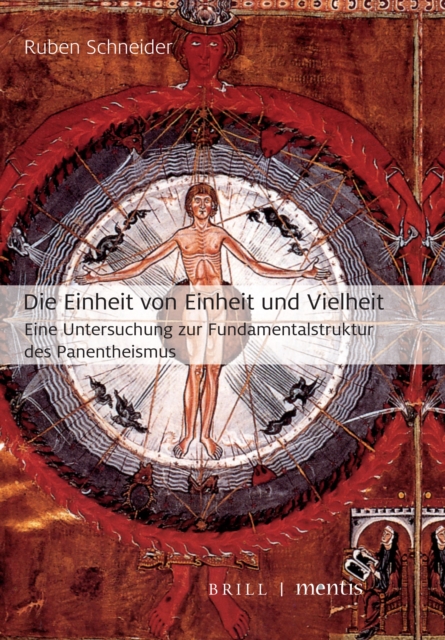
Die Einheit von Einheit und Vielheit: Eine Untersuchung zur Fundamentalstruktur des Panentheismus
Das Buch versteht sich als ein Beitrag zu einer Theorie uber das Verhaltnis von Absolutem und Endlichem im Rahmen der von Lorenz B. Puntel vorgelegten struktural-systematischen Philosophie. Dieses Verhaltnis soll als die (primordiale) Einheit von (korrelativer) Einheit und Vielheit bzw. als Autoimmanenz von Immanenz und Transzendenz bestimmt werden, was nach Meinung des Autors zugleich die Fundamentalstruktur des richtig verstandenen (Einheit-in-Vielheit-)Panentheismus darstellt: Das allumfassende Absolute stellt eine Einheit dar, welche die Vielheit der endlichen Entitaten umfasst und ihr dennoch auch gegenubersteht. Diese bei vielen Klassikern vorkommende Konzeption stellt eine analytisch-formallogisch orientierte Philosophie vor erhebliche konzeptuelle Schwierigkeiten, die diese Studie mit Ausblick auf eine mogliche Losung mit Methoden der mathematischen Kategorientheorie artikuliert. Dabei wird im Gesprach mit ausgewahlten Klassikern die Seinstheorie der struktural-systematischen Philosophie als ein angemessener philosophischer Theorierahmen vorgestellt, der sich insbesondere in den gegenwartigen Diskussionen der analytischen Religionsphilosophie als weiterfuhrende Anregung erweist.
eBook
Panentheism as cosmopolitanism: Karl Christian Friedrich Krause's conception of a global human league
Karl Christian Friedrich Krause (1781–1832) left for posterity an impressive and astonishingly contemporary corpus of philosophical creativity. Not only does it cover numerous topics of theoretical and practical philosophy, from a panentheistic-cosmopolitan point of view, but, in terms of the history of philosophy, it may be seen as one of the first works from a European pen which also appreciates the Indian roots of European thinking in their systematic importance. It combines them with Platonic metaphysics and Kant's transcendental philosophy to form a system of philosophy that is truly intercultural. In what follows, Krause's fundamental argument for panentheism is presented before it is argued that Krause's panentheism entails a cosmopolitan theory of human society according to which it is a postulate of practical reason to realize a cosmopolitan global league of humanity.
Journal Article
Reconceiving Trinitarian Creatorship and Redeemership through a Dialogue between Robert Jenson and Karl Barth: Soteriological Panentheism
In this article, I explore the significance of the protological and eschatological dimensions of the Trinity, critiquing and building upon the Trinitarian doctrines of Karl Barth and Robert Jenson. The traditional doctrine of the Trinity tends to separate the Triune God’s saving economy, which Barth attempts to reconcile via reclaiming their inseparability in his Church Dogmatics. However, Jenson critiques Barth for continuing to abstract the eternal life of God from God’s act in history and instead proposes an eschatological view of the immanent Trinity as the temporal fulfillment of God’s economic actions. By placing Barth and Jenson in mutual dialogue, I argue for a balanced integration of Barth’s and Jenson’s perspectives, asserting that both the primordial existence and the eschatological fulfillment of the Trinity are critical to understanding the Triune God as the Creator and Redeemer. At the end of the article, I propose a soteriological panentheism that aims to reconcile these dimensions. This scheme highlights the continuous, dynamic interaction between God’s eternal nature and temporal creation.
Journal Article

PANTHEISM, PANENTHEISM, AND ECOSOPHY: GETTING BACK TO SPINOZA?
Many authors in the field of Environmental Philosophy have claimed to be inspired by Spinoza's monism, which has traditionally been considered a form of pantheism because nature and God coincide. This idea has deep normative implications, as some environmental ethicists claim that wounding nature is the same as wounding God, which implies a resacralization of nature. In particular, we will focus on Arne Næss's Ecosophy (or Deep Ecology) to offer a current relevant example of the pantheist (or panentheist) worldview. However, a new demarcation distinguishes pantheism from panentheism; in the latter, nature and God belong together but do not fully coincide, as in pantheism. Nevertheless, whether Spinoza is a panentheist, pantheist, or neither has yet to be fully determined, as well as whether his doctrine serves as a proper foundation for an ecology that attempts the aforementioned resacralization of nature. This article attempts to clarify these issues.
Journal Article