
Catalogue Search | MBRL


Are you sure you want to remove the book from the shelf?

{{itemTitle}}
19,758
result(s) for
"parasite ecology"
Sort by:

Migratory animals feel the cost of getting sick: A meta-analysis across species
1. Migratory animals are widely assumed to play an important role in the long-distance dispersal of parasites, and are frequently implicated in the global spread of zoonotic pathogens such as avian influenzas in birds and Ebola viruses in bats. However, infection imposes physiological and behavioural constraints on hosts that may act to curtail parasite dispersal via changes to migratory timing (“migratory separation”) and survival (“migratory culling”). 2. There remains little consensus regarding the frequency and extent to which migratory separation and migratory culling may operate, despite a growing recognition of the importance of these mechanisms in regulating transmission dynamics in migratory animals. 3. We quantitatively reviewed 85 observations extracted from 41 studies to examine how both infection status and infection intensity are related to changes in body stores, refuelling rates, movement capacity, phenology and survival in migratory hosts across taxa. 4. Overall, host infection status was weakly associated with reduced body stores, delayed migration and lower survival, and more strongly associated with reduced movement. Infection intensity was not associated with changes to host body stores, but was associated with moderate negative effects on movement, phenology and survival. 5. In conclusion, we found evidence for negative effects of infection on host phenology and survival, but the effects were relatively small. This may have implications for the extent to which migratory separation and migratory culling act to limit parasite dispersal in migratory systems. We propose a number of recommendations for future research that will further advance our understanding of how migratory separation and migratory culling may shape host-parasite dynamics along migratory routes globally.
Journal Article

Parasites in Ecological Communities
Interactions between competitors, predators and their prey have traditionally been viewed as the foundation of community structure. Parasites – long ignored in community ecology – are now recognized as playing an important part in influencing species interactions and consequently affecting ecosystem function. Parasitism can interact with other ecological drivers, resulting in both detrimental and beneficial effects on biodiversity and ecosystem health. Species interactions involving parasites are also key to understanding many biological invasions and emerging infectious diseases. This book bridges the gap between community ecology and epidemiology to create a wide-ranging examination of how parasites and pathogens affect all aspects of ecological communities, enabling the new generation of ecologists to include parasites as a key consideration in their studies. This comprehensive guide to a newly emerging field is of relevance to academics, practitioners and graduates in biodiversity, conservation and population management, and animal and human health.
eBook
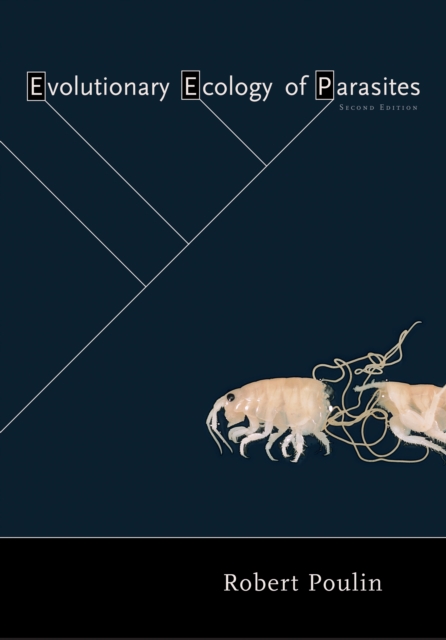
Evolutionary ecology of parasites
Parasites have evolved independently in numerous animal lineages, and they now make up a considerable proportion of the biodiversity of life. Not only do they impact humans and other animals in fundamental ways, but in recent years they have become a powerful model system for the study of ecology and evolution, with practical applications in disease prevention. Here, in a thoroughly revised and updated edition of his influential earlier work, Robert Poulin provides an evolutionary ecologist's view of the biology of parasites. He sets forth a comprehensive synthesis of parasite evolutionary ecology, integrating information across scales from the features of individual parasites to the dynamics of parasite populations and the structuring of parasite communities.
eBook

Amphibian population declines at Savannah River Site are linked to climate, not chytridiomycosis
Amphibian populations at the Savannah River Site (SRS), South Carolina, USA, have been censused consistently for 35 years, and this provides a time series to examine the causes of population fluctuations. We examined archived museum specimens of 15 anuran species collected at wetlands on the SRS for the presence of the causative agent (Batrachochytrium dendrobatidis) of chytridiomycosis, an emerging disease associated with population declines elsewhere. Infections were present in three out of 137 (2.18%) individuals; the pathogen was detected in two Rana catesbeiana and a single Rana sphenocephala, all collected between 1978 and 1981. Lesions were not consistent with the later stages of fatal chytridiomycosis. Analysis of population trajectories of nine amphibian species over 26 years at SRS showed that four species declined significantly over this period, including R. sphenocephala. However, we demonstrate that these declines are more likely caused by an increase in the number of years with insufficient rainfall and a shortened hydroperiod at the breeding site than by chytrid epidemics. This pattern appears to be linked to a drying trend at SRS through the 1990s, although it is unclear whether this was caused by climate change. This study demonstrates that the presence of B. dendrobatidis in amphibian communities where some species are declining does not always implicate chytrids as a cause of the decline. Like many other emerging pathogens, the outcome of infection can vary among individuals and populations, depending on life history traits, environmental conditions, and virulence factors of the pathogen. Our report also demonstrates the usefulness of archived museum specimens and long-term population monitoring in studying the host-parasite ecology of emerging diseases.
Journal Article

Parallel Pleistocene amphitropical disjunctions of a parasitic plant and its host
PREMISE OF THE STUDY: Aphyllon is a clade of holoparasites that includes closely related North American and South American species parasitic on Grindelia. Both Aphyllon (Orobanchaceae) and Grindelia (Asteraceae) have amphitropical disjunctions between North America and South America; however, the timing of these patterns and the processes to explain them are unknown. METHODS: Chronograms for the Orobanchaceae and Grindelia and their relatives were constructed using fossil and secondary calibration points, one of which was based on the inferred timing of horizontal gene transfer from a papilionoid legume into the common ancestor of Orobanche and Phelipanche. Elevated rates of molecular evolution in the Orobanchaceae have hindered efforts to determine reliable divergence time estimates in the absence of a fossil record. However, using a horizontal gene transfer event as a secondary calibration overcomes this limitation. These chronograms were used to reconstruct the biogeography of Aphyllon, Grindelia, and relatives using a DEC+J model implemented in RevBayes. KEY RESULTS: Aphyllon had two amphitropical dispersals from North America to South America, while Grindelia had a single dispersal. The dispersal of the Aphyllon lineage that is parasitic on Grindelia (0.40 Ma) took place somewhat after Grindelia began to diversify in South America (0.93 Ma). Using a secondary calibration based on horizontal gene transfer, we infer more recent divergence dates of holoparasitic Orobancheae than previous studies. CONCLUSIONS: Parallel host–parasite amphitropical disjunctions in Grindelia and Aphyllon illustrate one means by which ecological specialization may result in nonindependent patterns of diversity in distantly related lineages. Although Grindelia and Aphyllon both dispersed to South America recently, Grindelia appears to have diversified more extensively following colonization. More broadly, recent Pleistocene glaciations probably have also contributed to patterns of diversity and biogeography of temperate northern hemisphere Orobancheae. We also demonstrate the utility of using horizontal gene transfer events from well‐dated clades to calibrate parasite phylogenies in the absence of a fossil record.
Journal Article

The Novel and Endemic Pathogen Hypotheses: Competing Explanations for the Origin of Emerging Infectious Diseases of Wildlife
Chytridiomycosis, caused by the fungal pathogen Batrachochytrium dendrobatidis, is an emerging infectious disease implicated in declines of amphibian populations around the globe. An emerging infectious disease is one that has recently been discovered; has recently increased in incidence, geography, or host range; or is newly evolved. For any given outbreak of an emerging disease, it is therefore possible to state two hypotheses regarding its origin. The novel pathogen hypothesis states that the disease has recently spread into new geographic areas, whereas the endemic pathogen hypothesis suggests that it has been present in the environment but recently has increased in host range orpathogenicity. Distinguishing between these hypotheses is important, because the conservation measures needed to slow or stop the spread of a novel pathogen are likely to differ from those needed to prevent outbreaks of an endemic pathogen. Population genetics may help discriminate among the possible origins of an emerging disease. Current evidence suggests chytridiomycosis may be a novel pathogen being spread worldwide by carriers; until we know how much genetic variation to expect in an endemic strain, however, we cannot yet conclude that B. dendrobatidis is a novel pathogen.
Journal Article

Parasites alter food-web topology of a subarctic lake food web and its pelagic and benthic compartments
We compared three sets of highly resolved food webs with and without parasites for a subarctic lake system corresponding to its pelagic and benthic compartments and the whole-lake food web. Key topological food-web metrics were calculated for each set of compartments to explore the role parasites play in food-web topology in these highly contrasting webs. After controlling for effects from differences in web size, we observed similar responses to the addition of parasites in both the pelagic and benthic compartments demonstrated by increases in trophic levels, linkage density, connectance, generality, and vulnerability despite the contrasting composition of free-living and parasitic species between the two compartments. Similar effects on food-web topology can be expected with the inclusion of parasites, regardless of the physical characteristics and taxonomic community compositions of contrasting environments. Additionally, similar increases in key topological metrics were found in the whole-lake food web that combines the pelagic and benthic webs, effects that are comparable to parasite food-web analyses from other systems. These changes in topological metrics are a result of the unique properties of parasites as infectious agents and the links they participate in. Trematodes were key contributors to these results, as these parasites have distinct characteristics in aquatic systems that introduce new link types and increase the food web’s generality and vulnerability disproportionate to other parasites. Our analysis highlights the importance of incorporating parasites, especially trophically transmitted parasites, into food webs as they significantly alter key topological metrics and are thus essential for understanding an ecosystem’s structure and functioning.
Journal Article
rules for symbiont community assembly change along a mutualism–parasitism continuum
Symbiont community assembly is driven by host–symbiont and symbiont–symbiont interactions. The effects that symbionts exert on their hosts are often context‐dependent, and existing theoretical frameworks of symbiont community assembly do not consider the implications of variable outcomes to assembly processes. We hypothesized that symbiont–symbiont interactions become increasingly important along a parasitism/mutualism continuum because; (i) negative outcomes favour host resistance which in turn reduces symbiont colonization and subsequently reduce symbiont–symbiont interactions, whereas (ii) positive host outcomes favour tolerance and consequently higher symbiont colonization rates, leading to stronger interactions among symbionts. We found support for this hypothesis in the cleaning symbiosis between crayfish and ectosymbiotic branchiobdellidan worms. The symbiosis between crayfish and their worms can shift from parasitism/commensalism to mutualism as crayfish age. Here, field surveys identified changes in worm density, diversity and composition that were concomitant to changing symbiosis outcomes. We conducted several laboratory experiments and behavioural assays to relate patterns from the field to their likely causal processes. Young crayfish typically hosted only two relatively small worm species. Older crayfish hosted two additional larger species. In laboratory experiments, young crayfish exhibited a directed grooming response to all worm species, but were unable to remove small species. Conversely, adult crayfish did not exhibit grooming responses to any worm species. Relaxed grooming allowed the colonization of large worm species and initiated symbiont–symbiont intraguild predation that reduced the abundance and altered the behaviour of small worm species. Thus, the dominant processes of symbiont community assembly shifted from host resistance to symbiont–symbiont interactions through host ontogeny and a concomitant transition towards mutualism. This work shows that host resistance can have a prevailing influence over symbiont community assembly when symbiosis is disadvantageous to the host. However, when symbiosis is advantageous and resistance is relaxed, symbiont colonization rate and consequently abundance and diversity increases and interactions among symbionts become increasingly important to symbiont community assembly.
Journal Article
Prey, predators, parasites: intraguild predation or simpler community modules in disguise
1. Competition and predation are at the heart of community ecology. The theoretical concept of intraguild predation (IGP) combines these key interactions in a single community module. Because IGP is believed to be ubiquitous in nature, it has been subject to extensive research, and there exists a well-developed theoretical framework. 2. We show that a general class of IGP models can be transformed to simpler, but equivalent community structures. This rather unexpected simplification depends critically on the property of ‘indiscriminate predation', which we define broadly as the top-predator not distinguishing between its two different prey species. 3. In a broader context, the great importance of IGP and of the simplifying transformation we report here is enhanced by the recent insight that the basic IGP structure extends naturally to host-parasitoid and host-pathogen communities. We show that parasites infecting prey (predators) tend to render IGP effectively into exploitative competition (tritrophic food chain, respectively). 4. The equivalence between the original and simplified community module makes it possible to take advantage from already existing insights. We illustrate this by means of an eco-epidemiological IGP model that is strikingly similar to a classical exploitative competition model. 5. The change of perspective on certain community modules may contribute to a better understanding of food web dynamics. In particular, it may help explain the interactions in food webs that include parasites. Given the ubiquity of parasitism, food webs may appear in a different light when they are transformed to their simplified analogue.
Journal Article

Within guild co-infections influence parasite community membership : a longitudinal study in African Buffalo
1. Experimental studies in laboratory settings have demonstrated a critical role of parasite interactions in shaping parasite communities. The sum of these interactions can produce diverse effects on individual hosts as well as influence disease emergence and persistence at the population level. 2. A predictive framework for the effects of parasite interactions in the wild remains elusive, largely because of limited longitudinal or experimental data on parasite communities of freeranging hosts. 3. This 4-year study followed a community of haemoparasites in free-ranging African buffalo (Syncerus caffer). We detected infection by 11 haemoparasite species using PCR-based diagnostic techniques, and analyzed drivers of infection patterns using generalized linear mixed models to understand the role of host characteristics and season on infection likelihood. We tested for (i) effects of co-infection by other haemoparasites (within guild) and (ii) effects of parasites infecting different tissue types (across guild). 4. We found that within guild co-infections were the strongest predictors of haemoparasite infections in the buffalo; but that seasonal and host characteristics also had important effects. In contrast, the evidence for across-guild effects of parasites utilizing different tissue on haemoparasite infection was weak. 5. These results provide a nuanced view of the role of co-infections in determining haemoparasite infection patterns in free living mammalian hosts. Our findings suggest a role for interactions among parasites infecting a single tissue type in determining infection patterns.
Journal Article