
Catalogue Search | MBRL


Are you sure you want to remove the book from the shelf?

{{itemTitle}}
8,560
result(s) for
"performance philosophy"
Sort by:

Reframing immersive theatre : the politics and pragmatics of participatory performance
This diverse collection of essays and testimonies challenges critical orthodoxies about the twenty-first century boom in immersive theatre and performance. A culturally and institutionally eclectic range of producers and critics comprehensively reconsider the term 'immersive' and the practices it has been used to describe. Applying ecological, phenomenological and political ideas to both renowned and lesser-known performances, contributing scholars and artists offers fresh ideas on the ethics and practicalities of participatory performance. These ideas interrogate claims that have frequently been made by producers and by critics that participatory performance extends engagement. These claims are interrogated across nine dimensions of engagement: bodily, technological, spatial, temporal, spiritual, performative, pedagogical, textual, social. Enquiry is focussed along the following seams of analysis: the participant as co-designer; the challenges facing the facilitator of immersive/participatory performance; the challenges facing the critic of immersive/participatory performance; how and why immersion troubles boundaries between the material and the magical.
Book

The aesthetics of imperfection in music and the arts : spontaneity, flaws and the unfinished
The aesthetics of imperfection emphasises spontaneity, disruption, process and energy over formal perfection and is often ignored by many commentators or seen only in improvisation.
eBook

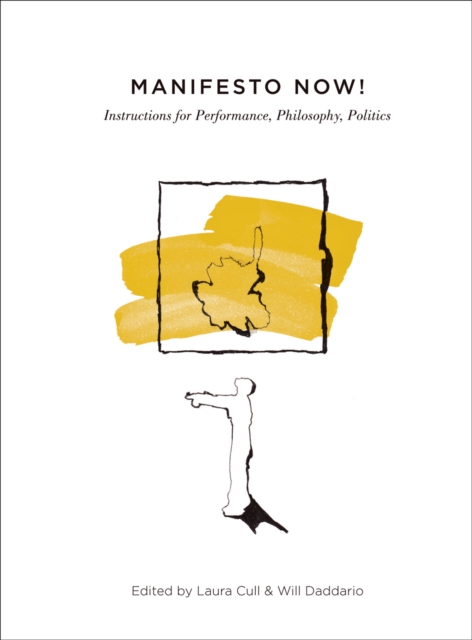
Manifesto now! instructions for performance, philosophy, politics
Manifesto Now! maps the current rebirth of the manifesto as it appears at the crossroads of philosophy, performance and politics. While the manifesto has been central to histories of modernity and modernism, the editors contend that its contemporary resurgence demands a renewed interrogation of its form, its content and its uses. Featuring contributions from trailblazing artists, scholars and activists currently working in the United States, the United Kingdom and Finland, this volume will be indispensable to scholars across the disciplines. Filled with examples of manifestos and critical thinking about manifestos, it contains a wide variety of critical methodologies that students can analyse, deconstruct and emulate.
eBook

Manifesto now! : instructions for performance, philosophy, politics
Manifesto now! maps the current rebirth of the manifesto as it appears at the crossroads of philosophy, performance, and politics. While the manifesto has been central to histories of modernity and Modernism, the editors contend that its contemporary resurgence demands a renewed interrogation of its form, its content, and the uses. Featuring contributions from trailblazing artists, scholars, and activists currently working in the United States, the United Kingdom, Finland, and Norway, this volume will be indispensable to scholars across the disciplines. Filled with examples of manifestos and critical thinking about manifestos, it contains a wide variety of critical methodologies that students can analyze, deconstruct, and emulate.
Book
Performance Philosophy: an introduction
This article introduces performance philosophy, despite the risk of performative contradiction such an act involves. First, it considers performance philosophy as a field that questions how performance thinks and thought is performed (including, specifically as philosophy). Drawing from Laruelle’s non-philosophy, it then addresses performance philosophy as method, framing it as an alternative, performative paradigm to the philosophy of the arts approach that has historically dominated approaches to aesthetics. It concludes by affirming the call to the field to address the ethico-political dimensions of knowledgeproduction in not only disciplinary, but also geopolitical terms.
Journal Article

Performativity in art, literature, and videogames
\"This book modifies the concept of performativity with media theory in order to build a rigorous method for analyzing videogame performances. Beginning with an interdisciplinary exploration of performative motifs in Western art and literary history, the book shows the importance of framing devices in orienting audiences' experience of art. The frame, as a site of paradox, links the book's discussion of theory with close readings of texts, which include artworks, books, and videogames. The resulting method is interdisciplinary in scope and will be of use to researchers interested in the performative aspects of gaming, art, digital storytelling and nonlinear narrative.\"-- Page 4 of cover.
Book
The Performative Nature of Dramatic Imagination
Creative imagination is a central concept in critical philosophy which establishes the framing faculty of the subject in the middle of the cognitive process. Linking the internal and the external, imagination is also key for dramatic acting methodologies. This mediation has been alternatively interpreted in Western tradition under a reversible perspective, giving priority to either the process that goes from the outside inwards (aesthesis) or just the opposite (poiesis). Going beyond dialectics, this article will connect philosophy with dramatic theory. My proposal explores the virtual drama of identity to emphasise how the transcendental and empirical get linked theatrically.
Journal Article

‘The very cunning of the scene’: notes towards a common dispositive for theatre and philosophy
The article suggests that eavesdropping scenes contain the key to a fundamental dispositive of the theatre, that reinforces the intricate metatheatrical dimensions of any performance and amplifies its philosophical aspects. In order to make this claim clear, the article discusses the idea of a dispositive, a concept broadly taken from Foucault (1980; 1986) and applies its self-reflexive dimensions to a number of examples from different plays, in order to demonstrate as those work both as scores for performances as well as texts with a philosophical character.
Journal Article