
Catalogue Search | MBRL


Are you sure you want to remove the book from the shelf?

{{itemTitle}}
4,828
result(s) for
"personal documentary"
Sort by:

American ethnographic film and personal documentary
American Ethnographic Film and Personal Documentary is a critical history of American filmmakers crucial to the development of ethnographic film and personal documentary. The Boston and Cambridge area is notable for nurturing these approaches to documentary film via institutions such as the MIT Film Section and the Film Study Center, the Carpenter Center and the Visual and Environmental Studies Department at Harvard. Scott MacDonald uses pragmatism’s focus on empirical experience as a basis for measuring the groundbreaking achievements of such influential filmmakers as John Marshall, Robert Gardner, Timothy Asch, Ed Pincus, Miriam Weinstein, Alfred Guzzetti, Ross McElwee, Robb Moss, Nina Davenport, Steve Ascher and Jeanne Jordan, Michel Negroponte, John Gianvito, Alexander Olch, Amie Siegel, Ilisa Barbash, and Lucien Castaing-Taylor. By exploring the cinematic, personal, and professional relationships between these accomplished filmmakers, MacDonald shows how a pioneering, engaged, and uniquely cosmopolitan approach to documentary developed over the past half century.
eBook

Mining the home movie
The first international anthology to explore the historical significance of amateur film, Mining the Home Movie makes visible, through image and analysis, the hidden yet ubiquitous world of home moviemaking. These essays boldly combine primary research, archival collections, critical analyses, filmmakers' own stories, and new theoretical approaches regarding the meaning and value of amateur and archival films. Editors Karen L. Ishizuka and Patricia R. Zimmermann have fashioned a groundbreaking volume that identifies home movies as vital methods of visually preserving history. The essays cover an enormous range of subject matter, defining an important genre of film studies and establishing the home movie as an invaluable tool for extracting historical and social insights.
eBook
Personal Documentation: Between “The Self” and “Myself”
Documentary practices are clearly linked to both organizational and individual practices. Historically, individual practices of library building, private study and compilation work in the form of records have gradually been transformed into collective and institutional forms. Individual hyperdocumentation is constantly inscribed in forms of collective hyperdocumentation, and not only for the \"influencers\" whose visibility allows them to reach a very large audience, but also for the simple user whose publications are part of a complex informational ecosystem that will encourage him/her to produce content as much as to consume it in a targeted manner. Personal documentary practices can also rely on possibilities heretofore reserved for companies and professionals. The ideal is thus the documentary transposition of the conscious and even the unconscious. Omnipresent in all its aspects, it is also prized by Otto Neurath who is personally interested in the documentation of himself, undertaking a graphic self‐documentation, a visual autobiography.
Book Chapter

“I Am One of Them” and “They Are My Actors”: Performing, Witnessing, and DV Image-Making in Plebian China
This chapter examines “personal” documentaries made
with the benefit of DV technology and the redefinition of documentary
ethics that proceeds from them by configuring new relationships between
the documentary maker and the subjects. It addresses two apparently
contradictory statements by personal documentarians—an
identificatory “I am one of them” and a theatrical
“they are my actors”—to analyze the
relations between experiencing, witnessing, and performance.
Book Chapter

Michael Moore's Provocations
This chapter contains sections titled:
Michael Moore, Emile de Antonio, and the Politics of Documentary Film
Roger and Me and the Documentary of Personal Witnessing
Bowling For Columbine and Exploratory Documentary Montage
Fahrenheit 9/11 and Partisan Interventionist Cinema
Sicko and the Michael Moore Genre
Book Chapter
Matter of mind : my Parkinson's
In a story that offers a new take on what it means to live with degenerative illness, three people grapple with a diagnosis of Parkinson's disease. An optician pursues brain surgery; a mother raising a preteen daughter becomes a boxing coach; and a cartoonist struggles to draw as his motor control declines. Each pursues their life's passions through equal measures of determination and adaptation.
Streaming Video
Some kind of heaven
Behind the gates of a palm three-lined fantasyland, four residents of America’s largest retirement community, The Villages, FL, strive to find solace and meaning.
Streaming Video
Palliative
In Palliative, Dr. Nadia Tremonti guides families through the heartbreak of pediatric terminal illness, transforming end-of-life care into a compassionate journey that asks: how can we make death more human?
Streaming Video
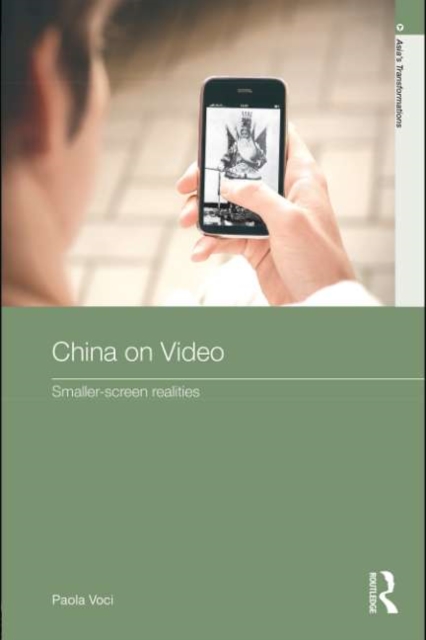
China on Video
China On Video is the first in-depth study that examines smaller-screen realities and the important role they play not only in the fast-changing Chinese mediascape, but also more broadly in the practice of experimental and non-mainstream cinema. At the crossroads of several disciplines—film, media, new media, media anthropology, visual arts, contemporary China area studies, and cultural studies--this book reveals the existence of a creative, humorous, but also socially and politically critical \"China on video\", which locates itself outside of the intellectual discourse surrounding both auteur cinema and digital art.
By describing smaller-screen movies, moviemaking and viewing as light realities, Voci points to their \"insignificant\" weight in terms of production costs, distribution size, profit gains, intellectual or artistic ambitions, but also their deep meaning in defining an alternative way of seeing and understanding the world. The author proposes that lightness is a concept that can usefully be deployed to describe the moving image, beyond the specificity of recent new media developments and which can, in fact, help us rethink previous cinematic practices in broad terms both spatially and temporally.
Paola Voci is a senior lecturer at the University of Otago. Her area of research combines Chinese and film studies. She has published on Chinese cinema, documentary and other non-fiction film/videomaking in contemporary China and the media of the Chinese diaspora.
\"China on Video is one of the most exciting books I have read in a long time. It redefines Chinese cinema. Paola Voci introduces and analyses the little-known, sometimes edgy, often funny, and always alternative world of Chinese satirical clips, online videos, independent documentaries, mobile phone films, and animations. The burgeoning world she depicts is more diverse, more vibrant, and less easily controlled than the old focus on Chinese feature films has led us to believe.\" Chris Berry, Goldsmith, University of London, UK
\"Ground-breaking! Voci's rigorous treatment of small-screen-based media practices in relation to legitimate and popular culture in contemporary China is highly innovative. The book recasts the terms of debate on new media, globalization, and visual citizenship.\" Zhen Zhang, Tisch School of Arts, NYU, USA
1. Smaller-Screen Realities 2. Building Bridges: From Silver Screens to Smaller-Screen Realities 3. Animations 4. Portable Movies: Cellflix 5. Egao Movies: Wicked Fun, Participatory Culture and Enlightenment 6. Light Political Documentaries 7. Lightened (Up) Subaltern Smaller-Screens 8. Smaller-Screens: Film Spaces and Theories 9. An Afterword on Lightness : Quasi-Conclusion
eBook
In the company of Rose
Tony-winning playwright and director James Lapine (Into the Woods, Sunday in the Park with George) befriends Rose Styron, the widow of the great American novelist William Styron (Sophie's Choice). Rose shares the fascinating story of her complex life as a poet, journalist, human rights activist, life partner to William, and friend of the Kennedys, Philip Roth, Carly Simon, the Clintons, James Baldwin, Leonard Bernstein, Meryl Streep, Gabriel Garcia Marquez and many other luminaries of her time.
Streaming Video