
Catalogue Search | MBRL


Are you sure you want to remove the book from the shelf?

{{itemTitle}}
376
result(s) for
"physiological and biochemical mechanisms"
Sort by:

Salinity Stress in Wheat (Triticum aestivum L.) in the Changing Climate: Adaptation and Management Strategies
Wheat constitutes pivotal position for ensuring food and nutritional security; however, rapidly rising soil and water salinity pose a serious threat to its production globally. Salinity stress negatively affects the growth and development of wheat leading to diminished grain yield and quality. Wheat plants utilize a range of physiological biochemical and molecular mechanisms to adapt under salinity stress at the cell, tissue as well as whole plant levels to optimize the growth, and yield by off-setting the adverse effects of saline environment. Recently, various adaptation and management strategies have been developed to reduce the deleterious effects of salinity stress to maximize the production and nutritional quality of wheat. This review emphasizes and synthesizes the deleterious effects of salinity stress on wheat yield and quality along with highlighting the adaptation and mitigation strategies for sustainable wheat production to ensure food security of skyrocketing population under changing climate.
Journal Article

Synergistic Reduction of Arsenic Uptake and Alleviation of Leaf Arsenic Toxicity in Maize (Zea mays L.) by Arbuscular Mycorrhizal Fungi (AMF) and Exogenous Iron through Antioxidant Activity
Arbuscular mycorrhizal fungi (AMF) play key roles in enhancing plant tolerance to heavy metals, and iron (Fe) compounds can reduce the bioavailability of arsenic (As) in soil, thereby alleviating As toxicity. However, there have been limited studies of the synergistic antioxidant mechanisms of AMF (Funneliformis mosseae) and Fe compounds in the alleviation of As toxicity on leaves of maize (Zea mays L.) with low and moderate As contamination. In this study, a pot experiment was conducted with different concentrations of As (0, 25, 50 mgꞏkg−1) and Fe (0, 50 mgꞏkg−1) and AMF treatments. Results showed that under low and moderate As concentrations (As25 and As50), the co-inoculation of AMF and Fe compound significantly increased the biomass of maize stems and roots, phosphorus (P) concentration, and P-to-As uptake ratio. Moreover, the co-inoculation of AMF and Fe compound addition significantly reduced the As concentration in stem and root, malondialdehyde (MDA) content in leaf, and soluble protein and non-protein thiol (NPT) contents in leaf of maize under As25 and As50 treatments. In addition, co-inoculation with AMF and Fe compound addition significantly increased the activities of catalase (CAT), peroxidase (POD), and superoxide dismutase (SOD) in the leaves of maize under As25 treatment. Correlation analysis showed that stem biomass and leaf MDA content were very significantly negatively correlated with stem As content, respectively. In conclusion, the results indicated that the co-inoculation of AMF and Fe compound addition can inhibit As uptake and promote P uptake by maize under low and moderate As contamination, thereby mitigating the lipid peroxidation on maize leaves and reducing As toxicity by enhancing the activities of antioxidant enzymes under low As contamination. These findings provide a theoretical basis for the application of AMF and Fe compounds in the restoration of cropland soil contaminated with low and moderate As.
Journal Article

Exogenous Proline Alleviated Low Temperature Stress in Maize Embryos by Optimizing Seed Germination, Inner Proline Metabolism, Respiratory Metabolism and a Hormone Regulation Mechanism
Proline (Pro) is not only an important osmotic adjustment substance, but it also plays an important role in regulating plant abiotic stress resistance. The maize varieties, Xinxin 2 (low temperature insensitive) and Damin 3307 (low temperature sensitive), were chosen as materials, setting a normal temperature for germination (22 °C/10 °C, 9d), low temperature germination (4 °C/4 °C, 5d) and normal temperature recovery (22 °C/10 °C, 4d), combined with a proline (15 mmol·L−1) soaking treatment, to reveal the seed germination and regulation mechanism in maize embryos. The results showed that proline significantly improved the germination potential, germination rate, germination index and vigor index of seeds under low temperature stress, increasing the length of the coleoptile and radicle, increasing the dry and fresh weight of young buds (coleoptile + radicle), and increasing the activity of α-amylase. Proline enhanced the activities of Δ1-pyrroline-5-carboxylic acid synthetase (P5CS) and ornithine aminotransferase (OAT) in maize embryos under low temperature stress, enhanced the proline synthesis pathways, and further enhanced proline accumulation. Proline induced the activity of proline dehydrogenase (ProDH) in the early stage of low temperature stress and stress relief. Under low temperature stress, the activities of hexokinase (HXK), phosphofructokinase (PFK), pyruvate kinase (PK), isocitrate dehydrogenase (IDH), succinate dehydrogenase (SDH), malate dehydrogenase (MDH) and glucose-6-phosphate dehydrogenase (G-6-PDH) and glucose-6-phosphate dehydrogenase (G-6-PDH and 6-P-GDH) in maize embryos were decreased, resulting in a decrease in the glycolysis (EMP) pathway, tricarboxylic acid (TCA) cycle and pentose phosphate pathway (PPP). Proline alleviated the inhibition of key enzyme activities of the EMP pathway, TCA cycle and PPP of maize embryos under low temperature stress, increased the activities of cytochrome oxidase (COX) and alternative oxidase (AOX), increased the ATP content, alleviated the inhibition of low temperature stress on main cytochrome pathway activity (ρVcyt), while further increasing the total respiratory activity (Vt) and the actual operational activity of the alternative pathway (ρValt) during seed germination at the initial stage of low temperature stress, as well as improving the inhibition of the Vt and ρValt in the middle and late stages of low temperature stress. Under low temperature stress, the content of abscisic acid (ABA) increased significantly, while gibberellin (GA), auxin (IAA) and zeatin nucleoside (ZR) decreased significantly. Proline alleviated the decrease in IAA, ZR and GA contents in maize embryos under low temperature stress, reduced the increase in the ABA content, and reduced the inhibition of low temperature on seed germination.
Journal Article

Soil NH4 +/NO3 − nitrogen characteristics in primary forests and the adaptability of some coniferous species
In terrestrial ecosystems, soil nutrient regimes at a plant's living site generally represent the plant's \"nutrition habitat\". Plant species frequently well adapt to their original \"nutrition habitat\" during a long process of evolution, and the apparent preference for ammonium or nitrate nitrogen source (NH^sub 4^ ^sup +^ or NO^sub 3^ ^sup -^) might be an important aspect of the adaptation. Plants typically favor the nitrogen form most abundant in their natural habitats. Nitrate has been recognized as the dominant mineral nitrogen form in most agricultural soils and the main nitrogen source for crops, but it is not usually the case in forest ecosystems. A large number of studies show that the \"nutrition habitats\" associated with primary forest soils are typically dominated by NH^sub 4^ ^sup +^ rather than NO^sub 3^ ^sup -^, generally with NO^sub 3^ ^sup -^ content much lower than NH^sub 4^ ^sup +^. Low levels of NO^sub 3^ ^sup -^ in these forest soils generally correspond to low net rates of nitrification. The probable reasons for this phenomenon include: 1) nitrification limitations and/or inhibitions caused by lower pH, lower NH^sub 4^ ^sup +^ availability (autotrophic nitrifiers cannot successfully compete for NH^sub 4^ ^sup +^ with heterotrophic organisms and plants), or allelopathic inhibitors (tannins or higher-molecular-weight proanthocyanidins) in the soil; or 2) substantial microbial acquisition of nitrate in the soils, which makes net nitrification rates substantially less than gross nitrification rates even though the latter are relatively high. Many coniferous species (especially such late successional tree species as Tsuga heterophylla, Pinus banksiana, Picea glauca, Pseudotsuga meziesii, Picea abies, etc.) fully adapt to their original NH^sub 4^ ^sup +^-dominated \"nutrition habitats\" so that their capacities of absorbing and using non-reduced forms of nitrogen (e.g., NO^sub 3^ ^sup -^) substantially decrease. These conifers typically show distinct preference to NH^sub 4^ ^sup +^ and reduced growth due to nitrogen-metabolism disorder when NO^sub 3^ ^sup -^ is the main nitrogen source. The physiological and biochemical mechanisms that account for the adaptation to NH^sub 4^ ^sup +^-dominated systems (or limited ability to use NO^sub 3^ ^sup -^) for the coniferous species include: i) distribution and activity of enzymes for catalyzing nitrogen reduction and assimilation, generally characterized by lower nitrate reductase (NR); ii) greater tolerance to NH^sub 4^ ^sup +^ or rapid detoxification of ammonium nitrogen in the roots; iii) lower capacity of absorption to NO^sub 3^ ^sup -^ by roots that might be controlled by feedback regulations of certain N-transport compounds, such as glutamine; iv) relations and balance between nitrogen and other elements (such as Ca^sup 2+^, Mg^sup 2+^, and Zn^sup 2+^ etc.). Some NH^sub 4^ ^sup +^-preferred conifers might be more adapted (tolerant) to lower base cation conditions; v) NO^sub 3^ ^sup -^ nutrition, rather than NH^sub 4^ ^sup +^, that may lead to the loss of considerable quantities of organic and inorganic carbon to the surrounding media and mycorrhizal symbiont and probably contribute to slower growth; and vi) the metabolic cost of reducing NO^sub 3^ ^sup -^ to NH^sub 4^ ^sup +^ that may make shade-tolerant conifers favor the uptake of reduced nitrogen (NH^sub 4^ ^sup +^). The adaptation of late successional conifers to NH^sub 4^ ^sup +^-dominated habitats has profound ecological implications. First, it might be an important prerequisite for the climax forest communities dominated by these conifers to maintain long-term stability. Second, primary coniferous or coniferous-broadleaved forests have been widely perturbed because of commercial exploitation, where the soil ammonium nitrogen pool tends to be largely transformed to nitrate after disturbance. In such a situation, the coniferous species that were dominant in undisturbed ecosystems may become poor competitors for nitrogen, and the site will be occupied by early successional (pioneer) plants better adapted to nitrate utilization. In other words, the implicit adaptation of many conifers dominant in undisturbed communities to ammonium nitrogen will cause difficulties in their regeneration on disturbed sites, which must be taken into account in the practical restoration of degraded temperate forest ecosystems.[PUBLICATION ABSTRACT]
Journal Article
Pharmacology of Chiral Drugs
This chapter contains sections titled:
Introduction
Basic principles of pharmacodynamics
Effect of chiral property on drugs
Summary
References
Book Chapter

Calcium transport across plant membranes
Calcium is an essential structural, metabolic and signalling element. The physiological functions of Ca2+ are enabled by its orchestrated transport across cell membranes, mediated by Ca2+-permeable ion channels,Ca2+-ATPases andCa2+/H+ exchangers. Bioinformatics analysis has not determined any Ca2+-selective filters in plant ion channels, but electrophysiological tests do reveal Ca2+ conductances in plant membranes. The biophysical characteristics of plant Ca2+ conductances have been studied in detail and were recently complemented by molecular genetic approaches. Plant Ca2+ conductances are mediated by several families of ion channels, including cyclic nucleotide-gated channels (CNGCs), ionotropic glutamate receptors, two-pore channel 1 (TPC1), annexins and several types of mechanosensitive channels. Key Ca2+-mediated reactions (e.g. sensing of temperature, gravity, touch and hormones, and cell elongation and guard cell closure) have now been associated with the activities of specific subunits from these families. Structural studies have demonstrated a unique selectivity filter in TPC1, which is passable for hydrated divalent cations. The hypothesis of a ROS-Ca2+ hub is discussed, linking Ca2+ transport to ROS generation. CNGC inactivation by cytosolic Ca2+, leading to the termination of Ca2+ signals, is now mechanistically explained. The structure–function relationships of Ca2+-ATPases and Ca2+/H+ exchangers, and their regulation and physiological roles are analysed.
Journal Article
Speedy stomata, photosynthesis and plant water use efficiency
Stomatal movements control CO2 uptake for photosynthesis and water loss through transpiration, and therefore play a key role in plant productivity and water use efficiency. The predicted doubling of global water usage by 2030 mean that stomatal behaviour is central to current efforts to increase photosynthesis and crop yields, particularly under conditions of reduced water availability. In the field, slow stomatal responses to dynamic environmental conditions add a temporal dimension to gaseous fluxes between the leaf and atmosphere. Here, we review recent work on the rapidity of stomatal responses and present some of the possible anatomical and biochemical mechanisms that influence the rapidity of stomatal movements.
Journal Article

A framework for understanding the functions of biomolecular condensates across scales
Biomolecular condensates are found throughout eukaryotic cells, including in the nucleus, in the cytoplasm and on membranes. They are also implicated in a wide range of cellular functions, organizing molecules that act in processes ranging from RNA metabolism to signalling to gene regulation. Early work in the field focused on identifying condensates and understanding how their physical properties and regulation arise from molecular constituents. Recent years have brought a focus on understanding condensate functions. Studies have revealed functions that span different length scales: from molecular (modulating the rates of chemical reactions) to mesoscale (organizing large structures within cells) to cellular (facilitating localization of cellular materials and homeostatic responses). In this Roadmap, we discuss representative examples of biochemical and cellular functions of biomolecular condensates from the recent literature and organize these functions into a series of non-exclusive classes across the different length scales. We conclude with a discussion of areas of current interest and challenges in the field, and thoughts about how progress may be made to further our understanding of the widespread roles of condensates in cell biology.Biomolecular condensates are membraneless molecular assemblies formed via liquid–liquid phase separation. They have a plethora of roles, ranging from controlling biochemical reactions to regulating cell organization and cell function. This article provides a framework for the study of condensate functions across these cellular length scales, offering to bring new understanding of biological processes.
Journal Article

Research progress on the physiological response and molecular mechanism of cold response in plants
Low temperature is a critical environmental stress factor that restricts crop growth and geographical distribution, significantly impacting crop quality and yield. When plants are exposed to low temperatures, a series of changes occur in their external morphology and internal physiological and biochemical metabolism. This article comprehensively reviews the alterations and regulatory mechanisms of physiological and biochemical indices, such as membrane system stability, redox system, fatty acid content, photosynthesis, and osmoregulatory substances, in response to low-temperature stress in plants. Furthermore, we summarize recent research on signal transduction and regulatory pathways, phytohormones, epigenetic modifications, and other molecular mechanisms mediating the response to low temperatures in higher plants. In addition, we outline cultivation practices to improve plant cold resistance and highlight the cold-related genes used in molecular breeding. Last, we discuss future research directions, potential application prospects of plant cold resistance breeding, and recent significant breakthroughs in the research and application of cold resistance mechanisms.
Journal Article
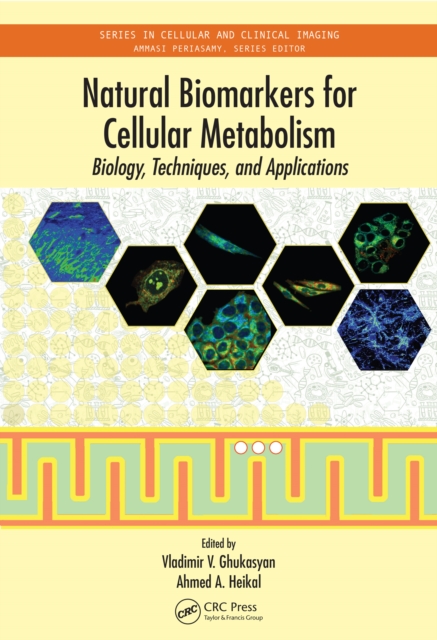
Natural Biomarkers for Cellular Metabolism
This guide covers the current state of knowledge on intrinsic fluorescent biomarkers and highlights advances in using these biomarkers for the metabolic mapping and clinical diagnosis of healthy and diseased cells and tissues. The book's first section introduces the fundamentals of cellular energy metabolic pathways as well as natural biomarkers within the context of their biological functions. The second section outlines the theoretical and technical background of quantitative, noninvasive, autofluorescence microscopy and spectroscopy methods. The last two sections explore applications in biochemistry, cell biology, and medicine.
eBook