
Catalogue Search | MBRL


Are you sure you want to remove the book from the shelf?

{{itemTitle}}
68
result(s) for
"picket lines"
Sort by:
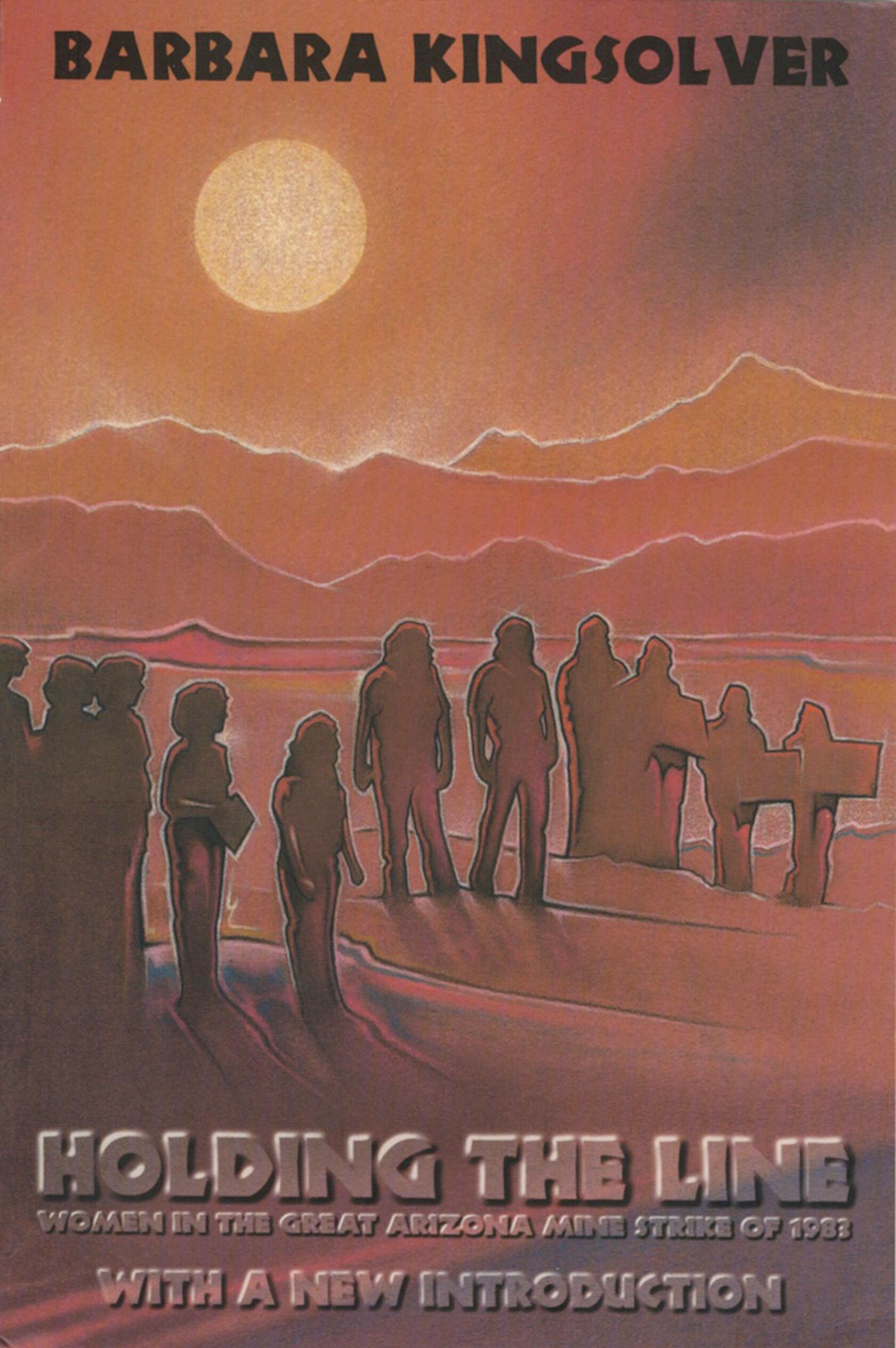
Holding the Line
Holding the Line, Barbara Kingsolver's first non-fiction book, is the story of women's lives transformed by an a signal event. Set in the small mining towns of Arizona, it is part oral history and part social criticism, exploring the process of empowerment which occurs when people work together as a community. Like Kingsolver's award-winning novels,Holding the Lineis a beautifully written book grounded on the strength of its characters.
Hundreds of families held the line in the 1983 strike against Phelps Dodge Copper in Arizona. After more than a year the strikers lost their union certification, but the battle permanently altered the social order in these small, predominantly Hispanic mining towns. At the time the strike began, many women said they couldn't leave the house without their husband's permission. Yet, when injunctions barred union men from picketing, their wives and daughters turned out for the daily picket lines. When the strike dragged on and men left to seek jobs elsewhere, women continued to picket, organize support, and defend their rights even when the towns were occupied by the National Guard. \"Nothing can ever be the same as it was before,\" said Diane McCormick of the Morenci Miners Women's Auxiliary. \"Look at us. At the beginning of this strike, we were just a bunch of ladies.\"
eBook

La violence ouvrière au tribunal – Étude des injonctions contre les piquets de grève au Québec (2002–2023)
À partir d’une analyse des jugements sur requête en émission d’une ordonnance d’injonction contre les piquets de grève rendus par la Cour supérieure du Québec entre 2002 et 2023, cet article montre qu’il a été extrêmement rare que des juges constatent des actes de violence graves, comme des coups, des blessures, des actes de vandalisme dangereux. En revanche, un regard menaçant, l’apparence ou le risque d’une quelconque nuisance peuvent toujours être qualifiés par la Cour comme de l’intimidation, une menace, de la violence, un acte fautif, un préjudice irréparable et peuvent justifier de limiter le droit de piqueter à sa plus simple expression. Nous défendons alors l’hypothèse que ces ordonnances accordées de manière quasi mécanique sont totalement disproportionnées, qu’elles sanctionnent les travailleurs et les travailleuses de manière indiscriminée et de manière préventive, au point de porter atteinte à l’essence même du droit de piqueter, et ce, en violation des droits à la liberté d’expression et de réunion pacifique des travailleurs et des travailleuses reconnus par la Cour suprême.
Journal Article
Simone Weil: Education, Spirituality and Political Commitment
The French thinker Simone Weil has seldom been considered part of the critical pedagogy story, yet there is much in her legacy of potential interest to scholars and practitioners in this area. Weil died at the tragically young age of 34, leaving behind a body of mostly unpublished writings that would later influence others in fields as diverse as classical studies, literature, philosophy, sociology, politics, and theology.
Book Chapter
