
Catalogue Search | MBRL


Are you sure you want to remove the book from the shelf?

{{itemTitle}}
4
result(s) for
"picoeconomics"
Sort by:

Cognitive requirements of competing neuro-behavioral decision systems: some implications of temporal horizon for managerial behavior in organizations
Interpretation of managerial activity in terms of neuroscience is typically concerned with extreme behaviors such as corporate fraud or reckless investment (Peterson, 2007; Wargo et al., 2010a). This paper is concerned to map out the neurophysiological and cognitive mechanisms at work across the spectrum of managerial behaviors encountered in more day-to-day contexts. It proposes that the competing neuro-behavioral decisions systems (CNBDS) hypothesis (Bickel et al., 2012b) captures well the range of managerial behaviors that can be characterized as hyper- or hypo-activity in either the limbically-based impulsive system or the frontal-cortically based executive system with the corresponding level of activity encountered in the alternative brain region. This pattern of neurophysiological responding also features in the Somatic Marker Hypothesis (Damasio, 1994) and in Reinforcement Sensitivity Theory (RST; Gray and McNaughton, 2000; McNaughton and Corr, 2004), which usefully extend the thesis, for example in the direction of personality. In discussing these theories, the paper has three purposes: to clarify the role of cognitive explanation in neuro-behavioral decision theory, to propose picoeconomics (Ainslie, 1992) as the cognitive component of competing neuro-behavioral decision systems theory and to suggest solutions to the problems of imbalanced neurophysiological activity in managerial behavior. The first is accomplished through discussion of the role of picoeconomics in neuro-behavioral decision theory; the second, by consideration of adaptive-innovative cognitive styles (Kirton, 2003) in the construction of managerial teams, a theme that can now be investigated by a dedicated research program that incorporates psychometric analysis of personality types and cognitive styles involved in managerial decision-making and the underlying neurophysiological bases of such decision-making.
Journal Article
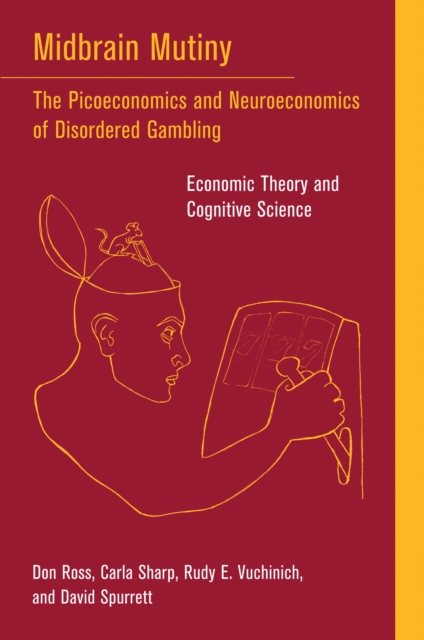
Midbrain mutiny
An analysis of how economic theories can be used to understand disordered and pathological gambling that calls on empirical evidence about behavior and the brain and argues that addictive gambling is the basic form of all addiction.
eBook

Midbrain Mutiny: The Picoeconomics and Neuroeconomics of Disordered Gambling: Economic Theory and Cognitive Science
The explanatory power of economic theory is tested by the phenomenon of irrational consumption, examples of which include such addictive behaviors as disordered and pathological gambling. Midbrain Mutiny examines different economic models of disordered gambling, using the frameworks of neuroeconomics (which analyzes decision making in the brain) and picoeconomics (which analyzes patterns of consumption behavior), and drawing on empirical evidence about behavior and the brain. The book describes addiction in neuroeconomic terms as chronic disruption of the balance between the midbrain dopamine system and the prefrontal and frontal serotonergic system, and reviews recent evidence from trials testing the effectiveness of antiaddiction drugs. The authors argue that the best way to understand disordered and addictive gambling is with a hybrid picoeconomic-neuroeconomic model.
Book

Framing physical activity as a distinct and uniquely valuable behavior independent of weight management: A pilot randomized controlled trial for overweight and obese sedentary persons
Purpose:
Promoting benefits of physical activity independent of weightmanagement may help overweight/obese persons.
Design:
Pilot randomized-controlledtrial.
Subjects
: Twenty-six sedentary, overweight/obese persons receiving health-care at Stanford Medical Center, no contraindications for exercise.
Control/Intervention Groups:
Usual medical care and community weight-management/fitness resources versus same plus a brief intervention derived from behavioral-economic and evolutionary psychological theory highlighting benefits of activity independent of weight-management.
Analysis:
Intent-to-treat. Cohen’s d effect-sizes and 95% confidence intervals (95%CI) for changes in moderate-intensity-equivalent physical activity/week, cardiorespiratory fitness, and depression at 3 months relative to baseline.
Results:
Intervention group participants demonstrated 3.76 hour/week of increased physical activity at study endpoint, controls only 0.7 hours/week (Cohen’s d=0.74, 95% CI -0.06 to +1.5). They also improved cardiorespiratory fitness (Cohen’s d=0.51, 95% CI -0.3 to +1.3) and reduced depression relative to controls (Cohen’s d=0.66, 95% CI -0.1 to +1.4).
Conclusion:
Promoting activity independent of weight-management appears promising for further study.
Journal Article