
Catalogue Search | MBRL


Are you sure you want to remove the book from the shelf?

{{itemTitle}}
307,901
result(s) for
"pipes"
Sort by:

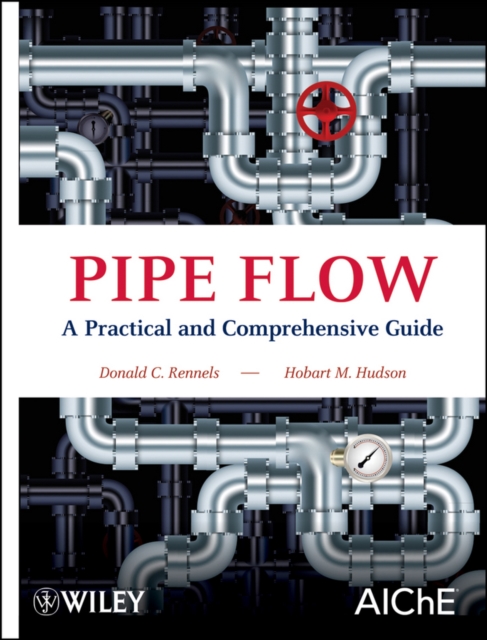
Pipe Flow
Pipe Flow provides the information required to design and analyze the piping systems needed to support a broad range of industrial operations, distribution systems, and power plants. Throughout the book, the authors demonstrate how to accurately predict and manage pressure loss while working with a variety of piping systems and piping components. The book draws together and reviews the growing body of experimental and theoretical research, including important loss coefficient data for a wide selection of piping components. Experimental test data and published formulas are examined, integrated and organized into broadly applicable equations. The results are also presented in straightforward tables and diagrams. Sample problems and their solution are provided throughout the book, demonstrating how core concepts are applied in practice. In addition, references and further reading sections enable the readers to explore all the topics in greater depth. With its clear explanations, Pipe Flow is recommended as a textbook for engineering students and as a reference for professional engineers who need to design, operate, and troubleshoot piping systems. The book employs the English gravitational system as well as the International System (or SI).
eBook


Factors influencing corrosion of metal pipes in soils
Deterioration of buried metal pipes due to corrosive soil environment is a major issue worlwide. Although failures of buried pipe due to corrosive soil is an old problem, yet such failures are still uncontrollable even with the application of advanced corrosion protection technologies. Therefore, understanding factors causing corrosion of buried pipes is necessary. This article reviews factors causing corrosion of buried pipes in soils. Factors include moisture content, soil resistivity, pH, dissolved oxygen, temperature and microbial activity. Moreover, we discuss the influence of manufacturing method and the comparison of corrosion behaviour of cast iron, ductile and mild steel pipes. We found that corrosion rate of pipes increases with moisture contents up to the critical moisture value. Although pH affects corrosion, there is no relationship between corrosion and pH and the corrosion rates of buried pipes are inversely proportional to soil resistivity. Soils containing more organic matter show high resistivity. Dissolved oxygen in soil develops differential cell which accelerates corrosion of metallic pipe. Different types of bacteria present in soil develop biofilms on metallic pipes, which deteriorates pipes with time.
Journal Article

Limit state equation and failure pressure prediction model of pipeline with complex loading
Assessing failure pressure is critical in determining pipeline integrity. Current research primarily concerns the buckling performance of pressurized pipelines subjected to a bending load or axial compression force, with some also looking at the failure pressure of corroded pipelines. However, there is currently a lack of limit state models for pressurized pipelines with bending moments and axial forces. In this study, based on the unified yield criterion, we propose a limit state equation for steel pipes under various loads. The most common operating loads on buried pipelines are bending moment, internal pressure, and axial force. The proposed limit state equation for intact pipelines is based on a three-dimensional pipeline stress model with complex load coupling. Using failure data, we investigate the applicability of various yield criteria in assessing the failure pressure of pipelines with complex loads. We show that the evaluation model can be effectively used as a theoretical solution for assessing the failure pressure in such circumstances and for selecting appropriate yield criteria based on load condition differences.
Assessing failure pressure is critical in determining pipeline integrity. In this study, based on the unified yield criterion, authors propose a limit state equation for steel pipes under various loads which can be converted into a series of failure pressure evaluation models for pipeline with different yield criteria.
Journal Article

IDig-up Primers/I: A Pipeline for Identification of Polymorphic Microsatellites Loci within Assemblies of Related Species
Simple sequence repeats (SSRs) have become one of the most popular molecular markers and are used in numerous fields, including conservation genetics, population genetic studies, and genetic mapping. Advances in next-generation sequencing technology and the growing amount of genomic data are driving the development of bioinformatics tools for SSR marker design. These tools work with different combinations of input data, which can be raw reads or assemblies, and with one or more input datasets. We present here a new strategy and implementation of a simple standalone pipeline that utilizes more than one assembly for the in silico design of PCR primers for microsatellite loci in more than one species. Primers are tested in silico to determine if they are polymorphic, eliminating the need to test time-consuming cross-species amplification in the laboratory. The end result is a set of markers that are in silico polymorphic in all analyzed species and have great potential for the identification of interspecies hybrids. The efficiency of the tool is demonstrated using two examples at different taxonomic levels and with different numbers of input assemblies to generate promising, high-quality SSR markers.
Journal Article

Joint Behavior of Full-Scale Precast Concrete Pipe Infrastructure: Experimental and Numerical Analysis
This study undertakes a comprehensive experimental and numerical analysis of the structural integrity of buried RC sewerage pipes, focusing on the performance of two distinct jointing materials: cement mortar and non-shrinkage grout. Through joint shear tests on full-scale sewer pipes under single point loading conditions, notable effects on the crown and invert of the joint were observed, highlighting the critical vulnerability of these structures to internal and external pressures. Two materials—cement–sand mortar and non-shrinkage grout—were used in RC pipe joints to experimentally evaluate the joint strength of the sewerage pipes. Among the materials tested, cement–sand mortar emerged as the superior choice, demonstrating the ability to sustain higher loads up to 25.60 kN, proving its cost-effectiveness and versatility for use in various locations within RC pipe joints. Conversely, non-shrinkage grout exhibited the lowest ultimate failure load, i.e., 21.50 kN, emphasizing the importance of material selection in enhancing the resilience and durability of urban infrastructure. A 3D finite element (FE) analysis was also employed to assess the effect of various factors on stress distribution and joint deformation. The findings revealed a 10% divergence between the experimental and numerical data regarding the ultimate load capacity of pipe joints, with experimental tests indicating a 25.60 kN ultimate load and numerical simulations showing a 23.27 kN ultimate load. Despite this discrepancy, the close concordance between the two sets of data underscores the utility of numerical simulations in predicting the behavior of pipe joints accurately. This study provides valuable insights into the selection and application of jointing materials in sewerage systems, aiming to improve the structural integrity and longevity of such critical infrastructure.
Journal Article

Experimental Study on Performance Enhancement of a Photovoltaic Module Incorporated with CPU Heat Pipe—A 5E Analysis
As is already known, solar photovoltaic (PV) technology is a widely accepted technology for power generation worldwide. However, it is scientifically proven that its power output decreases with an increase in the temperature of the PV module. Such an important issue is controlled by adopting a number of cooling mechanisms for the PV module. The present experimental study assesses the effect of a fanless CPU heat pipe on the performance of a PV module. The experiment was conducted in June in real weather conditions in Yekaterinburg, Russian Federation. The comparative analysis of two PV panels (i.e., cooled, and uncooled) based on the electrical energy, exergy performance, economic, embodied energy and energy payback (5E) for the two systems is presented and discussed. The key results from the study are that the average temperature reduction from the cooling process is 6.72 °C. The average power for the cooled panel is 11.39 W against 9.73 W for the uncooled PV panel; this represents an increase of 1.66 W for the cooled module. Moreover, the average improvements in the electrical efficiency, and embodied energy recorded for a cooled PV panel 2.98%, and 438.52 kWh, respectively. Furthermore, the calculations of the levelized cost of energy (LCE) for the cooled PV panel indicate that it can range from 0.277–0.964 USD/kWh, while that for the uncooled PV panel also ranges from 0.205–0.698 USD/kWh based on the number of days of operation of the plant.
Journal Article

Structural performance of buried reinforced concrete pipelines under deep embankment soil
Purpose
Buried pipelines under various soil embankment heights are cost-effective alternatives to transporting liquid products. This paper aims to assist pipeline architects and professionals in selecting the most cost-effective buried reinforced concrete pipelines under deep embankment soil with minor structural reinforcement while meeting shear stress requirements, safety and reliability constraints.
Design/methodology/approach
It is unfeasible to experimentally assess pipeline efficiency with high soil fill depth. Thus, to fill this gap, this research uses a dependable finite element analysis (FEA) to conduct a parametric study and carry out such an issue. This research considered reinforced concrete pipes with diameters of 25, 50, 75, 100, 125 and 150 cm at depths of 5, 10, 15 and 20 m.
Findings
According to this research, the proposed best pipeline diameter-to-thickness (D/T) proportions for soil embankment heights 5, 10, 15 and 20 m are 8.75, 4.8, 3.5 and 3.1, correspondingly. The cost-effective reinforced concrete (RC) pipeline thickness dramatically rises if the soil embankment reaches 20 m, indicating that the soil embankment depth highly influences it. Most of the analyzed reinforced concrete pipelines had a maximum deflection value of less than 1 cm, telling that the FEA accurately identified the pipeline width, needed flexural steel reinforcement, and concrete crack width while avoiding significant distortion.
Originality/value
The cost-effective thickness for the analyzed structured concrete pipes was calculated by considering the lowest required value of steel reinforcement. An algorithm was developed based on the parametric scientific findings to predict the ideal pipeline D/T ratio. A construction case study was also shown to assist architects and professionals in determining the best reinforced concrete pipeline geometry for a specific soil embankment height.
Journal Article

Analysis of skelp deformation zones for the down trajectory of electrically welded pipes forming
Deformation zones along the down trajectories of skelps forming using the forming mill TESA10-50 (Pipe Electrical Welding Unit) were considered. For pipes with 50×1.5 mm diameter, strained conditions for forming zones were identified for different options of down trajectories length with the as-formed skelp initial position upward gradient within the range of H = 0÷50 mm. It was determined that increase in the down trajectory length contributed to the decrease in longitudinal strain values, however, it could not provide for forming within the allowable values along the entire forming zone of the mill. Reduction in the skelp curvature by 8÷13 % resulted in the longitudinal strains decrease at the skelp edge along the entire forming zone length.
Journal Article