
Catalogue Search | MBRL


Are you sure you want to remove the book from the shelf?

{{itemTitle}}
84,815
result(s) for
"plant morphology"
Sort by:

Plants in disguise : features of creatures in flowers and foliage
When you wander a woodland forest, skip through a sunlit meadow, or ramble down a dusty path, you might see a furry tail, a bristly beard, or a fuzzy toe. Did you catch a glimpse of an animal? Or was it a plant in disguise? These wild plants aren't wearing masks or funny noses, but each one displays a feature of a creature.
Book

Articulation Morphology of Plants and Plant Evo-Devo: An Open Morphology—Empirical, Dynamic, All-Inclusive, and Unifying
In Articulation Morphology, inspired by the theory of anaphytes that was first proposed in 1843, ramification is the key principle in plant morphology in the open growth of plants. It engenders articulation: the formation of articles, called anaphytes. While the theory of anaphytes included tenets that are now considered outdated, Articulation Morphology—proposed here as a modern version of this theory—retains and further develops only those aspects that remain valid and fundamentally important, namely ramification and articulation. In this view, plants are articulated wholes: systems of articles formed through ramification and articulation: the formation of articles. These articles are understood dynamically as process combinations according to process morphology. For practical purposes, they may be described in traditional structural terms such as root, stem, leaf, or leaflet, but without implying a controversial and limited morphological theory such as the classical root–stem–leaf theory of mainstream morphology. Hence, articulation morphology is strictly empirical, solely relying on the observable processes of open growth, ramification and articulation. In contrast to classical mainstream morphology, which often fails to accommodate atypical or deviant structures, articulation morphology is all-inclusive: even the most deviant structures can be understood as deviant patterns of ramification and articulation. Furthermore, articulation morphology is unifying because articles constitute a fundamental morphological unit that applies to all plants from algae to bryophytes and vascular plants, whereas organ-centred classical mainstream morphology lacks such a fundamental unifying unit for all plants. Within this framework, the central concept of articulation morphology is no longer homology but transformation—the transformation of ramification and articulation. Owing to this fundamental shift and to its empirical, dynamic, all-inclusive, and unifying foundation, articulation morphology may be regarded as a new paradigm for plant morphology—an open morphology. From this perspective, plant evo-devo, especially plant morpho evo-devo, becomes the investigation of the development and evolution of ramification and articulation.
Journal Article

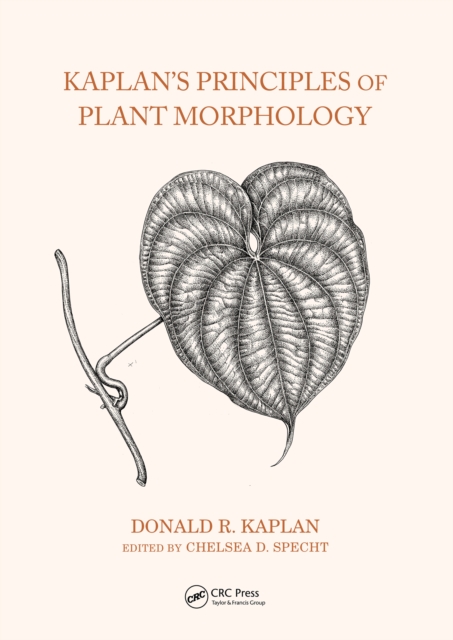
Kaplan's Principles of Plant Morphology
Kaplan's Principles of Plant Morphology defines the field of plant morphology, providing resources, examples, and theoretical constructs that illuminate the foundations of plant morphology and clearly outline the importance of integrating a fundamental understanding of plant morphology into modern research in plant genetics, development and physiology. As research on developmental genetics and plant evolution emerges, an understanding of plant morphology is essential to interpret developmental and morphological data. The principles of plant morphology are being brought into studies of crop development, biodiversity and evolution during climate change, and increasingly such researchers are turning to old texts to uncover information about historic research on plant morphology; there is great need for a modern reference and textbook that highlights past studies and provides the synthesis of data necessary to drive our future research in plant morphological and developmental evolution.
Key Features
Numerous illustrations demonstrating the principles of plant morphology
Historical context for interpretations of more recent genetic data
Firmly rooted in the principles of studying plant form and function
Provides evolutionary framework without relying on evolutionary interpretations for plant form
Only synthetic treatment of plant morphology on the market
This book defines the field of plant morphology, providing resources, examples and theoretical constructs that illuminate the foundations of plant morphology and clearly outline the importance of integrating a fundamental understanding of plant morphology into modern research in plant genetics, development and physiology.
eBook

Do plants know math? : unwinding the story of plant spirals, from Leonardo da Vinci to now
\"Charles Darwin was driven to distraction by plant spirals, growing so exasperated that he once begged a friend to explain the mystery \"if you wish to save me from a miserable death.\" The legendary naturalist was hardly alone in feeling tormented by these patterns. Plant spirals captured the gaze of Leonardo da Vinci and became Alan Turing's final obsession. This book tells the stories of the physicists, mathematicians, and biologists who found themselves magnetically drawn to Fibonacci spirals in plants, seeking an answer to why these beautiful and seductive patterns occur in botanical forms as diverse as pine cones, cabbages, and sunflowers. Do Plants Know Math? takes you down through the centuries to explore how great minds have been captivated and mystified by Fibonacci patterns in nature. It presents a powerful new geometrical solution, little known outside of scientific circles, that sheds light on why regular and irregular spiral patterns occur. Along the way, the book discusses related plant geometries such as fractals and the fascinating way that leaves are folded inside of buds. Your neurons will crackle as you begin to see the connections. The book will inspire you to look at botanical patterns-and the natural world itself-with new eyes. Featuring hundreds of gorgeous color images, Do Plants Know Math? includes a dozen creative hands-on activities and even spiral-plant recipes, encouraging readers to explore and celebrate these beguiling patterns for themselves\"--Publisher's description.
BOOK

Functional profiles reveal unique ecological roles of various biological soil crust organisms
1. At the heart of the body of research on biodiversity effects on ecosystem function is the debate over whether different species tend to be functionally singular or redundant. When we consider ecosystem multi-function, the provision of multiple ecosystem functions simultaneously, we may find that seemingly redundant species may in fact play unique roles in ecosystems. 2. Over the last few decades, the significance of biological soil crusts (BSCs) as ecological boundaries and ecosystem engineers, and their multi-functional nature, has become increasingly well documented. We compiled 'functional profiles' of the organisms in this understudied community, to determine whether functional singularity emerges when multiple ecosystem functions are considered. 3. In two data sets, one representing multiple sites around the semi-arid regions of Spain (regional scale), and another from a single site in central Spain (local scale), we examined correlations between the abundance or frequency of BSC species in a community, and multiple surrogates of ecosystem functioning. There was a wide array of apparent effects of species on specific functions. 4. Notably, in gypsiferous soils and at regional scale, we found that indicators of carbon (C) and phosphorus cycling were apparently suppressed and promoted by the lichens Diploschistes diacapsis and Squamarina lentigera, respectively. The moss Pleurochaete squarrosa appears to promote cycling in calcareous soils at this spatial scale. At the local scale in gypsiferous soils, D. diacapsis positively correlated with carbon cycling, but negatively with nitrogen cycling, whereas numerous lichens exhibited the opposite profile. 5. We found a high degree of functional singularity, i.e. that species were highly individualistic in their effects on multiple functions. Many functional attributes were not easily predictable from existing functional grouping systems based primarily on morphology. 6. Our results suggest that maintaining species-rich BSC communities is crucial to maintain the overall functionality of ecosystems dominated by these organisms, and that dominance and the outcome of competition could be highly influential in the determination of such functionality.
Journal Article

The Closest Living Relatives of Land Plants
The embryophytes (land plants) have long been thought to be related to the green algal group Charophyta, though the nature of this relationship and the origin of the land plants have remained unresolved. A four-gene phylogenetic analysis was conducted to investigate these relationships. This analysis supports the hypothesis that the land plants are placed phylogenetically within the Charophyta, identifies the Charales (stoneworts) as the closest living relatives of plants, and shows the Coleochaetales as sister to this Charales/land plant assemblage. The results also support the unicellular flagellate Mesostigma as the earliest branch of the charophyte lineage. These findings provide insight into the nature of the ancestor of plants, and have broad implications for understanding the transition from aquatic green algae to terrestrial plants.
Journal Article

A review of soil waterlogging impacts, mechanisms, and adaptive strategies
Waterlogging is a major abiotic stress affecting plant growth and productivity. Regardless of rainfall or irrigated environments, plants frequently face waterlogging, which may range from short-term to prolonged durations. Excessive precipitation and soil moisture disrupt crop growth, not because of the water itself but due to oxygen deficiency caused by water saturation. This lack of oxygen triggers a cascade of detrimental effects. Once the soil becomes saturated, oxygen depletion leads to anaerobic respiration in plant roots, weakening their respiratory processes. Waterlogging impacts plant morphology, growth, and metabolism, often increasing ethylene production and impairing vital physiological functions. Plants respond to waterlogging stress by altering their morphological structures, energy metabolism, hormone synthesis, and signal transduction pathways. This paper synthesizes findings from previous studies to systematically analyze the effects of waterlogging on plant yield, hormone regulation, signal transduction, and adaptive responses while exploring the mechanisms underlying plant tolerance to waterlogging. For instance, waterlogging reduces crop yield and disrupts key physiological and biochemical processes, such as hormone synthesis and nutrient absorption, leading to deficiencies of essential nutrients like potassium and calcium. Under waterlogged conditions, plants exhibit morphological changes, including the formation of adventitious roots and the development of aeration tissues to enhance oxygen transport. This review also highlighted effective strategies to improve plant tolerance to waterlogging. Examples include strengthening field management practices, applying exogenous hormones such as 6-benzylaminopurine (6-BA) and γ-aminobutyric acid (GABA), overexpressing specific genes (e.g., ZmEREB180 , HvERF2.11 , and RAP2.6L ), and modifying root architecture. Lastly, we discuss future challenges and propose directions for advancing research in this field.
Journal Article

Plant Morphology Impacts Bedload Sediment Transport
Bedload sediment transport plays an important role in the evolution of rivers, marshes and deltas. In these aquatic environments, vegetation is widespread, and plant species have unique morphology. However, the impact of real plant morphology on flow and sediment transport has not been quantified. This study used model plants with real plant morphology, based on the aquatic species Phragmites australis, Acorus calamus and Typha latifolia. The frontal area of these species increases away from the bed, which leads to higher near‐bed velocity than would be predicted from depth‐average frontal area. A plant morphology coefficient was defined to quantify the impact of vertically‐varied plant frontal area. Laboratory experiments confirmed that the plant morphology coefficient improved the prediction of near‐bed velocity, near‐bed turbulent kinetic energy and bedload transport rate in canopies with realistic morphology. Plant morphology can alter transport rates by up to an order of magnitude, relative to the assumption of uniform morphology. Plain Language Summary Aquatic vegetation is a crucial component of river, marsh and delta ecosystems. It has a significant impact on landscape evolution by altering sediment transport. Each vegetation species has a unique shape, but the impact of plant shape on sediment transport has not been previously investigated. This study explained how plant shape impacts sediment transport. Results show that differences in plant shape can change velocity and turbulence close to the channel bed, and thus alter sediment transport rate by an order of magnitude. Plants with greater vertical variation in shape, and specifically less plant volume near the channel bed, produced greater sediment transport. A parameter was defined to quantify the impact of plant shape on flow and sediment transport. By incorporating this parameter, our new model improves the prediction of sediment transport in vegetated regions. This study provides a method for describing the impact of plant shape on flow and sediment transport, which is important to the management and restoration of rivers, marshes and deltas. Key Points Plant morphology influences the near‐bed velocity, turbulent kinetic energy (TKE) and bedload transport rate inside emergent canopies A new model accounts for plant morphology in the prediction of near‐bed velocity and TKE and bedload transport For each canopy solid volume fraction, plants with greater vertical variation in frontal area produce greater bedload transport
Journal Article

Response Mechanism of Plants to Drought Stress
With the global climate anomalies and the destruction of ecological balance, the water shortage has become a serious ecological problem facing all mankind, and drought has become a key factor restricting the development of agricultural production. Therefore, it is essential to study the drought tolerance of crops. Based on previous studies, we reviewed the effects of drought stress on plant morphology and physiology, including the changes of external morphology and internal structure of root, stem, and leaf, the effects of drought stress on osmotic regulation substances, drought-induced proteins, and active oxygen metabolism of plants. In this paper, the main drought stress signals and signal transduction pathways in plants are described, and the functional genes and regulatory genes related to drought stress are listed, respectively. We summarize the above aspects to provide valuable background knowledge and theoretical basis for future agriculture, forestry breeding, and cultivation.
Journal Article