
Catalogue Search | MBRL


Are you sure you want to remove the book from the shelf?

{{itemTitle}}
386,628
result(s) for
"plasma"
Sort by:


Enhanced performance in fusion plasmas through turbulence suppression by megaelectronvolt ions
Alpha particles with energies on the order of megaelectronvolts will be the main source of plasma heating in future magnetic confinement fusion reactors. Instead of heating fuel ions, most of the energy of alpha particles is transferred to electrons in the plasma. Furthermore, alpha particles can also excite Alfvénic instabilities, which were previously considered to be detrimental to the performance of the fusion device. Here we report improved thermal ion confinement in the presence of megaelectronvolts ions and strong fast ion-driven Alfvénic instabilities in recent experiments on the Joint European Torus. Detailed transport analysis of these experiments reveals turbulence suppression through a complex multi-scale mechanism that generates large-scale zonal flows. This holds promise for more economical operation of fusion reactors with dominant alpha particle heating and ultimately cheaper fusion electricity.
Experiments at the Joint European Torus tokamak show improved thermal ion confinement in the presence of highly energetic ions and Alfvénic instabilities in the plasma.
Journal Article

Physics and applications of complex plasmas
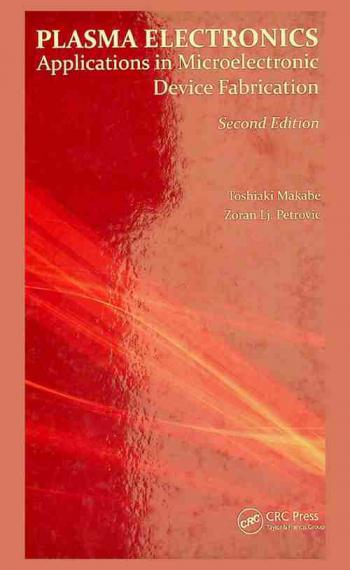
At the frontiers of physics and chemistry lies the new and rapidly emerging area of complex plasma systems. The study of complex plasma systems that contain colloid nano/microscopic particles is now actively pursued in a diverse range of scientific fields — from plasma and gas discharge physics, to astrophysics, materials science and engineering. This book highlights, in a systematic, insightful, and perceptive way, the fundamental physics and industrial applications of complex plasmas, with emphasis on the conditions relevant to laboratory gas discharges and industrial plasma reactors. It provides a specialized and comprehensive description of the most recent theoretical, experimental, and modeling efforts to understand the unique properties of complex plasma systems involving the stability, dynamics, and self-organization of colloid particles and their associations. Special attention is focused on the physical understanding of up-to-date developments in major technological applications of micron and nano-sized particles. Each chapter is presented in a concise and comprehensive manner, with a categorized overview of the underlying physics followed by an in-depth description. The book will appeal to scientists and researchers as well as undergraduate and graduate students wishing to explore the flourishing interdisciplinary field of complex plasma systems.
eBook

Turbulence Heating ObserveR – satellite mission proposal
The Universe is permeated by hot, turbulent, magnetized plasmas. Turbulent plasma is a major constituent of active galactic nuclei, supernova remnants, the intergalactic and interstellar medium, the solar corona, the solar wind and the Earth’s magnetosphere, just to mention a few examples. Energy dissipation of turbulent fluctuations plays a key role in plasma heating and energization, yet we still do not understand the underlying physical mechanisms involved. THOR is a mission designed to answer the questions of how turbulent plasma is heated and particles accelerated, how the dissipated energy is partitioned and how dissipation operates in different regimes of turbulence. THOR is a single-spacecraft mission with an orbit tuned to maximize data return from regions in near-Earth space – magnetosheath, shock, foreshock and pristine solar wind – featuring different kinds of turbulence. Here we summarize the THOR proposal submitted on 15 January 2015 to the ‘Call for a Medium-size mission opportunity in ESAs Science Programme for a launch in 2025 (M4)’. THOR has been selected by European Space Agency (ESA) for the study phase.
Journal Article

Investigation of the collisionless plasmoid instability based on gyrofluid and gyrokinetic integrated approach
In this work, the development of two-dimensional current sheets with respect to tearing modes, in collisionless plasmas with a strong guide field, is analysed. During their nonlinear evolution, these thin current sheets can become unstable to the formation of plasmoids, which allows the magnetic reconnection process to reach high reconnection rates. We carry out a detailed study of the effect of a finite $\\beta _e$, which also implies finite electron Larmor radius effects, on the collisionless plasmoid instability. This study is conducted through a comparison of gyrofluid and gyrokinetic simulations. The comparison shows in general a good capability of the gyrofluid models in predicting the plasmoid instability observed with gyrokinetic simulations. We show that the effects of $\\beta _e$ promotes the plasmoid growth. The effect of the closure applied during the derivation of the gyrofluid model is also studied through the comparison among the variations of the different contributions to the total energy.
Journal Article


Albumin infusion rate and plasma volume expansion: a randomized clinical trial in postoperative patients after major surgery
Background
Optimal infusion rate of colloids in patients with suspected hypovolemia is unknown, and the primary objective of the present study was to test if plasma volume expansion by 5% albumin is greater if fluid is administered slowly rather than rapidly.
Methods
Patients with signs of hypoperfusion after major abdominal surgery were randomized to intravenous infusion of 5% albumin at a dose of 10 ml/kg (ideal body weight) either rapidly (30 min) or slowly (180 min). Plasma volume was measured using radiolabeled albumin at baseline, at 30 min, and at 180 min after the start of infusion. Primary outcome was change in plasma volume from the start of infusion to 180 min after the start of infusion. Secondary outcomes included the change in the area under the plasma volume curve and transcapillary escape rate (TER) for albumin from 180 to 240 min after the start of albumin infusion.
Results
A total of 33 and 31 patients were included in the analysis in the slow and rapid groups, respectively. The change in plasma volume from the start of infusion to 180 min did not differ between the slow and rapid infusion groups (7.4 ± 2.6 vs. 6.5 ± 4.1 ml/kg; absolute difference, 0.9 ml/kg [95%CI, − 0.8 to 2.6],
P
= 0.301). Change in the area under the plasma volume curve was smaller in the slow than in the rapid infusion group and was 866 ± 341 and 1226 ± 419 min ml/kg, respectively,
P
< 0.001. TER for albumin did not differ and was 5.3 ± 3.1%/h and 5.4 ± 3%/h in the slow and in the rapid infusion groups, respectively,
P
= 0.931.
Conclusions
This study does not support our hypothesis that a slow infusion of colloid results in a greater plasma volume expansion than a rapid infusion. Instead, our result of a smaller change in the area under the plasma volume curve indicates that a slow infusion results in a less efficient plasma volume expansion, but further studies are required to confirm this finding. A rapid infusion has no effect on vascular leak as measured after completion of the infusion.
Trial registration
EudraCT2013-004446-42
registered December 23, 2014.
Journal Article