
Catalogue Search | MBRL


Are you sure you want to remove the book from the shelf?

{{itemTitle}}
11,754
result(s) for
"polar studies"
Sort by:

So, how long have you been native? : life as an Alaska native tour guide
\"So, How Long Have You Been Native? is Alexis C. Bunten's firsthand account of what it is like to work in the Alaska cultural tourism industry. An Alaska Native and anthropologist, she spent two seasons working for a tribally owned tourism business that markets the Tlingit culture in Sitka. Bunten's narrative takes readers through the summer tour season as she is hired and trained and eventually becomes a guide. A multibillion-dollar worldwide industry, cultural tourism provides one of the most ubiquitous face-to-face interactions between peoples of different cultures and is arguably one of the primary means by which knowledge about other cultures is disseminated. Bunten goes beyond debates about who owns Native culture and has the right to \"sell\" it to tourists. Through a series of anecdotes, she examines issues such as how and why Natives choose to sell their culture, the cutthroat politics of business in a small town, how the cruise industry maintains its bottom line, the impact of colonization on contemporary Native peoples, the ways that traditional cultural values play a role in everyday life for contemporary Alaska Natives, and how Indigenous peoples are engaging in global enterprises on their own terms. Bunten's bottom-up approach provides a fascinating and informative look at the cultural tourism industry in Alaska. \"-- Provided by publisher.
Book
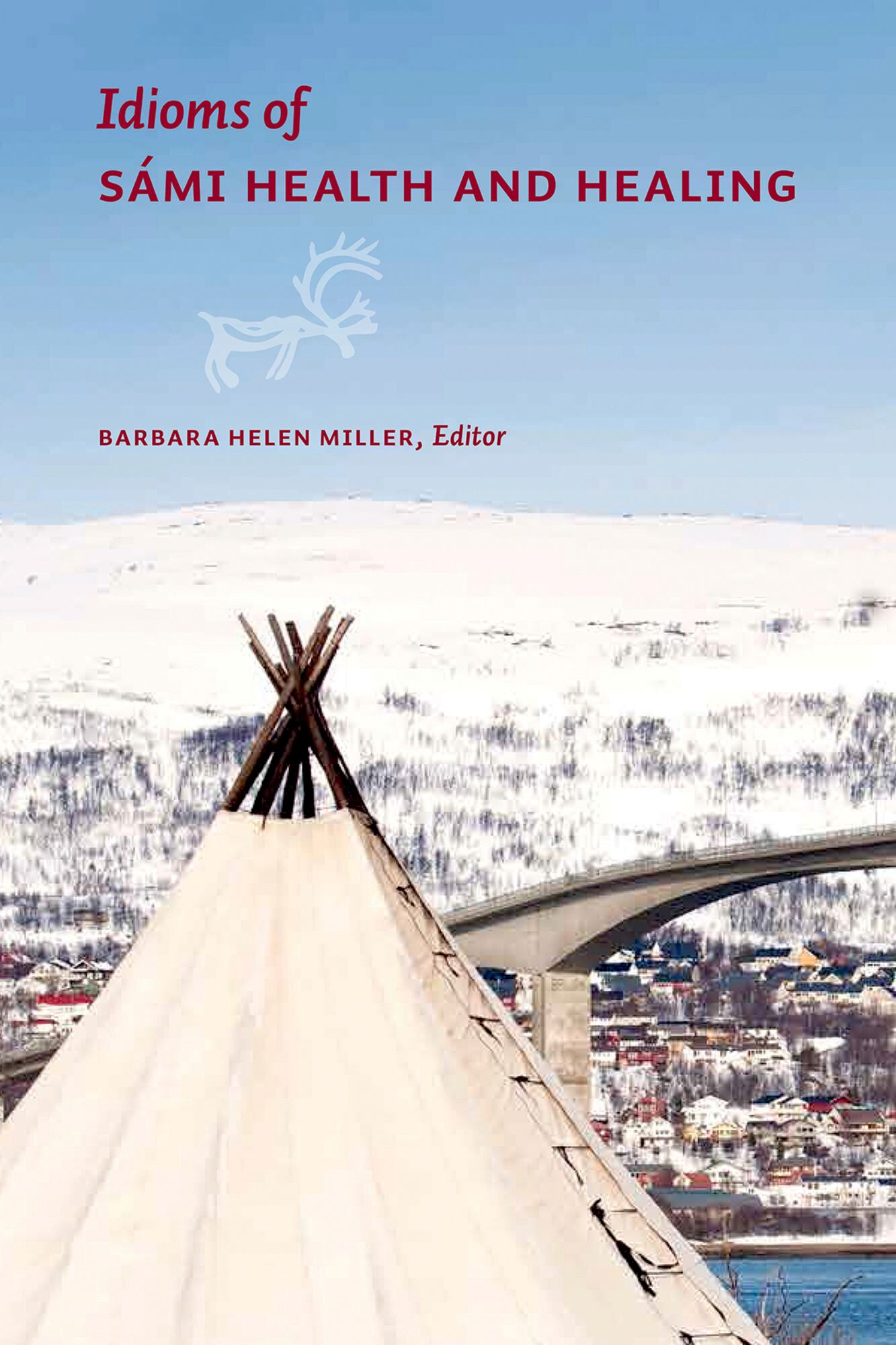
Idioms of Sámi Health and Healing
The Sámi—Indigenous people of northernmost Europe—have relied on Traditional Healing methods over generations. This pioneering volume documents, in accessible language, local healing traditions and demonstrates the effectiveness of using the resources local communities can provide. This collection of essays by ten experts also records how ancient healing traditions and modern health-care systems have worked together, and sometimes competed, to provide solutions for local problems. Idioms of Sámi Health and Healing is one of the first English-language studies of the Traditional Healing methods among the Sámi, and offers valuable insight and academic context to those in the fields of anthropology, medical anthropology, transcultural psychiatry, and circumpolar studies. Idioms of Sámi Health and Healing is the second volume in the Patterns of Northern Traditional Healing series. Foreword by David G. Anderson. Contributors: Kjell Birkely Andersen, Anne Karen Hætta, Mona Anita Kiil, Britt Kramvig, Trine Kvitberg, Stein R. Mathisen, Barbara Helen Miller, Marit Myrvoll, Randi Inger Johanne Nymo, Sigvald Persen.
eBook

Traditions, Traps and Trends
The transfer of knowledge is a key issue in the North as Indigenous Peoples meet the ongoing need to adapt to cultural and environmental change. In eight essays, experts survey critical issues surrounding the knowledge practices of the Inuit of northern Canada and Greenland and the Northern Sámi of Scandinavia, and the difficulties of transferring that knowledge from one generation to the next. Reflecting the ongoing work of the Research Group Circumpolar Cultures, these multidisciplinary essays offer fresh understandings through history and across geography as scholars analyze cultural, ecological, and political aspects of peoples in transition. Traditions, Traps and Trends is an important book for students and scholars in anthropology and ethnography and for everyone interested in the Circumpolar North. Contributors: Cunera Buijs, Frédéric Laugrand, Barbara Helen Miller, Thea Olsthoorn, Jarich Oosten, Willem Rasing, Kim van Dam, Nellejet Zorgdrager
eBook

Polar cousins : comparing Antarctic and Arctic geostrategic futures
Geopolitics and climate change now have immediate consequences for national and international security interests across the Arctic and Antarctic. The world’s polar regions are contested and strategically central to geopolitical rivalry. At the same time, rapid political, social, and environmental change presents unprecedented challenges for governance, environmental protection, and maritime operations in the regions. With chapters that raise awareness, address challenges, and inform policy options, Polar Cousins reviews the state of strategic thinking and options on Antarctica and the Southern Oceans in light of experience in the circumpolar North. Prioritizing strategic issues, it provides an essential discussion of geostrategic thinking, strategic policy, and strategy development. Featuring contributions from international defence experts, scientists, academics, policymakers, and decisionmakers, Polar Cousins offers key insights into the challenges unique to the polar regions.
eBook

Genome-wide association study of bipolar disorder in European American and African American individuals
To identify bipolar disorder (BD) genetic susceptibility factors, we conducted two genome-wide association (GWA) studies: one involving a sample of individuals of European ancestry (EA;
n
=1001 cases;
n
=1033 controls), and one involving a sample of individuals of African ancestry (AA;
n
=345 cases;
n
=670 controls). For the EA sample, single-nucleotide polymorphisms (SNPs) with the strongest statistical evidence for association included rs5907577 in an intergenic region at Xq27.1 (
P
=1.6 × 10
−6
) and rs10193871 in
NAP5
at 2q21.2 (
P
=9.8 × 10
−6
). For the AA sample, SNPs with the strongest statistical evidence for association included rs2111504 in
DPY19L3
at 19q13.11 (
P
=1.5 × 10
−6
) and rs2769605 in
NTRK2
at 9q21.33 (
P
=4.5 × 10
−5
). We also investigated whether we could provide support for three regions previously associated with BD, and we showed that the
ANK3
region replicates in our sample, along with some support for
C15Orf53
; other evidence implicates BD candidate genes such as
SLITRK2
. We also tested the hypothesis that BD susceptibility variants exhibit genetic background-dependent effects. SNPs with the strongest statistical evidence for genetic background effects included rs11208285 in
ROR1
at 1p31.3 (
P
=1.4 × 10
−6
), rs4657247 in
RGS5
at 1q23.3 (
P
=4.1 × 10
−6
), and rs7078071 in
BTBD16
at 10q26.13 (
P
=4.5 × 10
−6
). This study is the first to conduct GWA of BD in individuals of AA and suggests that genetic variations that contribute to BD may vary as a function of ancestry.
Journal Article
Genome-wide association study of bipolar I disorder in the Han Chinese population
We report the first genome-wide association study in 1000 bipolar I patients and 1000 controls, with a replication of the top hits in another 409 cases and 1000 controls in the Han Chinese population. Four regions with most strongly associated single-nucleotide polymorphisms (SNPs) were detected, of which three were not found in previous GWA studies in the Caucasian populations. Among them, SNPs close to specificity protein 8 (
SP8
) and
ST8
α-
N
-acetyl- neuraminide α-2,8-sialyltransferase (
ST8SIA2
) are associated with Bipolar I, with
P
-values of 4.87 × 10
−7
(rs2709736) and 6.05 × 10
−6
(rs8040009), respectively. We have also identified SNPs in potassium channel tetramerization domain containing 12 gene (
KCTD12
) (rs2073831,
P
=9.74 × 10
−6
) and in
CACNB2
(Calcium channel, voltage-dependent, β-2 subunit) gene (rs11013860,
P
=5.15 × 10
−5
), One SNP nearby the rs1938526 SNP of
ANK3
gene and another SNP nearby the SNP rs11720452 in chromosome 3 reported in previous GWA studies also showed suggestive association in this study (
P
=6.55 × 10
−5
and
P
=1.48 × 10
−5
, respectively). This may suggest that there are common and population-specific susceptibility genes for bipolar I disorder.
Journal Article

Tourism and Change in Polar Regions
The world’s polar regions are attracting more interest than ever before. Once regarded as barren, inhospitable places where only explorers go, the north and south polar regions have been transformed into high profile tourism destinations, increasingly visited by cruise ships as well as becoming accessible with direct flights. Tourism is seen as one of the few economic opportunities in these regions but at the same time the polar regions are being opened up to tourism development they are being affected by a number of new factors that are interconnected to travel and tourism. Climate change, landscape and species loss, increasing interest in energy resources and minerals, social changes in indigenous societies, and a new polar geopolitics all bring into question the sustainability of polar regions and the place of tourism within them.
This timely volume provides a contemporary account of tourism and its impacts in polar regions. It explores the development and prospects of polar tourism, as well as tourism’s impacts and associated change at high latitudes from environmental, economic, social and political perspectives. It draws on cutting edge research from both the Arctic and Antarctic to provide a comparative review and illustrate the real life issues arising from tourism’s role in these regions. Integrating theory and practice the book fully evaluates varying perspectives on polar tourism and proposes actions that could be taken by local and global management to achieve a sustainable future for polar regions and development of tourism.
This complete and current account of polar tourism issues is written by an international team of leading researchers in this area and will have global appeal to higher level students, researchers, academics in Tourism, Environmental Studies, Arctic/Polar Studies and conservation enthusiasts alike.
Michael Hall is Professor, Department of Management, University of Canterbury, New Zealand; Docent, Department of Geography, University of Oulu, Finland and Visiting Professor, Baltic Business School, Linnaeus University, Kalmar, Sweden. Co-editor of Current Issues in Tourism he has published widely in tourism and mobility, gastronomy and environmental history.
Jarkko Saarinen is Professor of Human Geography at the University of Oulu, Finland. His research interests include tourism development and its impacts and sustainability in peripheries. He is co-author of the book Nordic Tourism (2009), with C. Michael Hall and Dieter Muller.
Part 1: The Context 1. Tourism and Change in the Polar Regions: Introduction – Definitions, Locations, Places and Dimensions (C. Michael Hall & Jarkko Saarinen) 2. Tourism and Environmental Change in Polar Regions: Impacts, Climate Change and Biological Invasion (Hall) Part 2: Tourism and Change in the Northern Polar Regions 3. Cruise Tourism in Arctic Canada: Navigating a Warming Climate (E.J. Stewart, S.E.L. Howell, D. Draper, J. Yackel & A. Tivy) 4. Climate Change and Polar Bear Viewing: A Case Study of Visitor Demand, Carbon Emissions and Mitigation in Churchill, Canada (Jackie Dawson, Emma Stewart & Daniel Scott) 5. Climate Disruption and the Changing Dynamics of Polar Bear – Human Interactions in Northern Ontario: A Case Study of Polar Bear Management in Polar Bear Provincial Park, Ontario, Canada (Raynard Harvey Lemelin, Norman McIntyre, Rhonda Koster & Margaret Johnston) 6. Cruise Tourist Experiences and Management Implications for Auyuittuq, Sirmilik and Quttinirpaaq National Parks, Nunavut, Canada (Patrick T. Maher) 7. A Holiday on Ice on Hold? Nature-based Tourism and Climate Change in the Nordic North (Linda Lundmark) 8. Sustainability and Emerging Awareness of a Changing Climate: The Tourism Industry’s Knowledge and Perceptions of the Future of Nature-based Winter Tourism in Finland (Kaarina Tervo & Saarinen) 9. Constraints and Opportunities in the Development of Diamond Tourism in Yellowknife, NWT (Jamie Noakes & Margaret Johnston) Part 3: Tourism and Change in the Southern Polar Regions 10. Cultural heritage tourism in Antarctica and Svalbard: Patterns, Impacts, and Policies (Ricardo Roura) 11. Narratives of history, environment and global change: expeditioner-tourists in Antarctica (Mark Nuttall) 12. \"Awesome size…magnitude of the place…the incredible beauty…\": Visitors’ onsite experiences in the Ross Sea region of Antarctica (Maher) 13. Images of Antarctica and Ushuaia (Argentina) as a Gateway Port: Antarctic Visitors and Their Expectations (Marisol) 14. Business as (Un)Usual: Integrated Scenario Analysis for Tourism in Antarctica (Machiel Lamers, Bas Amelung & Jan H. Stel) 15. Tourism, Conservation and Visitor Management in the Sub-Antarctic Islands (Hall and Sandra Wilson) Part 4: Conclusions and Future Issues 16. Contested Place and the Legitimization of Sovereignty through Tourism in Polar Regions (Dallen J. Timothy) 17. Last Chance to See? Future Issues for Polar Tourism and Change (Hall & Saarinen)
eBook

Gender and Polar Studies: Mapping the Terrain
Mainstream impressions of the polar regions are too often dominated by a few persistent visions of a place populated only by polar bears and penguins, a blank space on the map ripe for heroic exploration, or a pure expanse of unmarked whiteness. In fact, the Arctic and Antarctic regions are sites of living social struggle, cultural production, political contest, and environmental scrutiny. Here, Rosner emphasizes how polar research raises significant issues relevant to pressing topics in feminist inquiry, including gender-based violence, women's citizenship and opportunities for self-governance, the assimilation of women into all-male spaces, women's authorship, and globalization.
Journal Article

Effect of Pharmacological and Neurostimulation Interventions for Cognitive Domains in Patients with Bipolar Disorder: A Systematic Review and Network Meta-Analysis of Randomized Controlled Trials
The priority of interventions to alleviate cognitive deficits in patients with bipolar disorder (BD) is inconclusive. We systematically evaluate the efficacy of pharmacological or neurostimulation interventions for cognitive function in BD through a network meta-analysis.
The PubMed, PsycINFO, Embase, and Cochrane Library databases were searched from database inception to September 30, 2021. Following PRISMA guidelines, all eligible studies were randomized controlled trials of adult bipolar patients that provided detailed cognitive outcomes. Studies were excluded if participants limited to comorbid substance use disorder or the intervention was a psychotherapy. Network meta-analysis comparing different interventions was conducted for 8 cognitive domains. Partially ordered set with Hasse diagram was used to resolve conflicting rankings between outcomes. The study was preregistered on PROSPERO database (CRD42020152044).
Total 21 RCTs including 42 tests for assessing intervention effects on cognition were retrieved. Adjunctive erythropoietin (SMD = 0.61, 95% CI = 0.00-1.23),
(SMD = 0.58, 95% CI = 0.03-1.13), and galantamine (SMD = 1.22, 95% CI = 0.10-2.35) was more beneficial for attention, working memory, and verbal learning in euthymic BD patients than treatment as usual, respectively. Hasse diagram suggested ranking of choice when multiple domains were combined.
Considerable variability in measurements of cognitive domains in BD was observed, and no intervention resulted in superior benefits across all domains. We suggested interventions priority can be tailored according to individual patients' cognitive deficits. As current findings from relatively small and heterogeneous dataset, future trials with consensus should be applied for building further evidence.
Journal Article

Characteristics of short-period internal waves in the Kara Sea inferred from satellite SAR data
In this paper we present the results of short-period internal wave (SIW) observations in the Kara Sea on the basis of satellite ENVISAT ASAR data between July and October 2007. Altogether, 248 internal wave (IW) packets and solitons are identified in 89 SAR images. Detailed spatial statistics of IW signatures and their properties in the Kara Sea is presented. The primary regions of IW activity are the areas near the Kara Gates Strait, the southeastern part of the Novaya Zemlya Trough, and in the vicinity of Cape Zhelaniya. We identify the regions where large IW packets are observed with wavelengths up to 2–3 km and the front length exceeding 200 km. The mean interpacket distance for observed IWs is about 20 km, but it may reach 50–60 km. Consequent IW packets are observed to travel up to 500 km from the presumed generation points. The results of satellite observations are compared with results of previous studies.
Journal Article