
Catalogue Search | MBRL


Are you sure you want to remove the book from the shelf?

{{itemTitle}}
87,878
result(s) for
"political campaigning"
Sort by:

Data-Driven Maintaining: The Role of the Party and Data Maintenance in the US Context
Political campaigning in the US is unique in the global context for its lack of attention to the role of the party, largely due to the centrality and power of campaigns. In the US context, successful data-driven campaigning (DDC) has often been covered by the press and analyzed by US scholars as an innovative campaign creating new tools and new tactics (and earning more media coverage for them). This research investigates the oft-ignored role of party organizations in DDC in the US, and in doing so, highlights the invisible work of data maintenance that is their purview. Methodologically, it brings together interviews with staffers from both party organizations and campaigns with thematic analysis of news coverage to answer questions about how the data-driven practices of parties versus campaigns differ, how parties’ data work is (and is not) covered, and what, in staffers’ views, contributes to such coverage. Ultimately, this research highlights how a lack of attention to party organizations’ work has gone hand in hand with a lack of attention to maintenance work in both academic and public discussions of DDC.
Journal Article

Political Communication in the Age of Platforms
Political communication has been extensively studied through both the broader context of societal and political systems, as well as through the lens of mediatization, which emphasizes the intersection of political and media logics. Within this framework, scholars originally identified three distinct stages or eras of political communication. However, recent scholarship has increasingly focused on the transition to a “fourth” era, characterized by the growing impact of digital and social media. This shift, from the “television age” to the “social media age”, has not only introduced new media channels for conveying political messages but has also fundamentally transformed the nature of political communication itself—shifting from top-down, centralized models to more horizontal, decentralized forms of interaction. Current research on the role of social media in political communication reveals a complex landscape. These platforms appear to both enhance and undermine established processes of political deliberation. On the one hand, they provide new avenues for civic engagement and political discourse, while on the other, they contribute to issues such as disinformation, polarization, and the erosion of privacy. This entry aims to offer a comprehensive review of how social media platforms have reshaped the dynamics of political communication and civic participation. It further explores the challenges that accompany these transformations, such as the spread of disinformation, rising political polarization, increasing incivility, and privacy concerns stemming from advanced digital marketing techniques in political contexts.
Journal Article

The New Kids on the Block: Cyberpolitics and the Emergence of New Latin American Parties (2000–2024)
This study examines the transformative impact of cyberpolitics on political systems in six Latin American countries—Argentina, Brazil, Chile, Colombia, Mexico, and Peru—between 2000 and 2024. Over this period, 34 elections and the emergence of 103 new political parties revealed a dynamic interplay between technological innovation and political fragmentation. Digital platforms have revolutionized political communication, enabling hyper-segmentation and direct voter engagement while contributing to the disintegration of traditional party structures. The rise of digital-native parties and outsider leaders highlights the shift toward personalized, campaign-driven politics. The research identifies a strong correlation between electoral cycles and the founding of new parties, with three times as many emerging in election years. While cyberpolitics has democratized participation, it has also intensified volatility, fostering a fragile political landscape. This study underscores the dual-edged role of digital technologies in reshaping democracy, emphasizing the need for further exploration of their long-term implications.
Journal Article
Social Media Campaigning in Greece: The Case of the 2023 National Parliamentary Elections
In contemporary democracies, social media platforms are widely used for political campaigning, with political figures seeking to connect with diverse segments of the public. This study aims to illuminate the implementation of online political campaigning in Greece by analysing the content shared on four social media platforms (Facebook, X, Instagram, and TikTok) by the leaders of the three principal political parties during the 2023 pre-election phase. We employ content analysis to evaluate primarily the textual and secondarily the visual elements of the posts (N = 1.222) found on the relevant accounts, using a coding framework that comprises 32 variables. The research draws on concepts pertinent to the platformised era, such as “virality,” “personalisation,” and “network media logic,” to highlight how contemporary politicians favour direct and easily comprehensible communication patterns with citizens. The results suggest that political leaders in Greece utilise social media as a means of emotionally mobilising voters. X and Facebook emerged as the primary platforms for distributing political messages, while Instagram and TikTok focused more on personalised and non-political content. The elements of personalisation were particularly prominent in the posts made by the leader of the Conservative Party (New Democracy), who demonstrated greater proficiency in utilising TikTok’s features.
Journal Article

Effective management in modern political parties and campaigns. The application analysis of political management concept in Poland
Effective management is the key point of each organizations wellfunctioning, political parties likewise. This article 1s an attempt to present the importance of the management in politics with particular emphasis on managing the political parties Essential data for reaching the goal has been taken from literature analysis as well as market observation performed by the author with special attention of international research and Polish marketplace background. Research problem is complemented by comparative analysis of presented concept and polish practice which offers the local conditions identification and good practice recognition it the process of gaining the competitive advantage. An additional value of the text 1s the pointing out of the fundamental differences and similarities in the area of management between the political and commercial organization.
Journal Article

Patriotism and National Symbols in Russian and Ukrainian Elections
How do political parties leverage patriotic appeals in their online campaigning within the context of autocracies and hybrid regimes? This study delves into the digital campaign strategies deployed by political parties during the most recent legislative elections in Russia (2021) and Ukraine (2019). In light of the armed conflict between Russia-backed separatists and Ukrainian forces in the eastern area of Ukraine, war-related themes and patriotic rhetoric emerged as pivotal concerns for politicians in both countries. The “rally around the flag” phenomenon posits that, in times of crisis, citizens often experience an intensified sense of national identity and patriotic fervor. Consequently, references to patriotism and related topics may evoke positive responses and prove instrumental for politicians during elections, serving to engage, mobilize, and attract voters. Drawing on a manual content analysis of the underlying communication strategies, we assessed whether parties’ reference to patriotic gestures and symbols or their attention to related policy topics (defense, war and military conflicts, and foreign policy and international relations) yielded an increased level of user engagement. Our findings reveal that references to patriotic symbols engendered increased user engagement within the Russian context, albeit without significantly affecting the engagement of Ukrainian voters. The latter tended to exhibit greater engagement with posts addressing defense and foreign policy matters though. Interestingly, Russian parties conspicuously avoided war-related topics, while Ukrainian voters displayed a propensity to penalize such content by generating fewer reactions to it.
Journal Article
The Trump Phenomenon
On November 8, 2016, American voters surprised the world by electing a rank outsider with no previous political experience, businessman and celebrity Donald J. Trump, to become the 45th President of the United States after one of the most divisive and contentious campaigns in recent history. In this short book, Peter Kivisto analyses how this happened, focusing on who Trump is and the narratives about him and his candidacy that evolved during the campaign, who his supporters are and what their worldview is, and the role of the media, right-wing Christians, and the Republican Party in making Trump's victory possible.
The Trump phenomenon must be viewed as a manifestation of right-wing populism, a movement which has serious implications for democratic values and practices, and this book examines how it took hold in America to put one of the most controversial presidents ever elected into the White House.
eBook
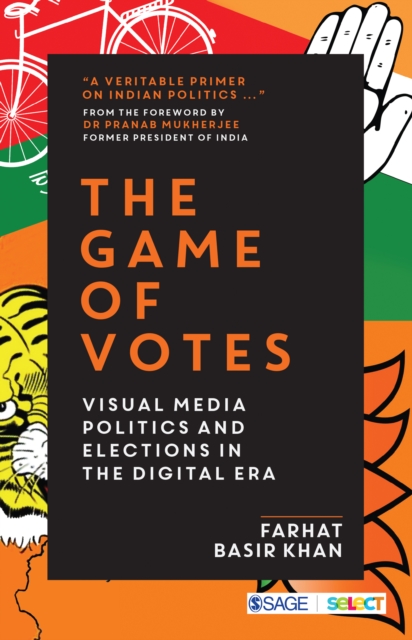
The Game of Votes
Taking the reader on a roller coaster ride, The Game of Votes showcases the full spectrum of the key actors and stars of the electoral arena, the rise and fall of political parties, the role of the digital and technology platforms, and the emergence of fake news impacting election outcome in India and across the world. The book is a veritable prime on Indian politics, as it runs through the entire history of Indian polity and provides insights into how political parties gradually shifted from campaigning on their own to hiring top-notch advertising agencies. It tells the story of how Modi won the election in 2014 and repeated an exceptional performance in 2019. It also gives a bird's eye view of how Barack Obama and Donald Trump ran their election campaigns and how to understand critical developments in political communication. The book provides glimpses of international politics in the US and Europe and covers important developments in Egypt and South East Asia, drawing comparisons between the Western world with the fast-changing developments in India. This book brings the readers face-to-face with the changing dynamics of election campaign and democracy. This is the inside story behind the game of votes in India.
eBook

The old in the new: Voter surveillance in political clientelism and datafied campaigning
This article compares political clientelism and datafied campaigning as two modes of relating politicians/parties and voters that are centred around voter surveillance. It contributes to the discussion on consequences of Big Data by showing similarities of datafied campaigns with a type of electoral politics that pre-dates the advent of mass media and is usually regarded as deficient. It thus departs from the predominant perspective on datafication and surveillance, which draws on Foucault, in order to identify the particular challenges that datafication poses in the realm of democratic electoral politics. They are related to four major aspects in which datafied campaigning resembles political clientelism, as opposed to the combination of ideology, issue-based campaigning and media appeal that characterized Western European party politics in the second half of the 20th century. It personalizes the relationship between politicians and voters with the help of intermediaries; it is based on an asymmetric and iterative monitoring of voters; it implies a strong particularism and an affinity with populist appeals; and it is ambivalent with regard to the volition of voters. The identification of these similarities renders general concerns about the consequences of datafied campaigning for democracy more concrete. It offers a mirror in which seemingly novel practices are revealed to have implications that are well known to be problematic for the quality of democracy.
Journal Article

Facebook Democracy
In July 2010, Facebook had over 500 million subscribers worldwide and the rapid rise of the site prompted Time magazine to name Facebook's founder Mark Zuckerberg its person of the year for 2010. This novel book advances our understanding of how democratic citizens are transformed by the \"Facebook revolution\". Despite increasing interest in politics and popular media, there has been little academic work on the impact of Facebook on politics in general, and on democratic processes in particular. The work that does exist has been limited to Facebook's impact on politics as a mobilization tool used by social movement activists. In this book, José Marichal argues that understanding Facebook's impact on political processes requires an understanding of how Facebook's architecture of disclosure shapes the construction of individuals' political identities by drawing users further into their pre-selected social networks. Drawing on a number of disciplines and an ethnographic analysis of 250 Facebook political groups, Marichal explores how Facebook's emphasis on social connection impacts key dimensions of political participation: e.g., mobilization, deliberation, and attitude formation.
eBook