
Catalogue Search | MBRL


Are you sure you want to remove the book from the shelf?

{{itemTitle}}
83,454
result(s) for
"politics and economy"
Sort by:

Nationalism and Nationhood in the United Arab Emirates
This book shows how an encounter with everyday nationhood in the northern United Arab Emirates can make us revisit the classics of sociology as continuous analytical world-views. Through the textual universe of Georg Simmel, and in particular his analysis of modern life as the feeling of dualism, the project reflects about how seemingly crucial challenges to the national - the forces of globalization and the wish to be unique - are drawn together with the formation of nationhood in everyday life. It does so not least by attending to the instances of everyday nationhood - like fashion and car-driving - that are at the same time central ways of embodying the modern. This volume appeals to students of nationalism, classical sociology, and the modern Arab Gulf. Martin Ledstrup is Researcher in the Centre for Contemporary Middle East Studies, University of Southern Denmark, Denmark.
Book

Anyuan
How do we explain the surprising trajectory of the Chinese Communist revolution? Why has it taken such a different route from its Russian prototype? An answer, Elizabeth Perry suggests, lies in the Chinese Communists' creative development and deployment of cultural resources – during their revolutionary rise to power and afterwards. Skillful \"cultural positioning\" and \"cultural patronage,\" on the part of Mao Zedong, his comrades and successors, helped to construct a polity in which a once alien Communist system came to be accepted as familiarly \"Chinese.\" Perry traces this process through a case study of the Anyuan coal mine, a place where Mao and other early leaders of the Chinese Communist Party mobilized an influential labor movement at the beginning of their revolution, and whose history later became a touchstone of \"political correctness\" in the People's Republic of China. Once known as \"China's Little Moscow,\" Anyuan came over time to symbolize a distinctively Chinese revolutionary tradition. Yet the meanings of that tradition remain highly contested, as contemporary Chinese debate their revolutionary past in search of a new political future.
eBook

Divided Gulf : The Anatomy of a Crisis
This book discusses the various critical dimensions of the Qatar Crisis as a development that has fundamentally reshaped the nature of regional integration for the near future. It represents the first academic attempt to challenge the commonly propagated binary view of this conflict. Further, the book explains the Gulf Crisis in the context of the transformation of the Gulf in the early 21st century, with new alliances and balances of power emerging. At the heart of the book lies the question of how the changing global and regional order facilitated or even fuelled the 2017 Crisis, which it argues was only the most recent climax in an ongoing crisis in the Gulf, on that had been simmering since 2011 and is rooted in historical feuds that date back to the 1800s. While contextualizing the crisis historically, the book also seeks to look beyond historical events to identify underlying patterns of identity security in connection with state and nation building in the Gulf.
Book
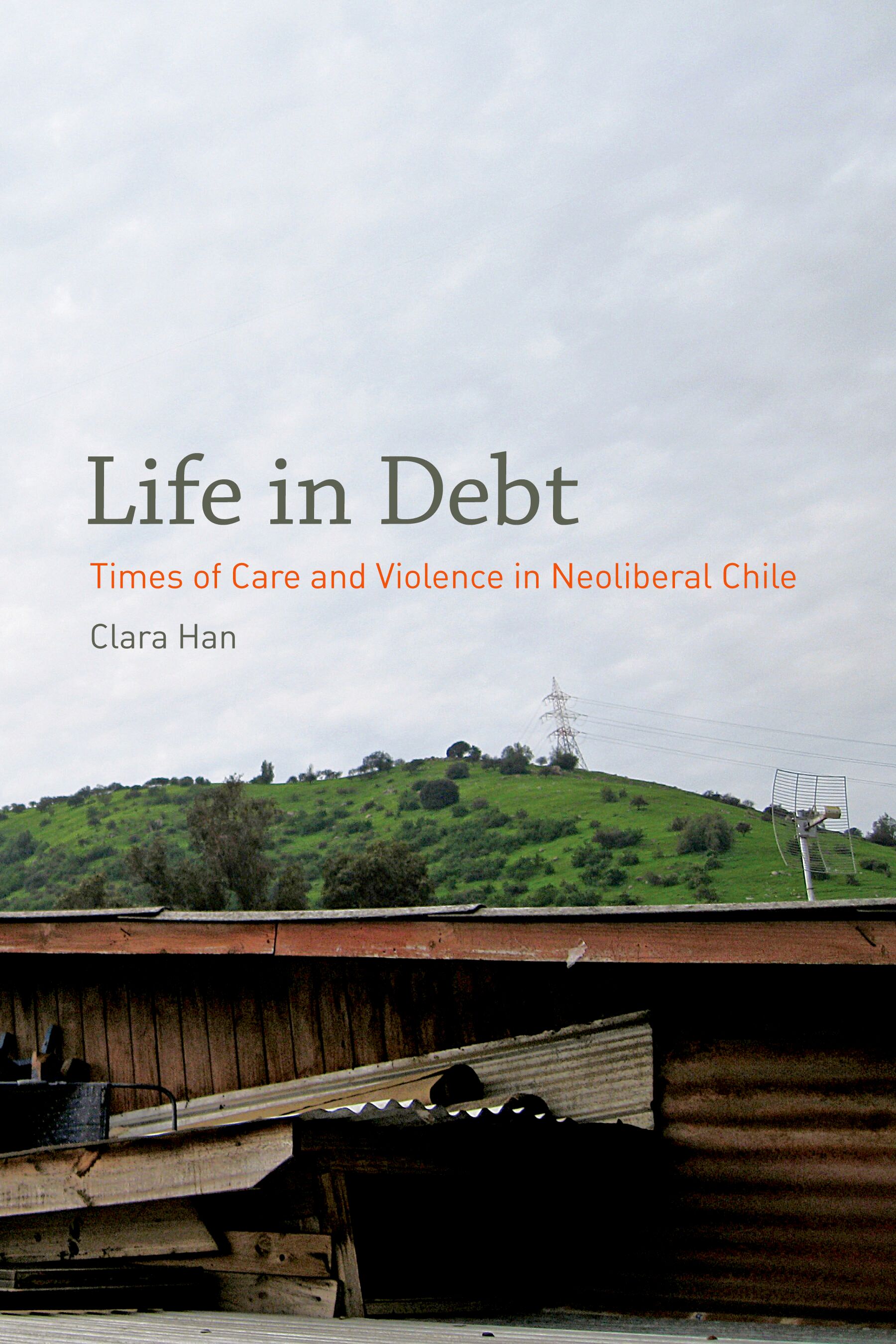
Life in Debt
Chile is widely known as the first experiment in neoliberalism in Latin America, carried out and made possible through state violence. Since the beginning of the transition in 1990, the state has pursued a national project of reconciliation construed as debts owed to the population. The state owed a \"social debt\" to the poor accrued through inequalities generated by economic liberalization, while society owed a \"moral debt\" to the victims of human rights violations. Life in Debt invites us into lives and world of a poor urban neighborhood in Santiago. Tracing relations and lives between 1999 and 2010, Clara Han explores how the moral and political subjects imagined and asserted by poverty and mental health policies and reparations for human rights violations are refracted through relational modes and their boundaries. Attending to intimate scenes and neighborhood life, Han reveals the force of relations in the making of selves in a world in which unstable work patterns, illness, and pervasive economic indebtedness are aspects of everyday life. Lucidly written, Life in Debt provides a unique meditation on both the past inhabiting actual life conditions but also on the difficulties of obligation and achievements of responsiveness.
eBook
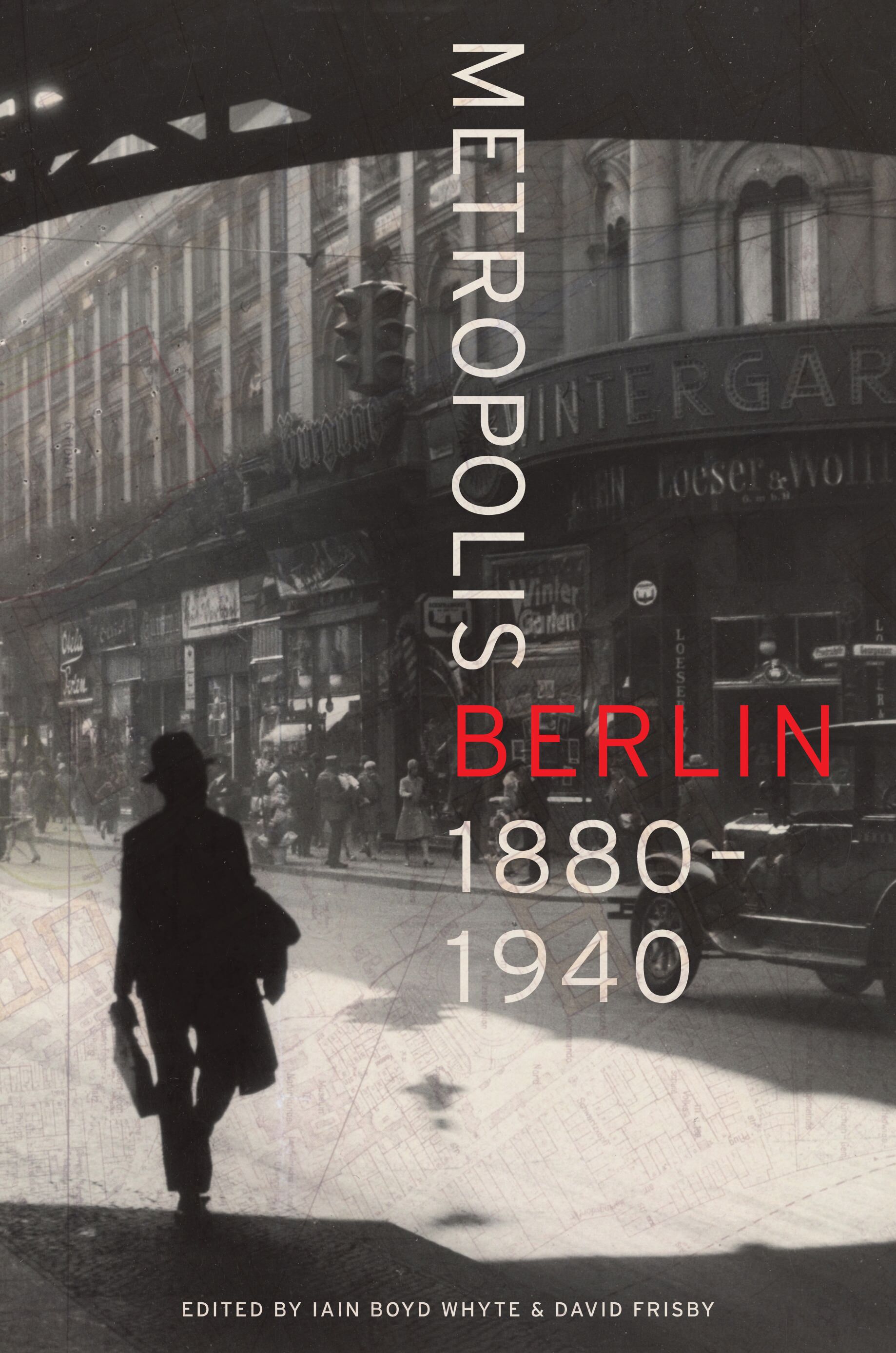
Metropolis Berlin
Metropolis Berlin: 1880-1940 reconstitutes the built environment of Berlin during the period of its classical modernity using over two hundred contemporary texts, virtually all of which are published in English translation for the first time. They are from the pens of those who created Berlin as one of the world’s great cities and those who observed this process: architects, city planners, sociologists, political theorists, historians, cultural critics, novelists, essayists, and journalists. Divided into nineteen sections, each prefaced by an introductory essay, the account unfolds chronologically, with the particular structural concerns of the moment addressed in sequence—be they department stores in 1900, housing in the 1920s, or parade grounds in 1940. Metropolis Berlin: 1880-1940 not only details the construction of Berlin, but explores homes and workplaces, public spaces, circulation, commerce, and leisure in the German metropolis as seen through the eyes of all social classes, from the humblest inhabitants of the city slums, to the great visionaries of the modern city, and the demented dictator resolved to remodel Berlin as Germania.
eBook


The Enemy of My Enemy
Policies to mitigate global climate change entail significant economic costs. Yet a growing number of firms lobby in favor of regulation to mitigate carbon emissions. Why do firms support environmental regulations that directly increase production costs? This question is all the more puzzling in a globalized economy where regulation may undermine the competitiveness of domestic firms at home and abroad. By imposing differential costs on participants in the domestic market, policies designed to mitigate carbon emissions shift market share toward firms with low anticipated adjustment costs. I develop and test a model of climate change policymaking in the presence of market competition and open borders. Heterogeneity in adjustment costs induces a preference for regulation among low-cost firms. Firms facing import pressure—or export competition—may prefer stringent regulation if costs are sufficiently asymmetric. Firms embedded in global value chains also benefit if regulation raises the costs of domestically produced intermediate goods.
Journal Article

Open economy politics and Brexit: insights, puzzles, and ways forward
On 23 June 2016, a majority of 52% of British voters decided in a referendum that the United Kingdom should leave the European Union. The decision sent shockwaves around Britain, Europe, and the world: the 'Brexit'-vote presents the first instance that a country has voted to exit a major supranational institution, putting both the European integration project and the future of the United Kingdom in a globalized world into question. At the time of writing, four months after the referendum vote, the contours of Brexit remain unclear. Yet even within this short time frame, Brexit politics have been remarkable on both the domestic and the international level. In this paper, we first present a brief overview of IPE research in the open economy politics (OEP) tradition. We then discuss the insights OEP provides that help us to better understand the referendum vote and Brexit politics, but also emphasize that they present a number of puzzles for OEP-inspired researchers. Based on this analysis, the final section suggests avenues for advancing the OEP research program.
Journal Article

In Defense of Workplace Democracy: Towards a Justification of the Firm–State Analogy
In the wake of the 2008 global financial crisis, an important conceptual battleground for democratic theorists ought to be, it would seem, the capitalist firm. We are now painfully aware that the typical model of government in so-called investor-owned companies remains profoundly oligarchic, hierarchical, and unequal. Renewing with the literature of the 1970s and 1980s on workplace democracy, a few political theorists have started to advocate democratic reforms of the workplace by relying on an analogy between firm and state. To the extent that a firm is an organization comparable to the state, it too ought to be ruled along democratic lines. Our paper tests the robustness of the analogy between firm and state by considering six major objections to it: (1) the objection from a difference in ends, (2) the objection from shareholders' property rights, (3) the objection from worker's consent, (4) the objection from workers' exit opportunities, (5) the objection from workers' (lack of) expertise, and (6) the objection from the fragility of firms. We find all of these objections wanting. While the paper does not ambition to settle the issue of workplace democracy at once, our goal is to pave the way for a more in-depth study of the ways in which firms and states can be compared and the possible implications this may have for our understanding of the nature of managerial authority and the governance of firms.
Journal Article