
Catalogue Search | MBRL


Are you sure you want to remove the book from the shelf?

{{itemTitle}}
958
result(s) for
"pollinisation"
Sort by:
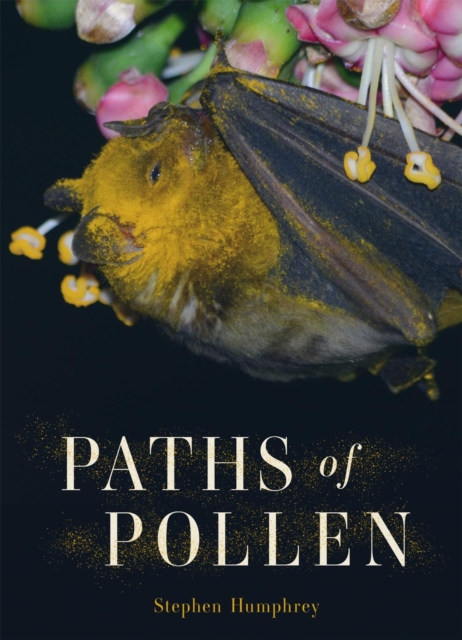
Paths of Pollen
A tiny organism called pollen pulls off one of nature's key
tasks: plant reproduction. Pollination involves a complex network
of different species interacting with one another and mutually
adapting to their ecosystems, which are constantly changing.
Some pollen grains require just a puff of wind to set them in
motion, but most plants depend on creatures gifted with mobility.
These might be birds, bats, reptiles, or insects including
butterflies, beetles, flies, wasps, and over twenty thousand
species of bee. In Paths of Pollen Stephen Humphrey asks
readers to imagine a tipping point where plants and pollinators can
no longer adapt to stressors such as urbanization, modern
agriculture, and global climate change. Illuminating the science of
pollination ecology through evocative encounters with biologists,
conservationists, and beekeepers, Humphrey illustrates the
significance of pollination to such diverse concerns as food
supply, biodiversity, rising global temperatures, and the
resilience of landscapes.
As human actions erase habitats and raise the planet's
temperature, plant diversity is dropping and a growing list of
pollinators faces decline or even extinction. Paths of
Pollen chronicles pollen's vital mission to spread plant
genes, from the prehistoric past to the present, while looking
towards an ecologically uncertain future.
eBook

BEEWAPI.com
Compte tenu des besoins en matière de pollinisation sur les cultures de semences oléagineuses hybride, la filière a mis en place en 2012 une plateforme internet permettant de mettre en relation les producteurs multiplicateurs de semences et les apiculteurs. Simple d'utilisation, ludique et permettant de nombreux échanges, cet outil permet, d'une part, de répondre aux besoins des deux métiers et, d'autre part, de favoriser la relation entre les deux filières. Grâce à la signature d'un contrat et d'une charte de bonnes pratiques apicoles et agricoles, Beewapi propose un véritable service professionnalisé.
Journal Article

Status of pollinators in North America
Pollinators--insects, birds, bats, and other animals that carry pollen from the male to the female parts of flowers for plant reproduction--are an essential part of natural and agricultural ecosystems throughout North America.
eBook

The Flowering of Australia's Rainforests
An introduction to pollination ecology in Australian rainforests, especially subtropical rainforests.
eBook


The potential consequences of pollinator declines on the conservation of biodiversity and stability of food crop yields
Following reports of dramatic declines in managed and feral honey bees from nearly every region of North America, scientists and resource managers from the U.S., Mexico, and Canada came together to review the quality of the evidence that honey bees as well as other pollinators are in long-term decline and to consider the potential consequences of these losses on the conservation of biodiversity and the stability of the yield of food crops. These experts in pollination ecology confirmed that the last 5 years of losses of honeybee colonies in North America leave us with fewer managed pollinators than at any time in the last 50 years and that the management and protection of wild pollinators is an issue of paramount importance to our food supply system. Although there are conclusive data that indicate 1200 wild vertebrate pollinators may be at risk, data on the status of most invertebrate species that act as pollination agents is lacking. The recommendations from a working group of over 20 field scientists, presented here, have been endorsed by 14 conservation and sustainable agriculture organizations, research institutes, and professional societies, including the Society for Conservation Biology. Among the most critical priorities for future research and conservation of pollinator species are (1) increased attention to invertebrate systematics, monitoring, and reintroduction as part of critical habitat management and restoration plans; (2) multi-year assessments of the lethal and sublethal effects of pesticides, herbicides, and habitat fragmentation on wild pollinator populations in and near croplands; (3) inclusion of the monitoring of seed and fruit set and floral visitation rates in endangered plant management and recovery plans; (4) inclusion of habitat needs for critically-important pollinators in the critical habitat designations for endangered plants; (5) identification and protection of floral reserves near roost sites along the \"nectar corridors\" of threatened migratory pollinators; and (6) investment in the restoration and management of a diversity of pollinators and their habitats adjacent to croplands in order to stabilize or improve crop yields. The work group encourages increased education and training to ensure that both the lay public and resource managers understand that pollination is one of the most important ecological services provided to agriculture through the responsible management and protection of wildland habitats and their populations of pollen-vectoring animals and nectar-producing plants.
Journal Article

Evolution of the magnitude and timing of inbreeding depression in plants
Estimates of inbreeding depression obtained from the literature were used to evaluate the association between inbreeding depression and the degree of self-fertilization in natural plant populations. Theoretical models predict that the magnitude of inbreeding depression will decrease with inbreeding as deleterious recessive alleles are expressed and purged through selection. If selection acts differentially among life history stages and deleterious effects are uncorrelated among stages, then the timing of inbreeding depression may also evolve with inbreeding. Estimates of cumulative inbreeding depression and stage-specific inbreeding depression (four stages: seed production of parent, germination, juvenile survival, and growth/reproduction) were compiled for 79 populations (using means of replicates, N = 62) comprising 54 species from 23 families of vascular plants. Where available, data on the mating system also were collected and used as a measure of inbreeding history A significant negative correlation was found between cumulative inbreeding depression and the primary selfing rate for the combined sample of angiosperms (N = 35) and gymnosperms (N = 9); the correlation was significant for angiosperms but not gymnosperms examined separately The average inbreeding depression in predominantly selfing species (δ = 0.23) was significantly less (43%) than that in predominantly outcrossing species (δ = 0.53). These results support the theoretical prediction that selfing reduces the magnitude of inbreeding depression. Most self-fertilizing species expressed the majority of their inbreeding depression late in the life cycle, at the stage of growth/reproduction (14 of 18 species), whereas outcrossing species expressed much of their inbreeding depression either early, at seed production (17 of 40 species), or late (19 species). For species with four life stages examined, selfing and outcrossing species differed in the magnitude of inbreeding depression at the stage of seed production (selfing δ = 0.05, N = 11, outcrossing δ = 0.32, N = 31), germination (selfing δ = 0.02, outcrossing δ = 0.12), and survival to reproduction (selfing δ = 0.04, outcrossing δ = 0.15), but not at growth and reproduction (selfing δ = 0.21, outcrossing δ = 0.27); inbreeding depression in selfers relative to outcrossers increased from early to late life stages. These results support the hypothesis that most early acting inbreeding depression is due to recessive lethals and can be purged through inbreeding, whereas much of the late-acting inbreeding depression is due to weakly deleterious mutations and is very difficult to purge, even under extreme inbreeding.
Journal Article

Programmed cell death: a way of life for plants
Cell death in higher plants has been widely observed in predictable patterns throughout development and in response to pathogenic infection. Genetic, biochemical, and morphological evidence suggests that these cell deaths occur as active processes and can be defined formally as examples of programmed cell death (PCD). Intriguingly, plants have at least two types of PCD, an observation that is also true of PCD in animals [Schwartz, L.M., Smith, W.W., Jones, M.E.E. and Osborne, B.A. (1993) Proc. Natl. Acad. Sci. USA 90, 980-984]. Thus, in plants, PCD resembles either a common form of PCD seen in animals called apoptosis or it resembles a morphologically distinct form of cell death. The ubiquitous occurrence and necessity of PCD for plant development and defense suggest that the underlying mechanisms of regulation and execution of these processes merit further examination.
Journal Article

Dioecy and its correlates in the flowering plants
Considerable effort has been spent documenting correlations between dioecy and various ecological and morphological traits for the purpose of testing hypotheses about conditions that favor dioecy. The data analyzed in these studies with few exceptions, come from local floras, within which it was possible to contrast the subsets of dioecious and nondioecious taxa with regard to the traits in question. However, if there is a strong phylogenetic component to the presence or absence of dioecy, regional sampling may result in spurious associations. Here, we report results of a categorical multivariate analysis of the strengths of various associations of dioecy with other traits over all flowering plants. Families were scored for presence of absence of monoecy or dioecy, systematic position, numbers of species and genera, growth forms, modes of and dispersal, geographic distribution, and trophic status. Seven percent of angiosperm genera (959 of 13,500) contain at least some dioecious species, and approximately 6% of angiosperm species (14,620 of 240,000) are dioecious. The most consistent associations in the data set relate the presence of dioecy to monoecy, wind or water pollination, and climbing growth. At both the family and the genus level, insect pollination is under represented among dioecious plants. At the family level, a positive correlation between dioecy and woody growth results primarily from the association between dioecy and climbing growth (whether woody or herbaceous) because neither the tree nor the shrub growth forms alone are consistently correlated with a family's tendency to include dioecious members. Dioecy appears to have evolved most frequently via monoecy, perhaps through divergent adjustments of floral sex ratios between individual plants. Monoecy itself is related to abiotic pollination and climbing growth as revealed by multivariate analysis
Journal Article

Do flying foxes limit flower abortion in African baobab (Adansonia digitata)? Case study in Benin, West Africa
Introduction. The plant baobab (Adansonia digitata L.) is a multipurpose tree in Sub-Saharan Africa. This study investigates the role of bat-induced pollination in baobab fruiting. Materials and methods. The tree was studied in three different climatic regions in Benin Republic: Matéri, Dassa-Zoume and Come-Houéyogbé, representing the Northern, Central and Southern parts of the country, respectively. Tree size (diameter at breast height, height, crown diameter) and flower size (sepals and petals length and width) were measured from each of the trees in the study areas and flower visitation by bats was monitored. Bats’ contribution to pollination success was also evaluated by monitoring caged and free flowers. Results and discussion. There were significant differences in tree and flower sizes among the three regions. Significant differences were also observed in the mean number of bat visits per tree and pollination success among tree populations, but, fruit set per tree was not significantly different among baobab populations, at least in the first 8 weeks. In all populations, flower abortion was significantly elevated in caged flowers. Conclusion. Based on findings of this study, it can be concluded that bat-pollination increases the fruit set rate, making it an important factor for in situ regeneration of baobab trees in the country.
Introduction. Le baobab (Adansonia digitata L.) est un arbre à usages multiples en Afrique sub-saharienne. Cet article étudie la pollinisation induite par les chauves-souris sur la fructification du baobab. Matériel et méthodes. Les arbres de trois régions climatiques différentes en République du Bénin ont été étudiés : Matéri, Dassa-Zoumè et Come-Houéyogbé, représentant le Nord, la zone centrale et la partie Sud du pays, respectivement. La dimension des arbres (diamètre à hauteur de poitrine, hauteur, diamètre de la couronne) et des fleurs (longueur et largeur des sépales et pétales) a été mesurée à partir de chacun des individus des zones d’étude et la visite des fleurs par les chauves-souris a été surveillée. La contribution des chauves-souris à la réussite de la pollinisation a également été évaluée à partir de fleurs libres ou protégées (en cage). Résultats et discussion. Des différences significatives ont été trouvées pour la dimension des arbres et des fleurs entre les trois régions étudiées Des différences significatives ont également été observées pour le nombre moyen de visites de chauves-souris par arbre et pour le succès de la pollinisation entre populations d’arbres. En revanche, la mise à fruit par arbre n’a pas été significativement différente entre les populations de baobab, au moins dans les 8 premières semaines. Dans tous les cas, l’avortement des fleurs a été significativement plus élevé sur fleurs mises en cage. Conclusion. D’aprés les résultats de cette étude, on peut conclure que la pollinisation par les chauves-souris augmente le taux de nouaison, ce qui est en fait un facteur important dans la régénération in situ des baobabs dans le pays.
Journal Article