
Catalogue Search | MBRL


Are you sure you want to remove the book from the shelf?

{{itemTitle}}
2,882
result(s) for
"popular learning"
Sort by:


Thinking together : lecturing, learning, and difference in the long nineteenth century
Changes to the landscape of higher education in the United States over the past decades have urged scholars grappling with issues of privilege, inequality, and social immobility to think differently about how we learn and deliberate. Thinking Together is a multidisciplinary conversation about how people approached similar questions of learning and difference in the nineteenth century.
In the open air, in homes, in public halls, and even in prisons, people pondered recurring issues: justice, equality, careers, entertainment, war and peace, life and death, heaven and hell, the role of education, and the nature of humanity itself. Paying special attention to the dynamics of race and gender in intellectual settings, the contributors to this volume consider how myriad groups and individuals—many of whom lived on the margins of society and had limited access to formal education—developed and deployed knowledge useful for public participation and public advocacy around these concerns. Essays examine examples such as the women and men who engaged lecture culture during the Civil War; Irish immigrants who gathered to assess their relationship to the politics and society of the New World; African American women and men who used music and theater to challenge the white gaze; and settler-colonists in Liberia who created forums for envisioning a new existence in Africa and their relationship to a U.S. homeland. Taken together, this interdisciplinary exploration shows how learning functioned not only as an instrument for public action but also as a way to forge meaningful ties with others and to affirm the value of an intellectual life.
By highlighting people, places, and purposes that diversified public discourse, Thinking Together offers scholars across the humanities new insights and perspectives on how difference enhances the human project of thinking together.
eBook
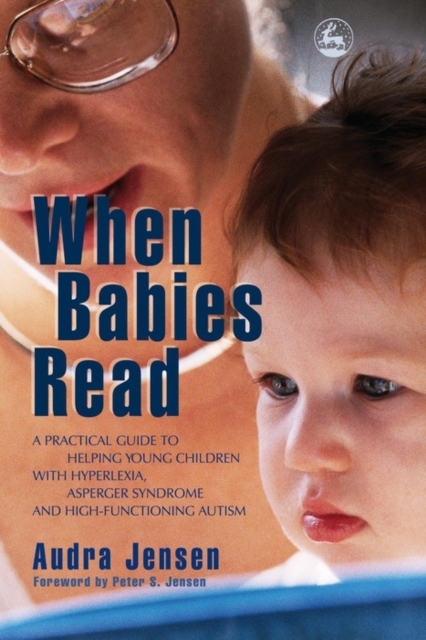
When babies read : a practical guide to help young children with hyperlexia, asperger syndrome and high-functioning autism
Audra Jensen' son began reading when he was only two years old. She shares her experiences - both the challenges and joys - of raising a child with autism and hyperlexia - an early and obsessive interest in the written word associated with social deficits and significant difficulty in understanding verbal language.The author stresses the importance of diagnosis of the condition for successful implementation of effective teaching strategies and encouragement of more typical childhood development. As well as useful advice, this guide provides a comprehensive reading curriculum specially designed for young, challenged children to help promote their reading ability.With practical suggestions on how to modify teaching and therapy programmes to suit a child's individual learning style, this practical guide will prove invaluable for parents of children with autism and hyperlexia.
eBook
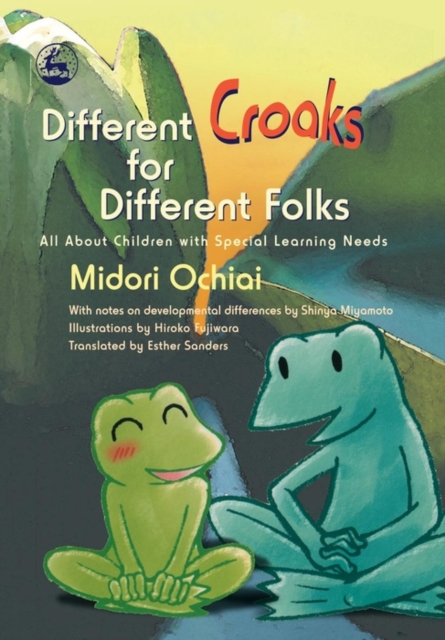
Different croaks for different folks : all about children with special learning needs
This illustrated book explores the difficulties faced by 'frogs with a different croak'. Aimed at children with autism and related spectrum conditions, Teacher Toad's lessons give practical advice on issues covering everything from hard-to-break habits to physical coordination difficulties.
eBook

Kernel Methods in Protein Structure Prediction
This chapter contains sections titled:
Introduction
Protein Structures
Kernel Methods
Kernels in Protein Structure Prediction
Conclusion
References
Book Chapter

Sixteen facial expressions occur in similar contexts worldwide
Understanding the degree to which human facial expressions co-vary with specific social contexts across cultures is central to the theory that emotions enable adaptive responses to important challenges and opportunities
1
–
6
. Concrete evidence linking social context to specific facial expressions is sparse and is largely based on survey-based approaches, which are often constrained by language and small sample sizes
7
–
13
. Here, by applying machine-learning methods to real-world, dynamic behaviour, we ascertain whether naturalistic social contexts (for example, weddings or sporting competitions) are associated with specific facial expressions
14
across different cultures. In two experiments using deep neural networks, we examined the extent to which 16 types of facial expression occurred systematically in thousands of contexts in 6 million videos from 144 countries. We found that each kind of facial expression had distinct associations with a set of contexts that were 70% preserved across 12 world regions. Consistent with these associations, regions varied in how frequently different facial expressions were produced as a function of which contexts were most salient. Our results reveal fine-grained patterns in human facial expressions that are preserved across the modern world.
An analysis of 16 types of facial expression in thousands of contexts in millions of videos revealed fine-grained patterns in human facial expression that are preserved across the modern world.
Journal Article

Refutation Text Facilitates Learning: a Meta-Analysis of Between-Subjects Experiments
Scientific misconceptions are ubiquitous, and in our era of near-instant information exchange, this can be problematic for both public health and the public understanding of scientific topics. Refutation text is one instructional tool for addressing misconceptions and is simple to implement at little cost. We conducted a random-effects meta-analysis to examine the effectiveness of the refutation text structure on learning. Analysis of 44 independent comparisons (n = 3,869) showed that refutation text is associated with a positive, moderate effect (g = 0.41, p < .001) compared to other learning conditions. This effect was consistent and robust across a wide variety of contexts. Our results support the implementation of refutation text to help facilitate scientific understanding in many fields.
Journal Article

Scripted Remedies: Leveraging AI and Pop Culture in Nursing Pharmacology Case Studies
Background
Nursing pharmacology, essential for patient safety, benefits from innovative teaching methods that enhance student engagement and understanding. This study evaluates the effects of integrating pop culture and artificial intelligence (AI) into nursing pharmacology case studies, aiming to improve learning outcomes.
Method
A total of 80 AI-assisted, pop culture-infused case studies that illustrated pharmacological principles were developed using diverse media narratives. Student performance on related exam questions was compared using a paired t test.
Results
Scores for pop culture-based questions (M = 0.91 [SD = 0.065]) improved significantly compared with traditional questions (M = 0.84 [SD = 0.087]), with a large effect size (Cohen's d = 1.01, p < .001), indicating enhanced engagement and retention.
Conclusion
Incorporating pop culture and AI into pharmacology education significantly enhanced student engagement and understanding, suggesting a promising approach to making learning more accessible, enjoyable, and relevant. [J Nurs Educ. 2025;64(X):XXX–XXX.]
Journal Article

When History Returns
Turns to theories and cultural representations of psychosocial life to reflect on, and better understand, the challenges of learning in times of social strife.
When History Returns brings together psychoanalytic theories of learning with the antinomies of social strife. From a psychoanalytic perspective, history returns through transitional scenes of inheriting a past one could not make, experiencing a present affected by what came before, and facing a future one can neither know nor predict. Taking such scenes as the subject of education, Deborah P. Britzman provides new approaches and vocabulary for conceptualizing experience and understanding, as expressed in psychoanalysis, literature, film, clinical case studies, and warm pedagogy. Britzman argues that novel quests for humane responsibility take hold in the fallout of understanding, in the feel of history, in imaginative dialogues and missed encounters, and in searches for friendship, belonging, and affiliation. Each chapter charts these quests in contemporary education, carrying readers into the heart of learning and the emotional situations that urge the transitions of difficult knowledge into care for thinking and the questions that follow.
eBook

The learning lives of digital youth-beyond the formal and informal
The main objective of the paper is to present an outline for an approach studying young people as learners across contexts, presented here as a 'learning lives approach'. For youth, the two most time-consuming aspects of their daily lives are schooling and media use. In research, we tend to study these as two separate worlds. The challenge is to find ways of understanding the interconnections between these two worlds as experienced by young people. The term 'learning lives' is meant to grasp the longer trajectories of learning that young people are involved in, moving from one setting to another. The paper explores key issues that inform a learning lives approach: theoretically, conceptually and methodologically. It is broader in scope than former approaches, comprising a study of learning as lifelong and lifewide in studying young people, new media and learning.
Journal Article