
Catalogue Search | MBRL


Are you sure you want to remove the book from the shelf?

{{itemTitle}}
16
result(s) for
"post-new order"
Sort by:

From Islamic modernism to Islamic conservatism: the case of West Sumatra Provinces, Indonesia
The study of the rise of Islamic conservatism in the context of local politics has not been the main focus of studies on Islamic conservatism in Indonesia. Studies on Islamic conservatism have so far emphasized the national political aspect, which illustrates that there has been a change in the dynamics of Islam towards a conservative turn. This article responds to various studies on Islamic conservatism in Indonesia by focusing on the emergence of local Islamic conservatism movements in West Sumatra Province after the New Order. West Sumatra is one of the regions predominantly inhabited by ethnic Minangkabau, which has long been known as a driving force in the Indonesian Islamic renewal and modernism movement. This research uses a qualitative method, with a case study approach, by interviewing actors, religious groups, traditional and religious leaders, and local Islamic organizations. This study found that the change in the spectrum of Islam from Islamic modernism to Islamic conservatism was influenced by several factors. First, the agency factor of post-New Order political openness was utilized by local Islamic organizations to promote religious conservatism. Second, the structural factor of political opportunities is the momentum in the promotion of Islamic conservatism. Third, Local identity was used as an instrument to promote Islamic conservatism in West Sumatra. This study is different from previous studies, as historical factors are the main factors in the proliferation of local Islamic conservatism movements such as in West Java, South Sulawesi, Solo, and West Sumatra.
Rising of religious Islamic conservatism has been expanding and increasing in the last two decades in Indonesia. The phenomenon of increasing Islamic conservatism is not only a national phenomenon but has also developed in the context of local politics in the province of West Sumatra, Indonesia. This change in Islamic orientation towards religious conservatism is contrary to the history of local Minangkabau Islam as an entity in Islamic renewal and Islamic modernism in Indonesia in the past. This article explains the change in the religious spectrum from modernism to Islamic conservatism that occurred in West Sumatra, which is little attention to the main concern of researchers on Islamic conservatism in Indonesia. Previous studies of Islamic conservatism in Indonesia tend to emphasize national phenomena and has not been a concern on Islamic conservatism in the context of local politics, especially in West Sumatra.
Journal Article

The Shift of Kyai's Roles in Kediri East Java in the Post New-Order Era: The contribution on local environment context
This study discusses kyai's roles in responding to the social, economic, and political changes in Kediri, East Java, in the post new-order era. Since the collapse of Soeharto's power in 1998, Indonesia was viewed as a model of the unity of Islam and democration. Islam played important roles in the orientation of the political form in Indonesian. The stronger contribution of the Muslims after the new order can not be separated from the roles of kyai. To date, kyai has a role of selecting outside cultures that enter the society. Unfortunately, the capability of kyai to selesct outside cultures is often not comparable to the swift flow of culture that reduce the role of kyai. This study concludes that the ownership of all symbolic, social, economic, and cultural capitals, has not been able to lead kyai to be successful in all arenas of their struggle.This is because efforts to strengthen economic and social capitals, especially political capital, turned out to weaken symbolic capital. The further impact is that their followers do not provide adequate support when kyai develop their wings in economic and political affairs.
Journal Article

Celebrification of Politics: Understanding Migration of Celebrities into Politics Celebrification of Celebrity Politicians in the Emerging Democracy of Indonesia
This work proposes a theory of ‘celebritisation of politics’. It assumes that celebritisation of politics takes shape once politics and political affairs are celebritised. It argues that in democratic countries, not merely individual celebrity turns into politician (celebrification of celebrity-politician), but also individual politician transmutes into celebrity (celebrification of celebrity-politician). The degree to which these celebrifications take place is likely determined by the country-, the media-, celebrity- and audiences-related factors. The first includes political party, government, media and election systems. The second incorporates mediatisation, representation and commodification of celebrity politician by the media and political economic structures of the media and cultural industries. The third consist of diversification and migration of celebrity politician and his/her personal and professional backgrounds. The fourth is connected with characteristics of the audiences addressed by the media and cultural industries, celebrity politician and political actor and organisation s/he associated with. Focusing on Indonesia’s democracy, this work reveals that establishments of the democratic political, media and election systems lead to celebrification of celebrity-politicians taking place in this country. In facing the parliamentary and local government elections, political parties recruited and commoditised substantial number of celebrities as candidates and represented them as political leaders to captivate the electorates and seek either parliamentary or local government offices. Some of them succeeded in such elections. They were migrating not merely across political parties, but also across the election arenas. Total number of those who turned into celebrity-politicians increased substantially, but none of them successfully came up as prominent politicians.
Journal Article
The Routledge Handbook of Transformative Global Studies
The Routledge Handbook of Transformative Global Studies provides
diverse and cutting-edge perspectives on this fast-changing field. For 30 years the
world has been caught in a long 'global interregnum,' plunging from
one crisis to the next and witnessing the emergence of new, vibrant, multiple, and
sometimes contradictory forms of popular resistance and politics.
This global 'interregnum' - or a period of uncertainty where the
old hegemony is fading and the new ones have not yet been fully realized -
necessitates critical self-reflection, brave intellectual speculation and
(un)learning of perceived wisdoms, and greater transdisciplinary collaboration
across theories, localities, and subjects. This Handbook takes up this challenge by
developing fresh perspectives on globalization, development, neoliberalism,
capitalism, and their progressive alternatives, addressing issues of democracy,
power, inequality, insecurity, precarity, wellbeing, education, displacement, social
movements, violence and war, and climate change. Throughout, it emphasizes the
dynamics for system change, including bringing post-capitalist, feminist,
(de)colonial, and other critical perspectives to support transformative global
praxis.
This volume brings together a mixture of fresh and established scholars from across
disciplines and from a range of both Northern and Southern contexts. Researchers and
students from around the world and across the fields of politics, sociology,
international development, international relations, geography, social anthropology,
economics, area studies, and philosophy will find this an invaluable and fresh guide
to global studies in the 21st century.
eBook
The UN at war : peace operations in a new era
This book is a critical political and institutional reflection on UN peace operations. It provides constructive suggestions as to how the UN and the international system can evolve to remain relevant and tackle the peace and security challenges of the 21st century, without abandoning the principles that the UN was founded upon and on which the legitimacy of UN peace operations rests. The author analyses the evolving politics on UN peace operations of the five veto powers of the UN Security Council, as well as major troop-contributing countries and western powers. He investigates the move towards peace enforcement and counter-terrorism, and what consequences this development may have for the UN. Karlsrud issues a challenge to practitioners and politicians to make sure that the calls for reform are anchored in a desire to improve the lives of people suffering in conflicts on the ground—and not spurred by intra-organizational turf battles or solely the narrow self-interests of member states. Finally, he asks how the UN can adapt its practices to become more field- and people-centered, in line with its core, primary commitments of protecting and serving people in need.
eBook
China, the West, and Democratization
Drawing upon insights from international socialization theory and social psychology, this book examines China's efforts to multipolarize - and hence potentially de-liberalize - the international system from the local perspective of a non-democratic (yet democratizing) nation and then applies these insights to Beijing's current global agency in the context of the Belt and Road Initiative.
Specifically, the book scrutinizes Beijing's normative engagement in Kazakhstan, a nation that evolved from an enthusiastic supporter of the West's normative domination of international affairs into an overt critic - after having institutionalized relations with Beijing through the Shanghai Cooperation Organization. Tracing and juxtaposing the respective patterns of Kazakhstan's political identity development before the SCO entered the region and after, this book not only yields unexpected conclusions about the quality of post-Soviet democratization outcomes, but also about Beijing's local and global influence potentiality for the time to come - and its limits.
This book will be of key interest to scholars and students of China's normative power, democratization studies, post-Soviet studies, and International Relations.
eBook
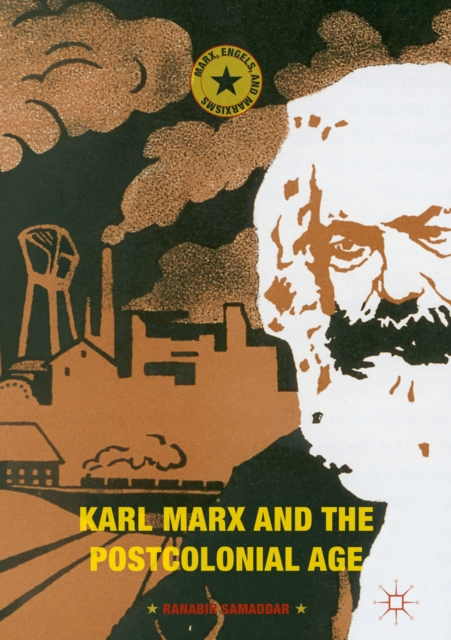
Karl Marx and the postcolonial age
Presents the very first amalgamation of two key and related areas of study: Marxism and Post-Colonialism Provides a close reading of Marx based on sources, notes, and references Avoids the usual doctrinaire controversies surrounding Marx's works and focuses on what has been relevant for the postcolonial context, which the book argues is a global context
eBook

moral economy reconsidered
Sure to be controversial and spur debate, this book presents a powerful analysis of rural change to marketization and globalization. Using Russia as a case study, it examines the how the rural population responded to reform policies during the transition away from communism. Wegren draws upon extensive field work, survey data, interviews, and wide-ranging Russian language source material to investigate adaptive behaviours by different groups of the rural population. The differentiated and nuanced analysis sheds considerable light on debates over whether actors are motivated mainly by rational or moral considerations.
eBook
Rethinking the post-Soviet experience : markets, moral economies, and cultural contradictions of post-socialist Russia
In this unique contribution to economic sociology, Jeffrey Hass examines the impact of culture, norms and political authority on Russia's post-socialist transition. The interactions and contradictions of moral economies and market relations are examined, exploring the often overlooked social dimension to market-building in Russia.
eBook

Rising China in the Changing World Economy
China's rapid and sustained growth over last thirty years has propelled it to become the world's second largest economy today and potentially the largest in the foreseeable future. As one of the first major economies pulling out of recession and the last remaining major socialist country in the world today, China presents a challenge to established thinking on the essential primacy of global capitalism and the settled nature of the world system - as China becomes more integrated into the world economy and the international system, both are themselves potentially transformed as a result of China's involvement. This book explores a wide range of issues connected with the impact of China on the global economy and the prevailing international system. Subjects covered include China's multinationals, international acquisitions, the exchange rate, research and development and technology transfer, China's emerging major business groupings, and small and medium sized enterprises.
eBook