
Catalogue Search | MBRL


Are you sure you want to remove the book from the shelf?

{{itemTitle}}
2,214
result(s) for
"power of god"
Sort by:

Spiritual intelligence can heal South Africa and christianity has a major role to play
In South Africa (SA), we live in a sick society with drugs, alcohol abuse, rape, murder, shootings, theft, hijackings, gambling, pornography and so many more evils. What is wrong in SA? The author of this article argues that our problems in SA are a result of God, religion and religious scriptures being marginalised in society – a growing absence of spiritual intelligence. A lack of spiritual intelligence contributes to people’s abuse of power. This power abuse can be prevented once human race has been made aware of a supernatural power. This awareness, known as spiritual intelligence, thus seems to be an answer to our country’s problems. The author shows how the idea of spiritual intelligence has emerged into a modern debate and how the importance of spiritual intelligence has become known and debated among academics, psychologists, educators and business people. This article suggests that Christianity should take part in this debate and play a role in developing spiritual intelligence, in making human race aware of the supernatural power of the Christian God, in providing moral behaviour that can benefit the world by bringing religion back to society to prevent power abuse and to heal an out-of-control world.
Journal Article
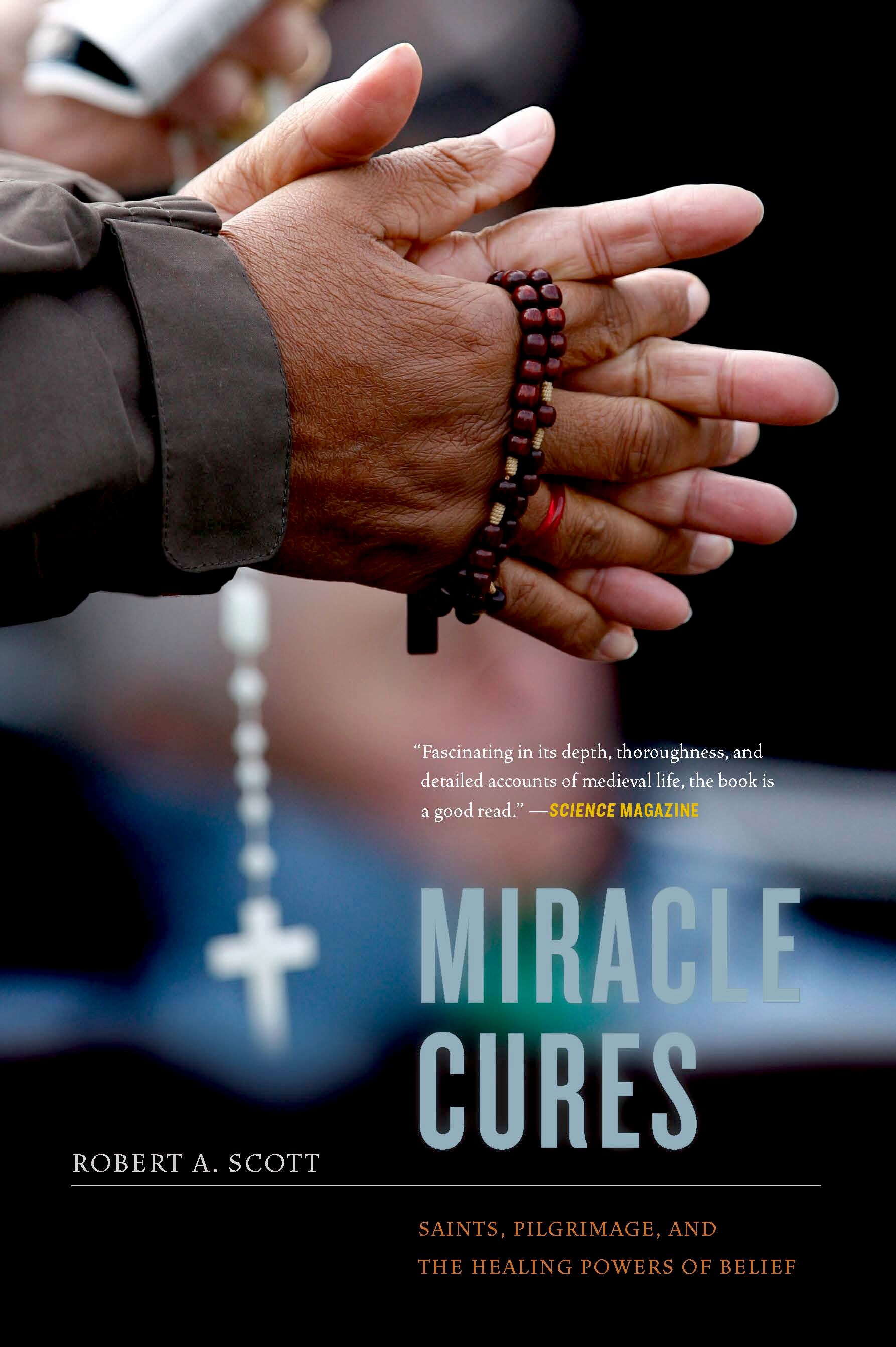
Miracle Cures
Iconic images of medieval pilgrims, such as Chaucer’s making their laborious way to Canterbury, conjure a distant time when faith was the only refuge of the ill and infirm, and thousands traveled great distances to pray for healing. Why, then, in an age of advanced biotechnology and medicine, do millions still go on pilgrimages? Why do journeys to important religious shrines—such as Lourdes, Compostela, Fátima, and Medjugorje—constitute a major industry? In Miracle Cures, Robert A. Scott explores these provocative questions and finds that pilgrimage continues to offer answers for many. Its benefits can range from a demonstrable improvement in health to complete recovery. Using research in biomedical and behavioral science, Scott examines accounts of miracle cures at medieval, early modern, and contemporary shrines. He inquires into the power of relics, apparitions, and the transformative nature of sacred journeying and shines new light on the roles belief, hope, and emotion can play in healing.
eBook

For the Rock Record
According to the idea of intelligent design, nature's complexity is the result of deliberate planning by a supernatural creative force. To date, most scientific arguments against this form of creationism have been made by evolutionary biologists. In this volume, a team of earth scientists reveals that the flaws of intelligent design are not limited to the biological sciences. Indeed, the geological sciences offer some of the best refutations of intelligent design arguements. For the Rock Record is dedicated to the proposition that the idea of intelligent design should be of serious concern to everyone. Editors Jill S. Schneiderman and Warren D. Allmon have gathered leading figures from the geological community with a wide range of viewpoints that go to the heart of the debate over what is and is not science. The purveyors of intelligent design theories and its kindred philosophies threaten the scientific literacy that our society needs by confusing faith and the practice of science. This collection offers a much-needed response.
eBook

“Anatheism” within the framework of theodicy : from theistic thinking to theopaschitic thinking in a pastoral hermeneutics
The Syrian and refugee crises, the violent radicalisation in Europe, and global xenophobia stir up anew the link between the human quest for meaning and hope within the realm of human misery and destructive acts of severe evil. The article focuses on the problem of theodicy and its link to God images. It discusses both inclusive and exclusive approaches to the theodicy issue, and proposes a paradigm shift from threat power to intimate, vulnerable power. A diagram is designed in order to identify different metaphors for God in pastoral caregiving. With reference to a pastoral approach, lamentation is viewed as an appropriate variant for theodicy. In the attempt to return to ‘God after God’ (anatheism), lamentation could help reinterpret the ḥesed of God in terms of our human predicament of ‘undeserved suffering’.
Journal Article

The God problem
The United States is one of the most highly educated societies on earth, and also one of the most religious. In The God Problem, Robert Wuthnow examines how middle class Americans juggle the seemingly paradoxical relationship between faith and reason. Based on exceptionally rich and candid interviews with approximately two hundred people from various faiths, this book dispels the most common explanations: that Americans are adept at keeping religion and intellect separate, or that they are a nation of \"joiners.\" Instead, Wuthnow argues, we do this—not by coming up with rational proofs for the existence of God—but by adopting subtle usages of language that keep us from making unreasonable claims about God. In an illuminating narrative that reveals the complex negotiations many undertake in order to be religious in the modern world, Wuthnow probes the ways of talking that occur in prayers, in discussions about God, in views of heaven, in understandings of natural catastrophes and personal tragedies, and in attempts to reconcile faith with science.
eBook
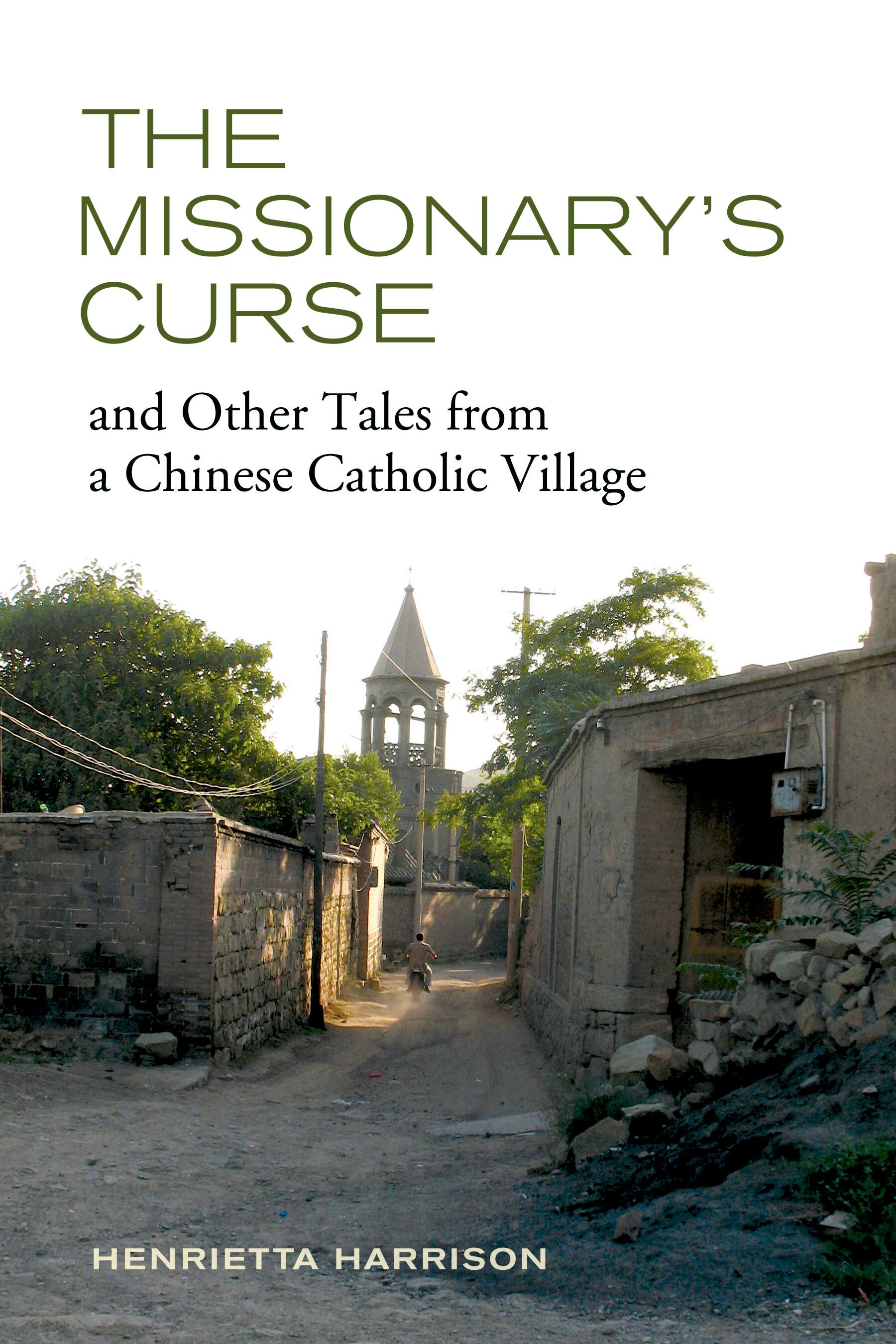
The missionary's curse and other tales from a Chinese Catholic village
The Missionary’s Curse tells the story of a Chinese village that has been Catholic since the seventeenth century, drawing direct connections between its history, the globalizing church, and the nation. Harrison recounts the popular folk tales of merchants and peasants who once adopted Catholic rituals and teachings for their own purposes, only to find themselves in conflict with the orthodoxy of Franciscan missionaries arriving from Italy. The village’s long religious history, combined with the similarities between Chinese folk religion and Italian Catholicism, forces us to rethink the extreme violence committed in the area during the Boxer Uprising. The author also follows nineteenth century Chinese priests who campaigned against missionary control, up through the founding of the official church by the Communist Party in the 1950s. Harrison’s in-depth study provides a rare insight into villager experiences during the Socialist Education Movement and Cultural Revolution, as well as the growth of Christianity in China in recent years. She makes the compelling argument that Catholic practice in the village, rather than adopting Chinese forms in a gradual process of acculturation, has in fact become increasingly similar to those of Catholics in other parts of the world.
eBook

Der 'Pantokrator': Die Inszenierung von Gottes Macht in der Offenbarung des Johannes
God’s power according to Revelation. The article argues that the ‘power of God’ expressed by the title ‘Pantokrator’ in the Revelation of John should be interpreted against a concrete context and issues about God’s deeds of righteousness. From a human perspective God seems to be passive and silent concerning the suffering of believers caused by the enemies of God. However, God’s sovereignty transcends all secular and supernatural powers. The power of God manifests itself in the acts of Jesus the Messiah whose power is paradoxically proclaimed by his being described as both a lion and a lamb.
Journal Article
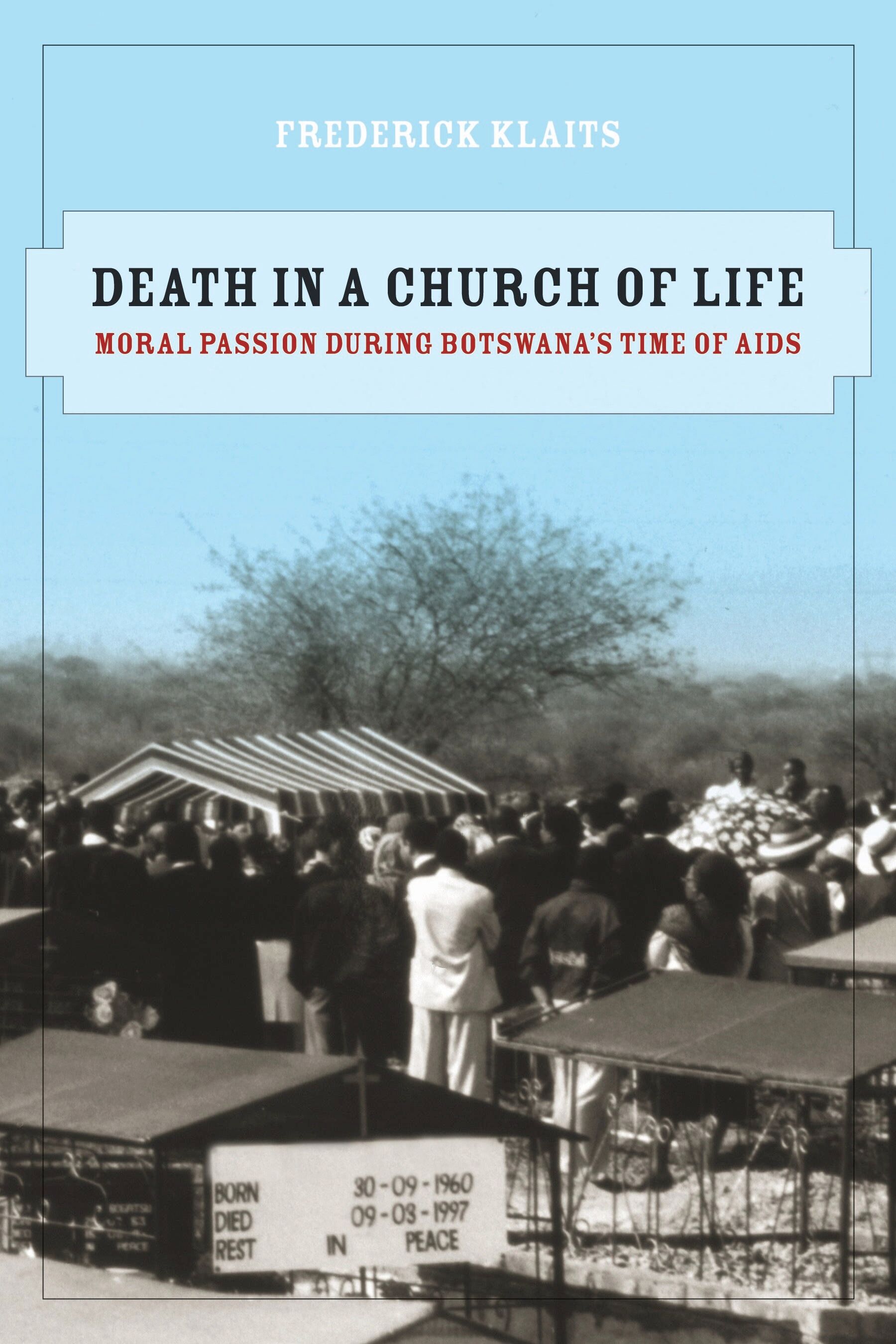
Death in a Church of Life
This deeply insightful ethnography explores the healing power of caring and intimacy in a small, closely bonded Apostolic congregation during Botswana's HIV/AIDS pandemic. Death in a Church of Life paints a vivid picture of how members of the Baitshepi Church make strenuous efforts to sustain loving relationships amid widespread illness and death. Over the course of long-term fieldwork, Frederick Klaits discovered Baitshepi's distinctly maternal ethos and the \"spiritual\" kinship embodied in the church's nurturing fellowship practice. Klaits shows that for Baitshepi members, Christian faith is a form of moral passion that counters practices of divination and witchcraft with redemptive hymn singing, prayer, and the use of therapeutic substances. An online audio annex makes available examples of the church members' preaching and song.
eBook

A Quandary Concerning Immanence
A stationary eddy that constantly re-forms in the riverbed of the evolution of Western normative institutions, Legal Critique dates back, beyond modernity, to the beginning of the so-called Common Era. But critique also shapes the historical review of earlier phases of this evolution, and this not only as a method of the examination of sources, but also as a transferential displacement that tends to project into history the divides and aporias which define a present political situation. Unsurprisingly, this proceeding betrays more about current conceptions than it reveals about those of the past. The fate of the philosophical topic of immanence and transcendence and that of the proto-modern politics inaugurated by the distinction of God’s absolute versus ordered power offer a significant case in point. Certain critical orientations find in the long and complex history of these divides merely their own anticipated echo. Yet, the split between the adepts of an Aristotelian universe rooted in the
being
of the
good
and the followers of Spinoza, accustomed to absolute power and immanent causality, resists such simplifications and warrants a new examination.
Journal Article
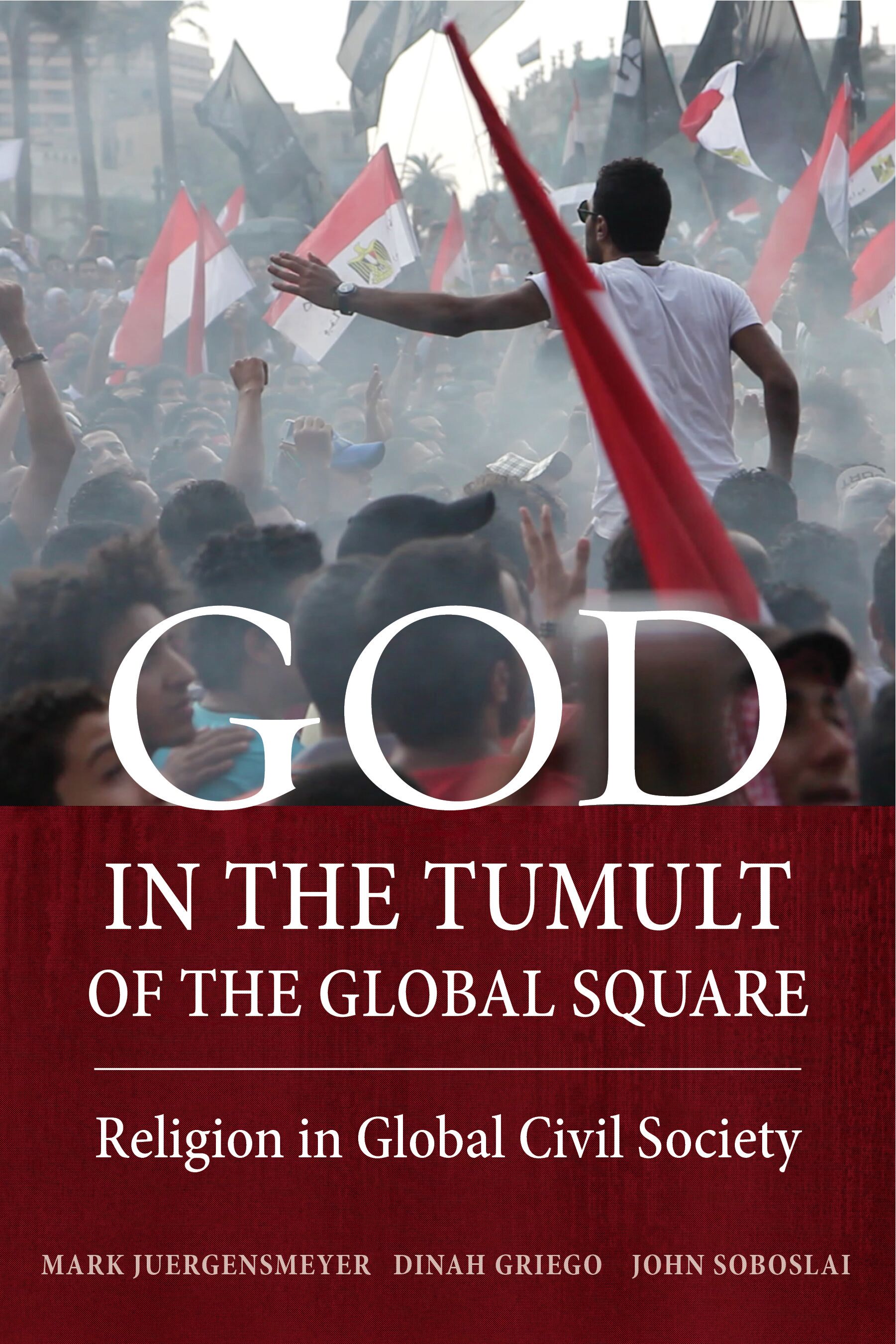
God in the tumult of the global square
How is religion changing in the twenty-first century? In the global era, religion has leapt onto the world stage, often in contradictory ways. Some religious activists are antagonistic and engage in protests, violent acts, and political challenges. Others are positive and help to shape an emerging transnational civil society. In addition, a new global religion may be in the making, providing a moral and spiritual basis for a worldwide community of concern about environmental issues, human rights, and international peace. God in the Tumult of the Global Square explores all of these directions, based on a five-year Luce Foundation project that involved religious leaders, scholars, and public figures in workshops held in Cairo, Moscow, Delhi, Shanghai, Buenos Aires, and Santa Barbara. In this book, the voices of these religious observers around the world express both the hopes and fears about new forms of religion in the global age.
eBook