
Catalogue Search | MBRL


Are you sure you want to remove the book from the shelf?

{{itemTitle}}
513,781
result(s) for
"prevention and control"
Sort by:

Wildfire!
Describes different kinds of wildfires, including forest fires, grass fires, and bush fires, explains how these fires are started, what conditions create a crisis, and steps taken to put fires out. Includes information on safety and prevention.
Book

Glycemia Reduction in Type 2 Diabetes — Microvascular and Cardiovascular Outcomes
In a secondary analysis comparing the effect of insulin glargine, glimepiride, liraglutide, and sitagliptin, added to metformin, on the incidences of microvascular complications and death, no material between-group differences were seen.
Journal Article


Trial design: Rivaroxaban for the prevention of major cardiovascular events after transcatheter aortic valve replacement: Rationale and design of the GALILEO study
Optimal antithrombotic treatment after transcatheter aortic valve replacement (TAVR) is unknown and determined empirically. The direct factor Xa inhibitor rivaroxaban may potentially reduce TAVR-related thrombotic complications and premature valve failure.
GALILEO is an international, randomized, open-label, event-driven, phase III trial in more than 1,520 patients without an indication for oral anticoagulation who underwent a successful TAVR (ClinicalTrials.govNCT02556203). Patients are randomized (1:1 ratio), 1 to 7days after a successful TAVR, to either a rivaroxaban-based strategy or an antiplatelet-based strategy. In the experimental arm, subjects receive rivaroxaban (10mg once daily [OD]) plus acetylsalicylic acid (ASA, 75-100mg OD) for 90days followed by rivaroxaban alone. In the control arm, subjects receive clopidogrel (75mg OD) plus ASA (as above) for 90days followed by ASA alone. In case new-onset atrial fibrillation occurs after randomization, full oral anticoagulation will be implemented with maintenance of the original treatment assignment. The primary efficacy end point is the composite of all-cause death, stroke, myocardial infarction, symptomatic valve thrombosis, pulmonary embolism, deep venous thrombosis, and systemic embolism. The primary safety end point is the composite of life-threatening, disabling, and major bleeding, according to the Valve Academic Research Consortium definitions.
GALILEO will test the hypothesis that a rivaroxaban-based antithrombotic strategy reduces the risk of thromboembolic complications post-TAVR with an acceptable risk of bleeding compared with the currently recommended antiplatelet therapy–based strategy in subjects without need of chronic oral anticoagulation.
Journal Article
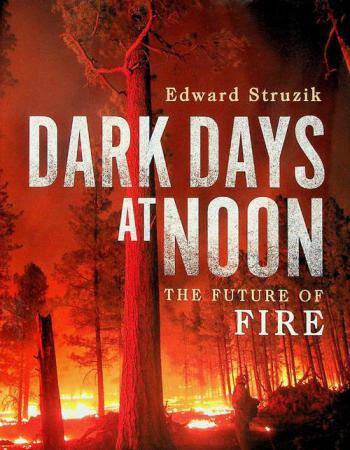
Dark days at noon : the future of fire
\"The catastrophic runaway wildfires advancing through North America and other parts of the world are not unprecedented. Fires loomed large once human activity began to warm the climate in the 1820s, leading to an aggressive firefighting strategy that has left many of the continent's forests too old and vulnerable to the fires that many tree species need to regenerate. Dark Days at Noon provides a broad history of wildfire in North America, from pre-European contact to the present, in the hopes that we may learn from how we managed fire in the past, and apply those lessons in the future. As people continue to move into forested landscapes to work, play, live, and ignite fires--intentionally or unintentionally--fire has begun to take its toll, burning entire towns, knocking out utilities, closing roads, and forcing the evacuation of hundreds of thousands of people. Fire management in North America requires attention and cooperation from both sides of the border, and many of the most significant fires have taken place at the boundary line. Despite a clear lack of political urgency among political leaders, Edward Struzik argues that wildfire science needs to guide the future of fire management, and that those same leaders need to shape public perception accordingly. By explaining how society's misguided response to fire has led to our current situation, Dark Days at Noon warns of what may happen in the future if we do not learn to live with fire as the continent's Indigenous Peoples once did.\"-- Provided by publisher.
Postexposure Doxycycline to Prevent Bacterial Sexually Transmitted Infections
In an open-label, randomized study involving men who have sex with men, doxycycline use after high-risk sexual exposure reduced the incidence of sexually transmitted infections (chlamydia, gonorrhea, and syphilis).
Journal Article

Fearsome forest fires
\"Discusses the science behind forest fires and what to do to stay safe from them\"-- Provided by publisher.
Book

Four year efficacy of prophylactic human papillomavirus quadrivalent vaccine against low grade cervical, vulvar, and vaginal intraepithelial neoplasia and anogenital warts: randomised controlled trial
Objectives To evaluate the prophylactic efficacy of the human papillomavirus (HPV) quadrivalent vaccine in preventing low grade cervical, vulvar, and vaginal intraepithelial neoplasias and anogenital warts (condyloma acuminata).Design Data from two international, double blind, placebo controlled, randomised efficacy trials of quadrivalent HPV vaccine (protocol 013 (FUTURE I) and protocol 015 (FUTURE II)). The trials were to be 4 years in length, and the results reported are from final study data of 42 months’ follow-up.Setting Primary care centres and university or hospital associated health centres in 24 countries and territories around the world.Participants 17 622 women aged 16-26 years enrolled between December 2001 and May 2003. Major exclusion criteria were lifetime number of sexual partners (>4), history of abnormal cervical smear test results, and pregnancy.Intervention Three doses of quadrivalent HPV vaccine (for serotypes 6, 11, 16, and 18) or placebo at day 1, month 2, and month 6.Main outcome measures Vaccine efficacy against cervical, vulvar, and vaginal intraepithelial neoplasia grade I and condyloma in a per protocol susceptible population that included subjects who received all three vaccine doses, tested negative for the relevant vaccine HPV types at day 1 and remained negative through month 7, and had no major protocol violations. Intention to treat, generally HPV naive, and unrestricted susceptible populations were also studied.Results In the per protocol susceptible population, vaccine efficacy against lesions related to the HPV types in the vaccine was 96% for cervical intraepithelial neoplasia grade I (95% confidence interval 91% to 98%), 100% for both vulvar and vaginal intraepithelial neoplasia grade I (95% CIs 74% to 100%, 64% to 100% respectively), and 99% for condyloma (96% to 100%). Vaccine efficacy against any lesion (regardless of HPV type) in the generally naive population was 30% (17% to 41%), 75% (22% to 94%), and 48% (10% to 71%) for cervical, vulvar, and vaginal intraepithelial neoplasia grade I, respectively, and 83% (74% to 89%) for condyloma.Conclusions Quadrivalent HPV vaccine provided sustained protection against low grade lesions attributable to vaccine HPV types (6, 11, 16, and 18) and a substantial reduction in the burden of these diseases through 42 months of follow-up.Trial registrations NCT00092521 and NCT00092534.
Journal Article

Wildfire readiness
\"As people expand settlement into wilder areas, the impact of wildfires, both naturally occurring and human-set, becomes more destructive. This timely book examines what scientists know about wildfires, whether we can predict them, and how we learn from each event. By studying the destruction they cause, scientists and engineers continue to come up with new and improved technologies to predict and control wildfires and better protect cities, buildings, and people. Case studies and brief bios of key scientists and organizations highlight the information\"-- Provided by publisher.
Book
Higher or Lower Hemoglobin Transfusion Thresholds for Preterm Infants
In this open, randomized, multicenter trial involving extremely-low-birth-weight preterm infants, the use of a higher hemoglobin threshold for red-cell transfusion did not improve survival without neurodevelopmental impairment at 22 to 26 months of age, corrected for prematurity.
Journal Article