
Catalogue Search | MBRL


Are you sure you want to remove the book from the shelf?

{{itemTitle}}
111
result(s) for
"protective relays"
Sort by:


A Machine Learning-Based Method for Identifying Critical Distance Relays for Transient Stability Studies
Protective relays play a crucial role in defining the dynamic responses of power systems during and after faults. Therefore, modeling protective relays in stability studies is crucial for enhancing the accuracy of these studies. Modeling all the relays in a bulk power system is a challenging task due to the limitations of stability software and the difficulties of keeping track of the changes in the setting information of these relays. Distance relays are one of the most important protective relays that are not properly modeled in current practices of stability studies. Hence, using the Random Forest algorithm, a fast machine learning-based method is developed in this paper that identifies the distance relays required to be modeled in stability studies of a contingency, referred to as critical distance relays (CDRs). GE positive sequence load flow analysis (PSLF) software is used to perform stability studies. The method is tested using 2018 summer peak load data of Western Electricity Coordinating Council (WECC) for various system conditions. The results illustrate the great performance of the method in identifying the CDRs. They also show that to conduct accurate stability studies, only modeling the CDRs suffices, and there is no need for modeling all the distance relays.
Journal Article
Hardware-in-the-Loop Testing for Protective Relays Using Real Time Digital Simulator (RTDS)
With the increasing size and complexity of power systems, it is crucial to have an effective protection system in place to ensure its reliability. One of the important components of the protection system are relays. It is important for a relay to operate dependably and securely so that any fault can be cleared in time to minimize damages to the power network. However, it is important to test a relay in a realistic environment before commissioning it to the network. Testing a relay in the actual network can be expensive with limited fault scenarios. Hence, Hardware-in-the-Loop (HIL) testing is an efficient method to perform closed-loop testing of a relay since numerous fault cases can be simulated to provide a realistic operating environment for the relay under test. This paper sheds light on the HIL testing done for protective relays using a sample distribution system using RTDS. Two SEL-351 relays have been used in this experiment, and proper settings for the relays are calculated for coordination. The paper also describes the procedure of configuring the relay and other RTDS components crucial for interfacing of the relay with RTDS. After test setup, a pre-fault, fault, and post-fault analysis was done for the system. The results obtained from these analyses are cross-checked with the event history of the two SEL-351 relays, obtained with AcSELerator Quickset software. This paper provides thorough information for researchers to replicate the presented study or to develop new HIL experiments. It can also help in developing a fundamental understanding of the HIL testing setup that can be further applied to a more complex power system.
Journal Article


Power System Protective Relaying
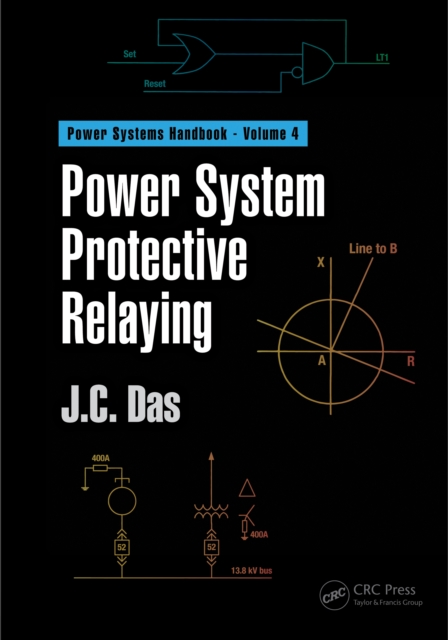
This book focuses on protective relaying, which is an indispensable part of electrical power systems. The recent advancements in protective relaying are being dictated by MMPRs (microprocessor-based multifunction relays). The text covers smart grids, integration of wind and solar generation, microgrids, and MMPRs as the driving aspects of innovations in protective relaying. Topics such as cybersecurity and instrument transformers are also explored. Many case studies and practical examples are included to emphasize real-world applications.
1. Modern Protective Relaying: An Overview
2. Protective Relays
3. Instrument Transformers
4. Microprocessor-Based Multifunction Relays
5. Current Interruption Devices and Battery Systems
6. Overcurrent Protection: Ideal and Practical
7. System Grounding
8. Ground Fault Protection
9. Bus-Bar Protection and Autotransfer of Loads
10. Motor Protection
11. Generator Protection
12. Transformer Reactor and Shunt Capacitor Bank Protection
13. Protection of Lines
14. Pilot Protection
15. Power System Stability
16. Substation Automation and Communication Protocols Including IEC 61850
17. Protective Relaying for Arc-Flash Reduction
\"This book is an excellent compilation of all the various topics of protective relaying. The focus is on protection systems and functions applied in various parts of the power system. The underlying fundamentals of power systems are not included in this book since they are handled in the other volumes of the handbook series. In the book, recent technological developments have been successfully taken into account, and there is even a chapter devoted to modern microprocessor-based multifunction relays. The book is based on the North American system design and standards but provides a vast amount of knowledge to engineers and students of this specific field all over the world.\" — Kimmo Kauhaniemi, University of Vaasa, Finland
Dr. J.C. Das is currently the President of Power System Studies, Inc. Snellville, USA. He headed the Electrical Power Systems Analysis Department at AMEC Inc., (now AMEC Foster Wheeler, Inc.) Tucker, GA, USA, for the last 30 years. He has varied experience in the utility industry, industrial establishments, hydroelectric generation, and atomic energy. He is responsible for power system studies, including short-circuit, load flow, harmonics, stability, arc-flash hazard, grounding, switching transients, EMTP simulations, and protective relaying. He conducts courses for continuing education in power systems and has authored or coauthored approximately 65 technical publications, six textbooks, and over 7,000 total published pages.
eBook

Protective relaying : principles and applications
\"Maintaining the features that sent the previous edition into 10 printings, Protective Relaying, Second Edition covers large and small utility systems as well as industrial and commercial systems ... provides a completely new treatment of generator protection in compliance with the most recent governmental rules and regulations ... supplies expanded information on symmetrical components ... delineates individual protection practices for all equipment components ... furnishes an overview of power system grounding, including system ferroresonance and safety grounding basics ... analyzes power system performance during abnormal conditions ... describes the relationship of input source performance to protection ... and more.\"--Jacket.
Book

Relay protection system of transmission line based on AI
With the development of modern power systems, higher requirements are imposed on relay protection technology. Traditional relay protection and fault diagnosis technologies have been unable to meet the requirements of the continuous development of power systems, and relay protection systems based on artificial intelligence(AI) technology have received increasing attention. Therefore, this document first analyses the weaknesses of traditional broadcast line protection and uses the adaptability and self-learning of artificial intelligence(AI); to propose the concept of protection of a relay line based on AI. In combination with the artificial nervous network, the AI-based relay protection system shall be studied and the experimental model shall be developed. This paper validates it with simulation experiments. The research results show that for the analysis of the ANN test results of the subnetwork, the actual output of the subnetwork is very close to the ideal output, and the error does not exceed 0.2%. The system has good performance and high reliability.
Journal Article