
Catalogue Search | MBRL


Are you sure you want to remove the book from the shelf?

{{itemTitle}}
104
result(s) for
"psychedelic rock"
Sort by:


Music Is Power
Honorable Mention, 2019 Foreword INDIES Awards - Performing Arts MusicHonorable Mention, Graphis 2021 Design Annual CompetitionPopular music has long been a powerful force for social change. Protest songs have served as anthems regarding war, racism, sexism, ecological destruction and so many other crucial issues. Music Is Power takes us on a guided tour through the past 100 years of politically-conscious music, from Pete Seeger and Woody Guthrie to Green Day and NWA. Covering a wide variety of genres, including reggae, country, metal, psychedelia, rap, punk, folk and soul, Brad Schreiber demonstrates how musicians can take a variety of approaches- angry rallying cries, mournful elegies to the victims of injustice, or even humorous mockeries of authority-to fight for a fairer world. While shining a spotlight on Phil Ochs, Gil Scott-Heron, The Dead Kennedys and other seminal, politicized artists, he also gives readers a new appreciation of classic acts such as Lesley Gore, James Brown, and Black Sabbath, who overcame limitations in their industry to create politically potent music Music Is Power tells fascinating stories about the origins and the impact of dozens of world-changing songs, while revealing political context and the personal challenges of legendary artists from Bob Dylan to Bob Marley.Supplemental material (Artist and Title List): https://d3tto5i5w9ogdd.cloudfront.net/wp-content/uploads/2020/07/24001955/Music_Is_Power_Supplementary_Artist_Title_List.doc
eBook

Pink Floyd : behind the wall : the complete psychedelic history from 1965 to today
A complete illustrated history of one of the most popular rock bands of all time, Pink Floyd. With more than 250 images and a complete discography.
Book
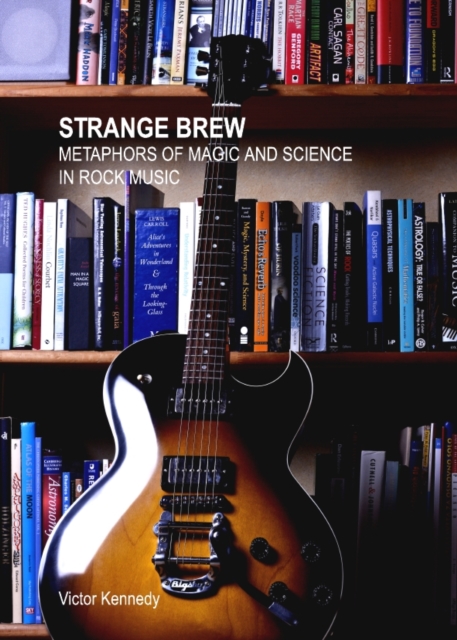
Strange Brew
\"Strange Brew\" is the title of a 1967 hit song from Creams album Disraeli Gears, which featured the most psychedelic cover art ever. The song is what postmodern scholars, influenced by Fredric Jameson, would call a pastiche: its lyrics combine images of love, witchcraft, and getting stoned with a note-for-note rendition of Albert Kings traditional blues song \"Oh Pretty Woman.\" The songs title is a metaphor suggesting that words and music can mix to become a kind of magic potion. Strange.
eBook


Psychedelic-assisted therapy from a narrative therapy perspective: A map for practitioners
Psychedelic-assisted therapy is currently in its second wave and enjoying a renaissance of sorts. This article describes a narrative therapy–inspired approach to working therapeutically with psychedelics. My intent in writing this paper is to provide a model for how narrative therapy ideas in practice can be applied to the three stages of psychedelic-assisted therapy: preparation, medicine work and integration. In describing this map for practitioners, the rites of passage metaphor, as applied therapeutically by Michael White, is used to outline the phases a person will move through in their psychedelic-assisted therapy journey.
Journal Article

Sgt. Pepper at fifty : the mood, the look, the sound, the legacy of the Beatles' great masterpiece
Provides a \"critique of the album by looking at the unique cultural circumstances that led to its creation; examining the rich assemblage of influences that informed its sound; exploring the landmark cover art, which continues to inspire, debate, and intrigue; and assessing the record's enduring legacy as the pinnacle of British pop\"--Amazon.com.
Book

Banding together
Why do some music styles gain mass popularity while others thrive in small niches?Banding Togetherexplores this question and reveals the attributes that together explain the growth of twentieth-century American popular music. Drawing on a vast array of examples from sixty musical styles--ranging from rap and bluegrass to death metal and South Texas polka, and including several created outside the United States--Jennifer Lena uncovers the shared grammar that allows us to understand the cultural language and evolution of popular music.
What are the common economic, organizational, ideological, and aesthetic traits among contemporary genres? Do genres follow patterns in their development? Lena discovers four dominant forms--Avant-garde, Scene-based, Industry-based, and Traditionalist--and two dominant trajectories that describe how American pop music genres develop. Outside the United States there exists a fifth form: the Government-purposed genre, which she examines in the music of China, Serbia, Nigeria, and Chile. Offering a rare analysis of how music communities operate, she looks at the shared obstacles and opportunities creative people face and reveals the ways in which people collaborate around ideas, artworks, individuals, and organizations that support their work.
eBook

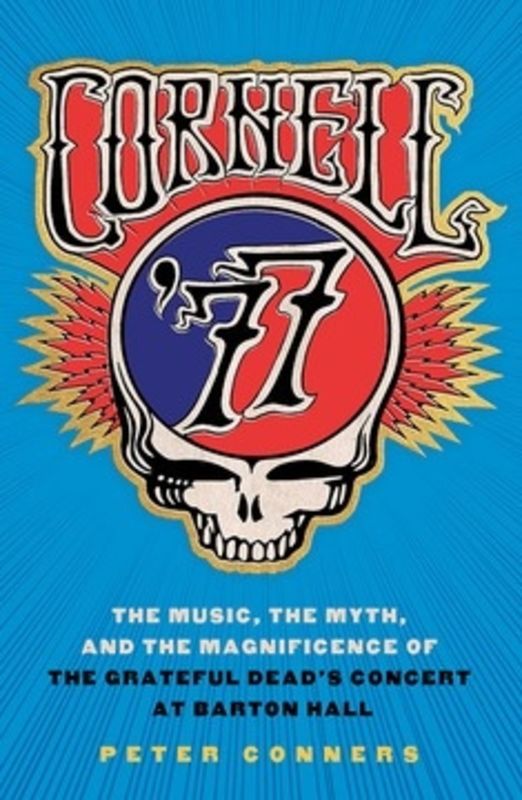
Cornell '77
On May 8, 1977, at Barton Hall, on the Cornell University campus, in front of 8,500 eager fans, the Grateful Dead played a show so significant that the Library of Congress inducted it into the National Recording Registry. The band had just releasedTerrapin Stationand was still finding its feet after an extended hiatus. In 1977, the Grateful Dead reached a musical peak, and their East Coast spring tour featured an exceptional string of performances, including the one at Cornell.
Many Deadheads claim that the quality of the live recording of the show made by Betty Cantor-Jackson (a member of the crew) elevated its importance. Once those recordings-referred to as \"Betty Boards\"-began to circulate among Deadheads, the reputation of the Cornell '77 show grew exponentially. With time the show at Barton Hall acquired legendary status in the community of Deadheads and audiophiles.
Rooted in dozens of interviews-including a conversation with Betty Cantor-Jackson about her recording-and accompanied by a dazzling selection of never-before-seen concert photographs, Cornell '77 is about far more than just a single Grateful Dead concert. It is a social and cultural history of one of America's most enduring and iconic musical acts, their devoted fans, and a group of Cornell students whose passion for music drove them to bring the Dead to Barton Hall. Peter Conners has intimate knowledge of the fan culture surrounding the Dead, and his expertise brings the show to life. He leads readers through a song-by-song analysis of the performance, from \"New Minglewood Blues\" to \"One More Saturday Night,\" and conveys why, forty years later, Cornell '77 is still considered a touchstone in the history of the band.
eBook