
Catalogue Search | MBRL


Are you sure you want to remove the book from the shelf?

{{itemTitle}}
1,462
result(s) for
"réfugié"
Sort by:

The Rights of Others
The Rights of Others examines the boundaries of political community by focusing on political membership - the principles and practices for incorporating aliens and strangers, immigrants and newcomers, refugees and asylum seekers into existing polities. Boundaries define some as members, others as aliens. But when state sovereignty is becoming frayed, and national citizenship is unravelling, definitions of political membership become much less clear. Indeed few issues in world politics today are more important, or more troubling. In her Seeley Lectures, the distinguished political theorist Seyla Benhabib makes a powerful plea, echoing Immanuel Kant, for moral universalism and cosmopolitan federalism. She advocates not open but porous boundaries, recognising both the admittance rights of refugees and asylum seekers, but also the regulatory rights of democracies. The Rights of Others is a major intervention in contemporary political theory, of interest to large numbers of students and specialists in politics, law, philosophy and international relations.
eBook

Mistrust, Anger, and Hostility in Refugees, Asylum Seekers, and Immigrants: A Systematic Review
Western societies are witnessing major demographic changes because of human displacement. The September 11 attacks and the wars that followed have increased host societies' feelings of hostility, anger, and mistrust toward refugees, asylum seekers, and immigrants, especially those from Arab countries. This systematic review aimed to gather available peer-reviewed literature regarding how society's hostile attitudes and feelings of anger and mistrust toward these refugees may have a negative impact on their general well-being. It further aimed to identify whether society's discrimination and negative feelings toward this population influence the refugees' willingness to seek support from services provided by the host society and, simultaneously, to trust the helping professionals who provide the services. Twelve studies met the inclusion criteria. Results indicated that: (a) host societies' mistrust, hostility, and discrimination expressed in overt or subtle ways toward refugees, asylum seekers, and immigrants have a harmful impact on their biopsychosocial well-being, often triggering feelings of helplessness, anger, frustration, and general mistrust; (b) society's discriminatory attitudes and behaviours may lead refugees and asylum seekers to avoid social and health services even when needed, and to transfer their negative feelings onto helping professionals; and (c) immigration laws and policies may have deleterious effects on their biopsychosocial well-being, on society's negative views of them, and on their own perception vis-à-vis available services and helping professionals. Some recommendations are provided to address these concerns.
Les sociétés occidentales assistent actuellement à une évolution démographique importante dû au déplacement humain. Les attentats du 11 septembre et les guerres qui ont suivi ont eu pour effet d'augmenter, parmi les sociétés d'accueil, les sentiments d'hostilité, de colère et de méfiance à l'égard des réfugiés, des demandeurs d'asile et des immigrants, en particulier ceux des pays arabes. Le présent examen systématique visait à rassembler toute documentation évaluée par les pairs concernant la manière dont les attitudes et sentiments de colère et de méfiance à l'égard de ces réfugiés peuvent avoir un impact négatif sur leur bien-être général. Il visait également à déterminer si la discrimination de la société et les sentiments négatifs envers cette population peuvent influencer la volonté des réfugiés à trouver de l'aide parmi les services fournis par la société d'accueil et dans un même temps, leur disposition à faire confiance aux professionnels offrant les services. Au total, 12 études répondaient aux critères d'inclusion. Les résultats ont indiqué que : (a) la méfiance, l'hostilité et la discrimination exprimées par les sociétés d'accueil de façons explicite et implicite à l'égard des réfugiés, demandeurs d'asile et immigrants ont un effet négatif sur leur bien-être biopsychosocial, pouvant parfois déclencher des sentiments d'impuissance, de colère, de frustration et de méfiance générale; (b) les attitudes et comportements discriminatoires de la société d'accueil peuvent empêcher les réfugiés et demandeurs d'asile à solliciter de l'aide auprès des services sociaux et de la santé même en cas de besoin en plus de transférer leurs sentiments négatifs sur les professionnels aidants; et (c) les lois et politiques en matière d'immigration peuvent avoir des effets nuisibles sur leur bien-être biopsychosocial, sur les perceptions de la société à leur égard et sur leurs propres perceptions vis-à-vis les services offerts et les professionnels aidants. Certaines recommandations sont fournies pour répondre à ces préoccupations.
Journal Article

L’expérience scolaire des enfants de réfugiés syriens au cours de l’exil : du transit à la réinstallation
Cadre de la recherche : Cet article est basé sur une enquête ethnographique menée auprès d’une dizaine de familles de réfugiés syriens arrivées à Strasbourg après 2011.Objectifs : On explicite les parcours scolaires des enfants, de la Syrie à la France en passant par les pays de transit (Liban, Turquie), afin de montrer les contraintes d’une scolarisation pendant l’exil, ainsi que les différentes formes de mobilisations familiales pour l’accès aux droits et la réussite scolaire de ces enfants. Méthodologie : Cette enquête de terrain ethnographique mobilise des méthodes qualitatives telles que l’« observation participante » et le recueil de « récits de vie ». Résultats : Les contraintes scolaires rencontrées dans les pays de transit sont liées aux limites de l’accès aux droits. Ces dernières créent des ruptures et placent les enfants en situation de retard scolaire au moment de leur arrivée en France. Les obstacles posés par les retards accumulés, la langue et les contenus enseignés conduisent parfois à des impasses. Malgré les difficultés, les familles sont aussi des actrices qui mobilisent différentes ressources pour assurer une poursuite de la scolarité à leurs enfants. Conclusion : Les contraintes successives pendant l’exil amènent à s’interroger sur les institutions scolaires qui évaluent et catégorisent les élèves en oubliant leurs parcours. Que pourrions-nous envisager afin d’assurer une égalité de traitement entre des enfants ayant des parcours différents ? Contribution : Partant des nombreuses recherches existantes qui traitent des contraintes scolaires des enfants réfugiés d’un point de vue institutionnel, cette recherche explore la famille de l’intérieur afin de montrer le point de vue de ses membres. Elle relie la dimension institutionnelle à la dimension familiale et individuelle.
Journal Article
Être parent à l’intersection de différents contextes socioculturels : l’expérience de mères réfugiées originaires du Moyen-Orient au Québec, Canada
Cadre de la recherche : Les parents réfugiés sont particulièrement à risque de vivre des difficultés structurelles, sociales et de santé mentale lors de leur arrivée au Québec. Parmi les multiples défis rencontrés, l’établissement dans un contexte socioculturel différent de celui de leur pays d’origine peut entraîner des difficultés importantes, en particulier lorsque ces contextes comportent des éléments discordants. Ces défis risquent d’être accrus lorsque les enfants sont âgés entre 0 et 5 ans. Objectifs : La présente étude explore l’expérience de la parentalité chez les mères réfugiées qui se trouvent à l’intersection de différents contextes socioculturels et qui ont un enfant entre 0 et 5 ans. De quelle manière vivent-elles leur parentalité face à des éléments culturels différents ?Méthodologie : Quinze participantes ont été rencontrées via des entretiens semi-structurés au sujet de leurs valeurs, leurs objectifs parentaux, ainsi que des défis qu’elles ont rencontrés en tant que mères depuis leur arrivée dans le contexte socioculturel québécois. Résultats : Les résultats révèlent des différences socioculturelles au sein de trois thèmes : 1) la manière de concevoir la famille et les liens en son sein, 2) la manière de concevoir les liens avec le voisinage, comme réseau de soutien, et 3) la manière de concevoir les libertés et les droits individuels de leur enfant.Conclusions : L’analyse des résultats met en lumière une différence sous-jacente aux trois thèmes : l’importance du collectif dans la vie quotidienne des participantes, par rapport à l’individualisme qui prévaut selon elles au Québec. La discussion permet de souligner la dimension multisystémique de cette différence et illustre la manière dont elle affecte l’expérience des mères réfugiées au quotidien. Contribution : L’étude permet de mieux comprendre l’expérience d’établissement des mères réfugiées au Québec. Plusieurs recommandations et pistes d’intervention sont proposées pour favoriser l’accompagnement des familles réfugiées.
Journal Article

Lessons from America
Every war has refugees; every revolution has exiles. Most of the
refugees of the French Revolution mourned the demise of the
monarchy. Lessons from America examines an unusual group
who did not. Doina Pasca Harsanyi looks at the American experience
of a group of French liberal aristocrats, early participants in the
French Revolution, who took shelter in Philadelphia during the
Reign of Terror. The book traces their path from enlightened salons
to revolutionary activism to subsequent exile in America and,
finally, back to government posts in France-illuminating the ways
in which the French experiment in democracy was informed by the
American experience.
eBook

Beyond criminalization: Immigration and the challenges for criminology
This paper discusses the increasing importance of administrative punishment in the penal field, using the judicialization of immigration conflicts in Canada as an example. Based on documentary analysis and the results of fieldwork conducted at the Immigration and Refugee Board of Canada between 2007 and 2009, I will present some characteristics of the legal translation of conflicts in immigration law and the forms of punishment involved. I will argue that these differ substantially from those in criminal law. My ultimate goal is to question the idea of criminalization of immigration as a category capable of nuancing the complexity of administrative forms of social response. Instead, I suggest that we should understand the forms of punishment in administrative law as they are (police measures and administrative sanctions), rethinking their role in the penal field to better understand how these forms of penalisation may even supplement or superimpose traditional criminalisation processes.
Journal Article

Things Fall Apart: Containing the Spillover from an Iraqi Civil War
\"Iraq is rapidly descending into all-out civil war. Unfortunately, the United States probably will not be able to just walk away from the chaos. Even setting aside the humanitarian nightmare that will ensue, a full-scale civil war would likely consume more than Iraq: historically, such massive conflicts have often had highly deleterious effects on neighboring countries and other outside states. Spillover from an Iraq civil war could be disastrous.\" Thus begins this sobering analysis of what the near future of Iraq could look like, and what America can do to reduce the threat of wider conflict. Preventing spillover of the Iraqi conflict into neighboring states must be a top priority. In explaining how that can be accomplished, Daniel Byman and Kenneth Pollack draw on their own considerable expertise as well as relevant precedents. The authors scrutinize several recent civil wars, including Lebanon, Chechnya, Afghanistan, Kosovo, and Bosnia. After synthesizing those experiences into lessons on how civil wars affect other nations, Byman and Pollack draw from them to produce recommendations for U.S. policy. Even while the Bush Administration attempts to prevent further deterioration of the situation in Iraq, it needs to be planning how to deal with a full-scale civil war if one develops.
eBook

Homelessness, citizenship, and identity : the uncanniness of late modernity
In the aftermath of September 11, donations to the poor and homeless have declined while ordinances against begging and sleeping in public have increased. The increased security of public spaces has been matched by a quest for increased security and surveillance of immigrants. In this groundbreaking study, Kathleen R. Arnold explores homelessness in terms of the globalization of the economy, national identity, and citizenship. She argues that domestic homelessness and conditions of statelessness, such as refugees, exiles, and poor immigrants, are defined and addressed in similar ways by the political sphere, in such a manner that each of these groups are subjected to policies that perpetuate their exclusion. Drawing on such authors as Freud, Marx, Foucault, Derrida, Lévinas, and Agamben, Arnold argues for a radical politics of homelessness based on extending hospitality and the toleration of difference.
eBook
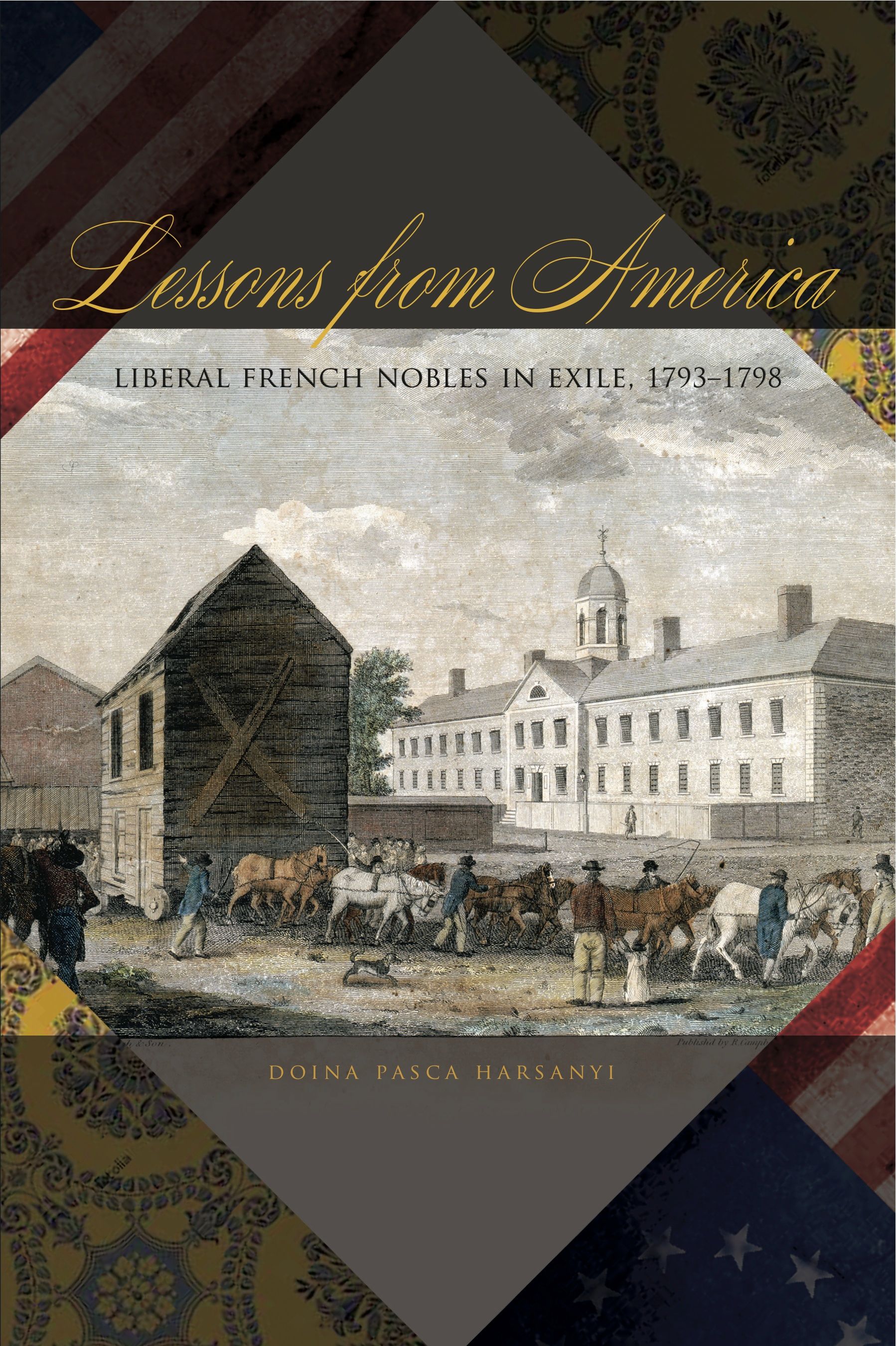
Lessons from America : liberal French nobles in exile, 1793-1798
Every war has refugees; every revolution has exiles. Most of the refugees of the French Revolution mourned the demise of the monarchy. Lessons from America examines an unusual group who did not. Doina Pasca Harsanyi looks at the American experience of a group of French liberal aristocrats, early participants in the French Revolution, who took shelter in Philadelphia during the Reign of Terror. The book traces their path from enlightened salons to revolutionary activism to subsequent exile in America and, finally, back to government posts in France—illuminating the ways in which the French experiment in democracy was informed by the American experience.
eBook
Practicing Social Justice
Examine new research and innovative programs targeted to serve vulnerable populations!
This collection highlights innovative programs and interventions targeted toward underserved, vulnerable, and marginalized populations, including the homeless, immigrants, refugees, female ex-offenders, people with developmental disabilities who are entering the criminal justice system, homicidal youth, and children whose parents are involved in high-conflict custody disputes. In addition, Practicing Social Justice raises critical questions on how society should justly provide for the economic well-being of our most valuable human asset-our children-with an incisive look at the Temporary Aid for Needy Families legislation and its long-term impact on disadvantaged children. This book also evaluates the Bridges Across Racial Polarization Programs ® and explores a wide selection of important social justice issues that the social workers of today and tomorrow need to understand.
Specifically, this well-referenced book: details the mission and guiding principles of the Emmet and Mary Doerr Center for Social Justice at the Saint Louis University School of Social Service, with a focus on the Center's innovative partnered approach examines nine models/theories of justice with varying philosophical, sectarian, and nonsectarian orientations illustrates innovative approaches to community economic development for previously neglected poor communities, including an inclusive community plan structured to bring about home ownership, macro-enterprises, and the accumulation of capital through savings documents the rise of homelessness in the state of Missouri-in spite of an unprecedented period of economic growth and general prosperity explores social justice concerns for immigrants and refugees entering the United States, with a focus on providing positive community commitment and response describes an empowering
eBook