
Catalogue Search | MBRL


Are you sure you want to remove the book from the shelf?

{{itemTitle}}
116,646
result(s) for
"refuse"
Sort by:

Waste management
\"Discusses the environmental issue of waste management and how to create a sustainable way of living\"--Provided by publisher.
Book

Circular ecologies : environmentalism and waste politics in urban China
After four decades of reform and development, China is confronting a domestic waste crisis. As the world's largest waste-generating nation, the World Economic Forum projects that by 2030, the volume of household waste in China will be double that of the United States. Starting in the early 2000s, Chinese policymakers came to see waste management as an object of environmental governance central to the creation of \"modern\" cities, and experimented with the circular economy, in which technology and policy could convert all forms of waste back into resources. Based on long-term research in Guangzhou, Circular Ecologies critically analyzes the implementation of technologies and infrastructures to modernize a mega-city's waste management system, and the grassroots ecological politics that emerged in response. In Guangzhou, waste's transformation revealed uncomfortable truths about China's environmental governance: a preference for technology over labor, the aestheticization of order, and the expropriation of value in service of an ecological vision.
Amy Zhang argues that in post-reform China, waste—the material vestige of decades of growth and increasing consumption—is a systemic irritant that troubles China's technocratic governance. Waste provoked an unlikely coalition of urban communities, from the middle class to precarious migrant workers, that came to constitute a nascent, bottom-up environmental politics, and offers a model for conceptualizing ecological action under authoritarian conditions.
eBook


An Ontology of Trash
A philosophical exploration of the problematic nature of the disposable.
Plastic bags, newspapers, pizza boxes, razors, watches, diapers, toothbrushes … What makes a thing disposable? Which of its properties allows us to treat it as if it did not matter, or as if it actually lacked matter? Why do so many objects appear to us as nothing more than brief flashes between checkout-line and landfill?
In An Ontology of Trash, Greg Kennedy inquires into the meaning of disposable objects and explores the nature of our prodigious refuse. He takes trash as a real ontological problem resulting from our unsettled relation to nature. The metaphysical drive from immanence to transcendence leaves us in an alien world of objects drained of meaningful physical presence. Consequently, they become interpreted as beings that somehow essentially lack being, and exist in our technological world only to disappear. Kennedy explores this problematic nature and looks for possibilities of salutary change.
eBook
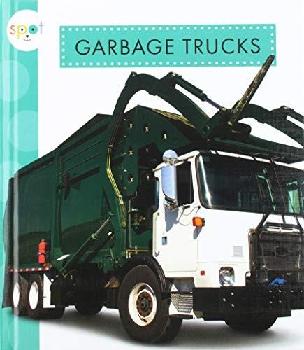
Garbage trucks
\"This search-and-find book invites early readers to look for new vocabulary words and pictures while giving simple facts about garbage trucks and how they pick up trash in order to keep communities clean\"--Provided by publisher.
Book

From the cult of waste to the trash heap of history : the politics of waste in socialist and postsocialist Hungary
Zsuzsa Gille combines social history, cultural analysis, and
environmental sociology to advance a long overdue social theory of waste in this
study of waste management, Hungarian state socialism, and post--Cold War capitalism.
From 1948 to the end of the Soviet period, Hungary developed a cult of waste that
valued reuse and recycling. With privatization the old environmentally beneficial,
though not flawless, waste regime was eliminated, and dumping and waste incineration
were again promoted. Gille's analysis focuses on the struggle between a
Budapest-based chemical company and the small rural village that became its toxic
dump site.
eBook

Waste problems and management in developing countries
\"This new volume offers effective solutions to the mismanagement of waste, particularly in developing countries, by providing an understanding of different types of wastes, their generation, and use of advanced technologies for waste management, and by focusing on integrating the technical and regulatory complexities of waste management. Waste Problems and Management in Developing Countries provides a comprehensive overview of the characterization, issues, and regulatory development of waste management for sustainable solutions and prevention techniques. It covers the various types of pollution, including pollution from plastics, industrial activities, metals, livestock, healthcare, food loss and waste, etc. It explores new techniques for thermal and radioactive waste management and includes such methods as vermicomposting and composting for organic wastes management and profitable use. The volume also looks at the role of modern technologies and legislation measures to manage biosolid waste. The volume includes numerous data sets obtained from various surveys and highlights special categories of waste that may not fit precisely into either RCRA Subtitle D (solid wastes) or Subtitle C (hazardous wastes). Academicians, researchers, and students will find the volume to be a comprehensible volume about waste management and its diversity, exploration, exploitation, and management strategies.\"-- Provided by publisher.
BOOK

Recycled Jute Non-Woven Material Coated with Polyaniline/TiOsub.2 Nanocomposite for Removal of Heavy Metal Ions from Water
Growing volumes of textile waste and heavy metal pollution of water are emerging environmental challenges. In an attempt to tackle these issues, a non-woven sorbent based on jute fibers was fabricated by recycling the textile waste from the carpet industry. The influence of contact time, concentration, pH and temperature on the sorption of lead and copper ions from aqueous solutions was studied. In order to enhance the sorption capacity of the non-woven material, in situ synthesis of polyaniline (PANI) in the presence of TiO[sub.2] nanostructures was performed. The contribution of TiO[sub.2] nanoparticles and TiO[sub.2] nanotubes to the uniformity of PANI coating and overall sorption behavior was compared. Electrokinetic measurements indicated increased swelling of modified fibers. FTIR and Raman spectroscopy revealed the formation of the emeraldine base form of PANI. FESEM confirmed the creation of the uniform nanocomposite coating over jute fibers. The modification with PANI/TiO[sub.2] nanocomposite resulted in a more than 3-fold greater sorption capacity of the material for lead ions, and a 2-fold greater absorption capacity for copper ions independently of applied TiO[sub.2] nanostructure. The participation of both TiO[sub.2] nanostructures in PANI synthesis resulted in excellent cover of jute fibers, but the form of TiO[sub.2] had a negligible effect on metal ion uptake.
Journal Article

Trash talk : an eye-opening exploration of our planet's dirtiest problem
\"In a world of mass consumption and busy schedules, taking the time to understand our own trash habits can be daunting. In Talking Trash, the ever-curious and talented Iris Gottlieb pulls back the curtain on the intricacies of the global trash production system and its contribution to climate change . From the history of the mafia's rule of the New York sanitation system to orbital debris (space trash) to the myth of recycling, Gottlieb will help readers see trash in a whole new way. Complete with beautiful illustrations and several landfills' worth of research, Talking Trash shines a much-needed light on a system that has been broken for far too long, providing readers with surprising, disgusting, and insightful information to better understand how we affect garbage and how it affects us\"-- Provided by publisher.
BOOK

Lag Phase in the Anaerobic Co-Digestion of ISargassum/I spp. and Organic Domestic Waste
The mass arrival of pelagic sargassum is an international issue that is currently taking its toll on the economic activity of affected regions by causing a significant reduction in investment and tourism. The purpose of this work was to evaluate the Logistic Modified and Gompertz Modified sigmoid kinetic models for describing the lag phase in the generation of biomethane. The case studies were: anaerobic co-digestion (ACoD) of Sargassum spp./domestic organic waste and Sargassum spp. in mono-digestion. The experimental method, based on biochemical methane potential (BMP), enabled kinetic models to be built for methane production under environmental conditions and an estimate to be made for the duration of the lag phase. The maximum cumulative production determined for monodigestion was 140.7 cm[sup.3] of CH[sub.4]/g SV at 99 days, and for ACoD, it was 161.3 cm[sup.3] of CH[sub.4]/g SV at 172 days. The lag phase was determined to be approximately 7 days and 93 days, respectively. It was concluded that the modified sigmoid growth functions are a valuable tool for studying the start-up and scaling of systems for the ACoD of organic waste. The results present the ACoD of coastal pelagic sargassum algae and domestic organic waste as a potential alternative energy source.
Journal Article