
Catalogue Search | MBRL


Are you sure you want to remove the book from the shelf?

{{itemTitle}}
528
result(s) for
"religious critics"
Sort by:
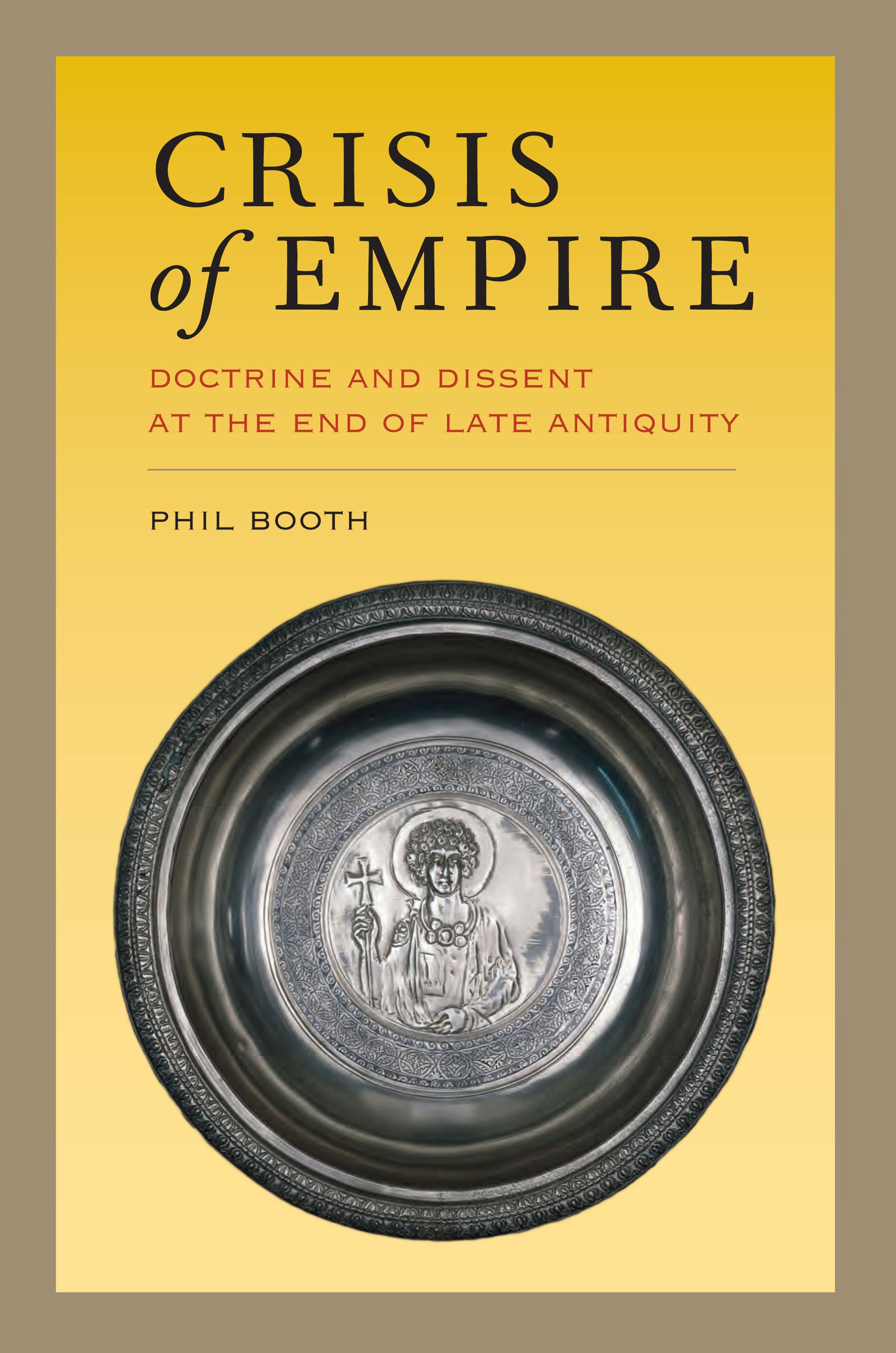
Crisis of empire
This book focuses on the attempts of three ascetics—John Moschus, Sophronius of Jerusalem, and Maximus Confessor—to determine the Church’s power and place during a period of profound crisis, as the eastern Roman empire suffered serious reversals in the face of Persian and then Islamic expansion. By asserting visions which reconciled long-standing intellectual tensions between asceticism and Church, these authors established the framework for their subsequent emergence as Constantinople's most vociferous religious critics, their alliance with the Roman popes, and their radical rejection of imperial interference in matters of the faith. Situated within the broader religious currents of the fourth to seventh centuries, this book throws new light on the nature not only of the holy man in late antiquity, but also of the Byzantine Orthodoxy that would emerge in the Middle Ages, and which is still central to the churches of Greece and Eastern Europe.
eBook

George Herbert’s The Country Parson Through the Ages
Cultural biases prevented its appearance in the highly charged religious climate of the day (1.е., the pre-Civil War hegemony of the Anglo-Catholic party). A later attempt at publication in 1641 by Robert Cook (a Puritan who married George Herbert's widow) was similarly unsuccessful because 7he Country Parson was again viewed as too low-church and for putting no particular emphasis on the Prayer Book and failing to call the \"communion table\" an \"altar.\" While not referring exclusively to The Country Parson, Robert H. Ray, in his study of the allusions to Herbert through the centuries, reports that \"The Commonwealth decade of 1650-60 brought Herbert's reputation to a high level.\" Hutchinson observes: \"Herbert's memory was . . . preserved by The Country Parson, which was often quoted and praised in the eighteenth century. · It was Herbert's piety and praxis as they appear in The Country Parson that kept his name alive and influential in this century when his poetry was forgotten or disparaged.
Journal Article

Invoking Wittgenstein in Defence of Religious Belief
This paper provides an overview of five defences of religious belief against criticisms offered by ‘modern atheists’ such as Richard Dawkins. All five defences maintain that the atheist’s criticisms are off target as a result of the atheist having failed properly to grasp how religious language is used. All five defences are linked with Wittgenstein. My interest here is not in whether any of the defences outlined are Wittgenstein’s (I take no position on that), but rather on whether any plausibly deliver the conclusion that the atheist’s criticisms are off target. The paper concludes that, as they stand, all five defences face significant objections. First, while some would deliver the conclusion that the ‘modern atheist’s’ criticisms are off target, their accounts of how religious language is used appear implausible. Second, the remaining defences, while offering more plausible accounts of how religious language is used, appear not to deliver the conclusion that the ‘modern atheist’s’ criticisms are off target. The paper also notes that those who claim atheist criticisms of religious belief are off target aren’t always clear about which defence (or defences) they are offering, be it one of the five defences outlined here or some other defence. By providing this map or overview, I aim to offer such defenders an opportunity to identify more clearly which defence they have in mind and why they believe it succeeds.
Journal Article
Ventriloquial Acts in Sor María de Jesús de Ágreda’s Mística Ciudad de Dios
Sor María de Ágreda (1602–1665), a Franciscan nun and Abbess of the Conceptionist monastery at Ágreda, was a prolific writer whose theological works are yet to be extensively studied. In this article, I examine the practice of divine ventriloquism in Sor María’s mystical (auto)biography of the Virgin of the Immaculate Conception, Mística ciudad de Dios (1670). I aim to examine the complexity inherent in Sor María’s ‘unmediated’ ventriloquizing of sacred voices and the positionality and power appropriated through this act. The argument focuses on the use of the ventriloquial mechanism, its relationship to Sor María’s authorial position, and how readers may conceptualize the production and reception of the sacred voice. The textual perforance with which readers are presented in Mística ciudad de Dios provides a rich example of how women religious writers appropriated divine authority, resulting in a complex position of agency and self-fashioned individuality.
Journal Article

‘Connected or committed critic?’ Teologies nagedink oor die vraagstuk van ‘Binnestander’- of ‘Buitestander’-kritikus in Suid-Afrika
‘Connected or committed critic?’ Theologically pondered on the issue of ‘Insider’- or ‘Outsider’ critic in South AfricaDuring the beginning of 2023, a conference was organised by a study group to be held in Stellenbosch later that year with the focus on the ideology of apartheid in South Africa, with special reference to prof. B.B. Keet, one of the first theologians to oppose this ideology. The author of this article was invited to attend the conference and present a paper. Unfortunately the conference did not take place, for various reasons, and subsequently the author decided to finalise his paper and present it as an article for publication. The author decided to look into the matter from two opposing views which were called ‘connected critic’ (criticism of the insider) on the one hand, and ‘committed critic’ (criticism of the outsider) on the other hand. Which road should be followed by prophetic theologians in their church, when they become convinced that their church is contradicting the Word of God and the gospel of Jesus Christ? Should they stay inside the church (connected critic) and contribute their criticism from there, or should they leave the church while raising their voice from outside the church (committed critic)?ContributionThe article starts with an introduction that investigates the views of Keet. Then three other voices are analysed, namely those of prof. W.D. Jonker of Stellenbosch (connected critic), Beyers Naudé of Johannesburg (committed critic) and at last the voice of the author himself (connected critic). In the end, the author explains why he had chosen for the option to be a connected critic. In a final conclusion, a few remarks are made as far as the future of South Africa is concerned.
Journal Article
The Grace to Go on Living: The Dialectics of Everyday Life and Christian Japanization in Endō Shūsaku’s Silence
This study reinterprets Father Rodrigues’s apostasy in Endō Shūsaku’s Silence not as a religious failure, but as a process of Christianity’s “Japanization,” analyzed within the context of postwar Japanese intellectual history. Where existing criticism often falls into the binary opposition between martyrdom and betrayal, this study introduces the perspective of individual conviction versus organizational authority. First, Rodrigues’s act resonates with Yoshimoto Takaaki’s tenkō (ideological conversion) theory, specifically defined as the “third form of tenkō.” This form represents the choice to pursue the integrity of personal conviction over obedience to an organization. This links Rodrigues’s action to the spiritual continuity of the Kakure Kirishitan (Hidden Christians), arguing that the essence of his apostasy is a betrayal of the Church institution, not of faith itself. Furthermore, through the theme of the dialectic of everyday life, the study demonstrates that salvation is discovered not in the glorious death of martyrdom, but within the secular fabric of daily existence. Rodrigues’s paradoxical condition of being both weak and strong as Okada San’emon after the fumie is an extension of the Kakure Kirishitan’s survival, who maintained their faith amid secular labor. In conclusion, Endō’s literature serves as a testimony for the “cowards” and a plea for the grace to go on living. It illuminates the process through which individual faith transcends institutional authority and takes root in the indigenous Japanese way of life, thereby completing the vision of Christianity’s “Japanization.”
Journal Article
The Moral Hope Argument
This essay develops a distinct moral argument for the reasonableness of believing in God (conceived as a perfectly good creator) inspired by the pragmatic argument for “the religious hypothesis” advanced by William James in “The Will to Believe.” It also contextualizes the argument relative to familiar moral arguments, notably those of C.S. Lewis and Kant. Briefly, the argument developed here holds that when facing more than one coherent picture of reality, each of which could be true based on the arguments and evidence but only one of which fulfills the hope that in a fundamental way reality is on the side of moral goodness (what I call “the ethico-religious hope”), a reasonable person could opt to believe in the hope’s fulfillment and live accordingly. Following James’ approach, however, this argument does not imply that others who do not adopt such a picture are necessarily irrational or less rational.
Journal Article

\But Angels Don't Have Wings\: Art, Religion, and Michelangelo's ILast Judgment/I in Gilio's IDialogue on the Errors and Abuses of Painters/I
This article provides a close reading of Giovanni Andrea Gilio’s critique of Michelangelo’s Last Judgment as presented in the Dialogue on the Errors and Abuses of Painters (1564). The dialogue has generally been taken as reflecting the emerging Counter-Reformation concerns regarding the indecorousness of contemporary religious art, concerns that led to the censoring of the Last Judgment’s nudes in 1564 after the Council of Trent’s decree on sacred images. One frequent justification for ecclesiastical oversight over the production of religious art was that artists such as Michelangelo had prioritized their art over its religious contents and devotional aims. Though Gilio’s work has been read as confirming this view, this essay argues that the various opinions expressed during the animated exchanges in the dialogue yield a set of nuanced and often innovative interpretations of the Last Judgment that resist a reductive dichotomy between art and religion. Whether intentionally or not, the dialogue conveys that by the time of Michelangelo, and perhaps because of Michelangelo, the forms of art and the contents of religion could not be so easily distinguished from each other, largely because the artist’s subjectivity blurred the boundaries between the two.
Journal Article

Grechaninov's Sister Beatrice and the Consecration of the Stage in Orthodox Russia
When Alexander Grechaninov's opera Sister Beatrice on a text by Maurice Maeterlinck premiered in Moscow in 1912, it promised to bring together two conceptual worlds, those of symbolist aesthetics and the Russian Orthodox liturgy. Critics who hoped that Grechaninov's experience as a composer of sacred music would help bring alive the ‘unheard music’ of Maeterlinck's symbolist ‘Miracle Play’, however, were sorely disappointed. The opera drew scorn from critics for its overly concrete musical rhetoric, while conservative commentators levelled claims of blasphemy. In this article, I consider the two scenes depicting miracles in Sister Beatrice to demonstrate how it negotiated these competing perspectives, employing insights from religious philosophy as well as symbolist aesthetics. Drawing on new archival evidence, I also demonstrate how church and state censors co-participated with composers and critics debating whether and how the sacred might be displayed on stage and in sound.
Journal Article