
Catalogue Search | MBRL


Are you sure you want to remove the book from the shelf?

{{itemTitle}}
2,704
result(s) for
"religious historians"
Sort by:


The Science of Religion in Britain, 1860–1915
Marjorie Wheeler-Barclay argues that, although the existence and significance of the science of religion has been barely visible to modern scholars of the Victorian period, it was a subject of lively and extensive debate among nineteenth-century readers and audiences. She shows how an earlier generation of scholars in Victorian Britain attempted to arrive at a dispassionate understanding of the psychological and social meanings of religious beliefs and practices-a topic not without contemporary resonance in a time when so many people feel both empowered and threatened by religious passion-and provides the kind of history she feels has been neglected.
Wheeler-Barclay examines the lives and work of six scholars: Friedrich Max Müller, Edward B. Tylor, Andrew Lang, William Robertson Smith, James G. Frazer, and Jane Ellen Harrison. She illuminates their attempts to create a scholarly, non-apologetic study of religion and religions that drew upon several different disciplines, including anthropology, sociology, the classics, and Oriental studies, and relied upon contributions from those outside as well as within the universities. This intellectual enterprise-variously known as comparative religion, the history of religions, or the science of religion-was primarily focused on non-Christian religions. Yet in Wheeler-Barclay's study of the history of this field within the broad contexts of Victorian cultural, intellectual, social, and political history, she traces the links between the emergence of the science of religion to debates about Christianity and to the history of British imperialism, the latter of which made possible the collection of so much of the ethnographic data on which the scholars relied and which legitimized exploration and conquest. Far from promoting an anti-religious or materialistic agenda, the science of religion opened up cultural space for an exploration of religion that was not constricted by the terms of contemporary conflicts over Darwin and the Bible and that made it possible to think in new and more flexible ways about the very definition of religion.
eBook

The life and thought of Herbert Butterfield : history, science, and God
\"Once recalled only for The Whig interpretation of history (1931) and Christianity and history (1949), Sir Herbert Butterfield's contribution to western culture has undergone an astonishing revaluation over the past twenty years. What has been left out of this reappraisal is the man himself. Yet the force of Butterfield's writings is weakened without some knowledge of the man behind them: his temperament, contexts, and personal torments. Previous authors have been unable to supply a rounded portrait for lack of available material, particularly a dearth of sources for the crucial period before the outbreak of war in 1939. Michael Bentley's original, startling biography draws on sources never seen before. They enable him to present a new Butterfield, one deeply troubled by self-doubt, driven by an urgent sexuality and plagued by an unending tension between history, science and God in a mind as hard and cynical as it was loving and charitable\"-- Provided by publisher.
Book
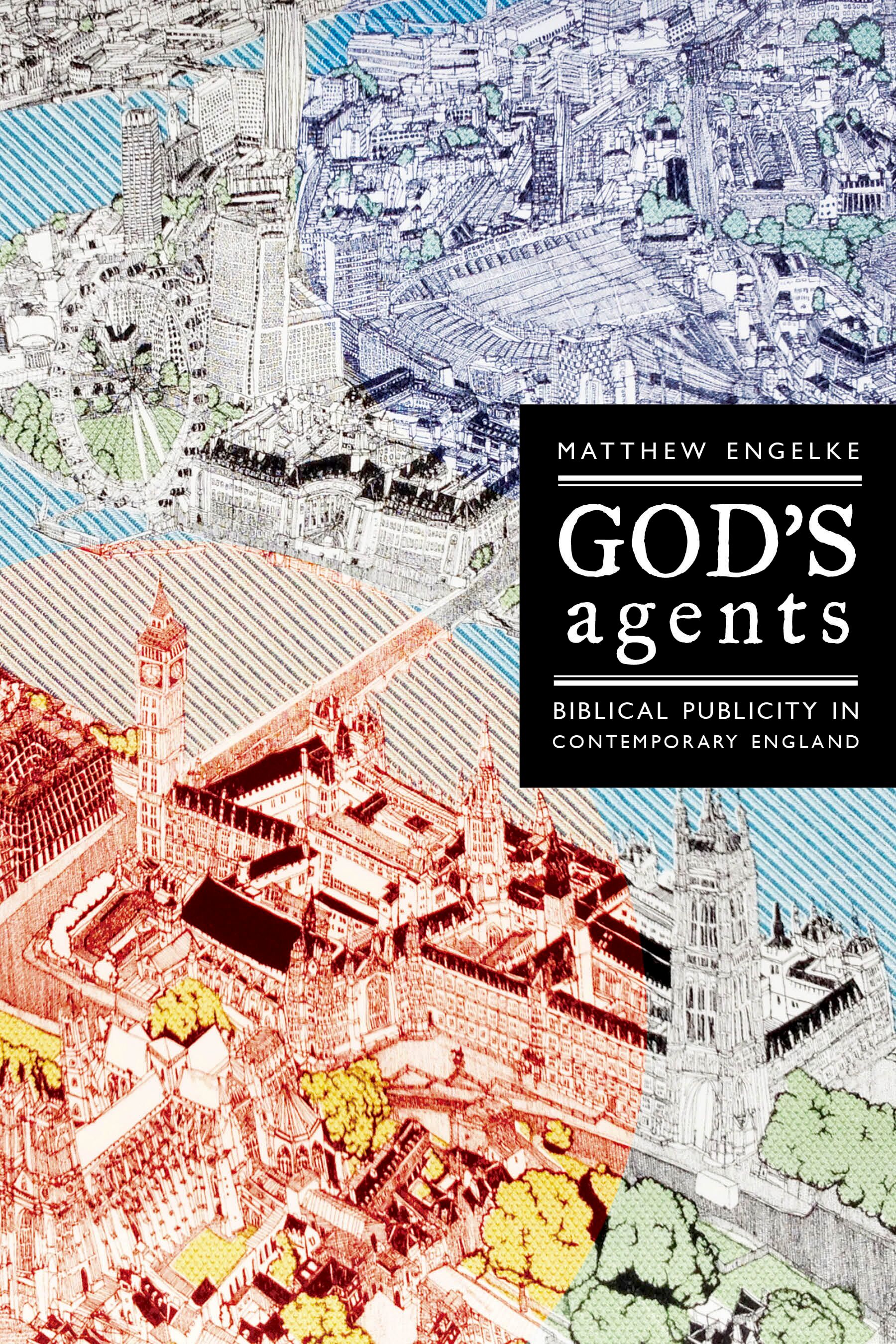
God's agents
The British and Foreign Bible Society is one of the most illustrious Christian charities in the United Kingdom. Founded by evangelicals in the early nineteenth century and inspired by developments in printing technology, its goal has always been to make Bibles universally available. Over the past several decades, though, Bible Society has faced a radically different world, especially in its work in England. Where the Society once had a grateful and engaged reading public, it now faces apathy—even antipathy—for its cause. These days, it seems, no one in England wants a Bible, and no one wants other people telling them they should: religion is supposed to be a private matter. Undeterred, these Christians attempt to spark a renewed interest in the Word of God. They’ve turned away from publishing and toward publicity to “make the Bible heard.” God’s Agents is a study of how religion goes public in today’s world. Based on over three years of anthropological research, Matthew Engelke traces how a small group of socially committed Christians tackle the challenge of publicity within what they understand to be a largely secular culture. In the process of telling their story, he offers an insightful new way to think about the relationships between secular and religious formations: our current understanding of religion needs to be complemented by greater attention to the process of generating publicity. Engelke argues that we are witnessing the dynamics of religious publicity, which allows us to see the ways in which conceptual divides such as public/private, religious/secular, and faith/knowledge are challenged and redefined by social actors on the ground.
eBook

Wild religion
Wild Religion is a wild ride through recent South African history from the advent of democracy in 1994 to the euphoria of the football World Cup in 2010. In the context of South Africa's political journey and religious diversity, David Chidester explores African indigenous religious heritage with a difference. As the spiritual dimension of an African Renaissance, indigenous religion has been recovered in South Africa as a national resource. Wild Religion analyzes indigenous rituals of purification on Robben Island, rituals of healing and reconciliation at the new national shrine, Freedom Park, and rituals of animal sacrifice at the World Cup. Not always in the national interest, indigenous religion also appears in the wild religious creativity of prison gangs, the global spirituality of neo-shamans, the ceremonial display of Zulu virgins, the ancient Egyptian theosophy in South Africa's Parliament, and the new traditionalism of South Africa's President Jacob Zuma. Arguing that the sacred is produced through the religious work of intensive interpretation, formal ritualization, and intense contestation, Chidester develops innovative insights for understanding the meaning and power of religion in a changing society. For anyone interested in religion, Wild Religion uncovers surprising dynamics of sacred space, violence, fundamentalism, heritage, media, sex, sovereignty, and the political economy of the sacred.
eBook

Global Muslims in the age of steam and print
The second half of the nineteenth century marks a watershed in human history. Railroads linked remote hinterlands with cities; overland and undersea cables connected distant continents. New and accessible print technologies made the wide dissemination of ideas possible; oceangoing steamers carried goods to faraway markets and enabled the greatest long-distance migrations in recorded history. In this volume, leading scholars of the Islamic world recount the enduring consequences these technological, economic, social, and cultural revolutions had on Muslim communities from North Africa to South Asia, the Indian Ocean, and China. Drawing on a multiplicity of approaches and genres, from commodity history to biography to social network theory, the essays in Global Muslims in the Age of Steam and Print offer new and diverse perspectives on a transnational community in an era of global transformation.
eBook
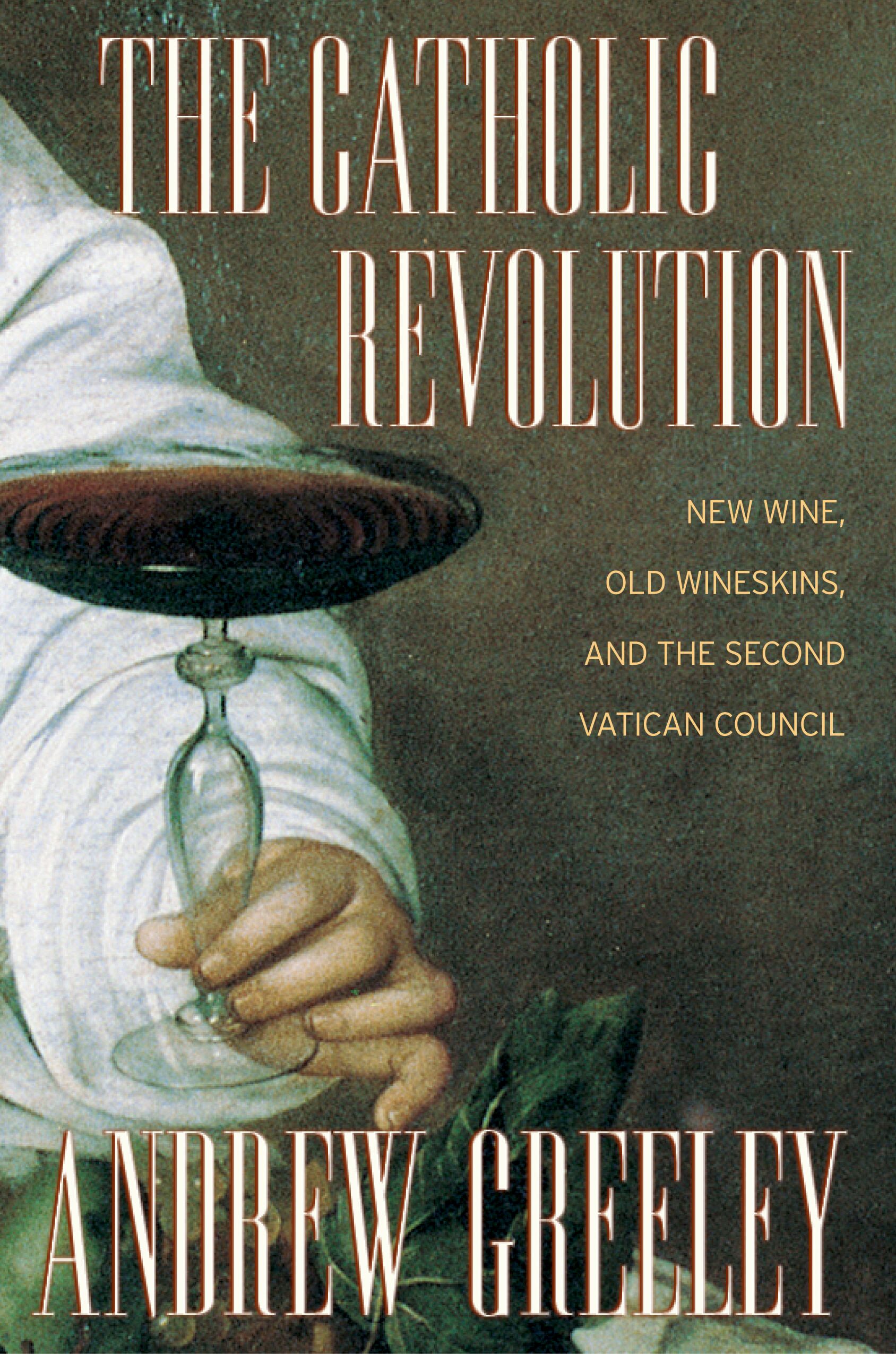
The Catholic Revolution
How, a mere generation after Vatican Council II initiated the biggest reform since the Reformation, can the Catholic Church be in such deep trouble? The question resonates through this new book by Andrew Greeley, the most recognized, respected, and influential commentator on American Catholic life. A timely and much-needed review of forty years of Church history, The Catholic Revolution offers a genuinely new interpretation of the complex and radical shift in American Catholic attitudes since the second Vatican Council (1962-1965). Drawing on a wealth of data collected over the last thirty years, Greeley points to a rift between the higher and lower orders in the Church that began in the wake of Vatican Council II—when bishops, euphoric in their (temporary) freedom from the obstructions of the Roman Curia, introduced modest changes that nonetheless proved too much for still-rigid structures of Catholicism: the \"new wine\" burst the \"old wineskins.\" As the Church leadership tried to reimpose the old order, clergy and the laity, newly persuaded that \"unchangeable\" Catholicism could in fact change, began to make their own reforms, sweeping away the old \"rules\" that no longer made sense. The revolution that Greeley describes brought about changes that continue to reverberate—in a chasm between leadership and laity, and in a whole generation of Catholics who have become Catholic on their own terms. Coming at a time of crisis and doubt for the Catholic Church, this richly detailed, deeply thoughtful analysis brings light and clarity to the years of turmoil that have shaken the foundations, if not the faith, of American Catholics.
eBook
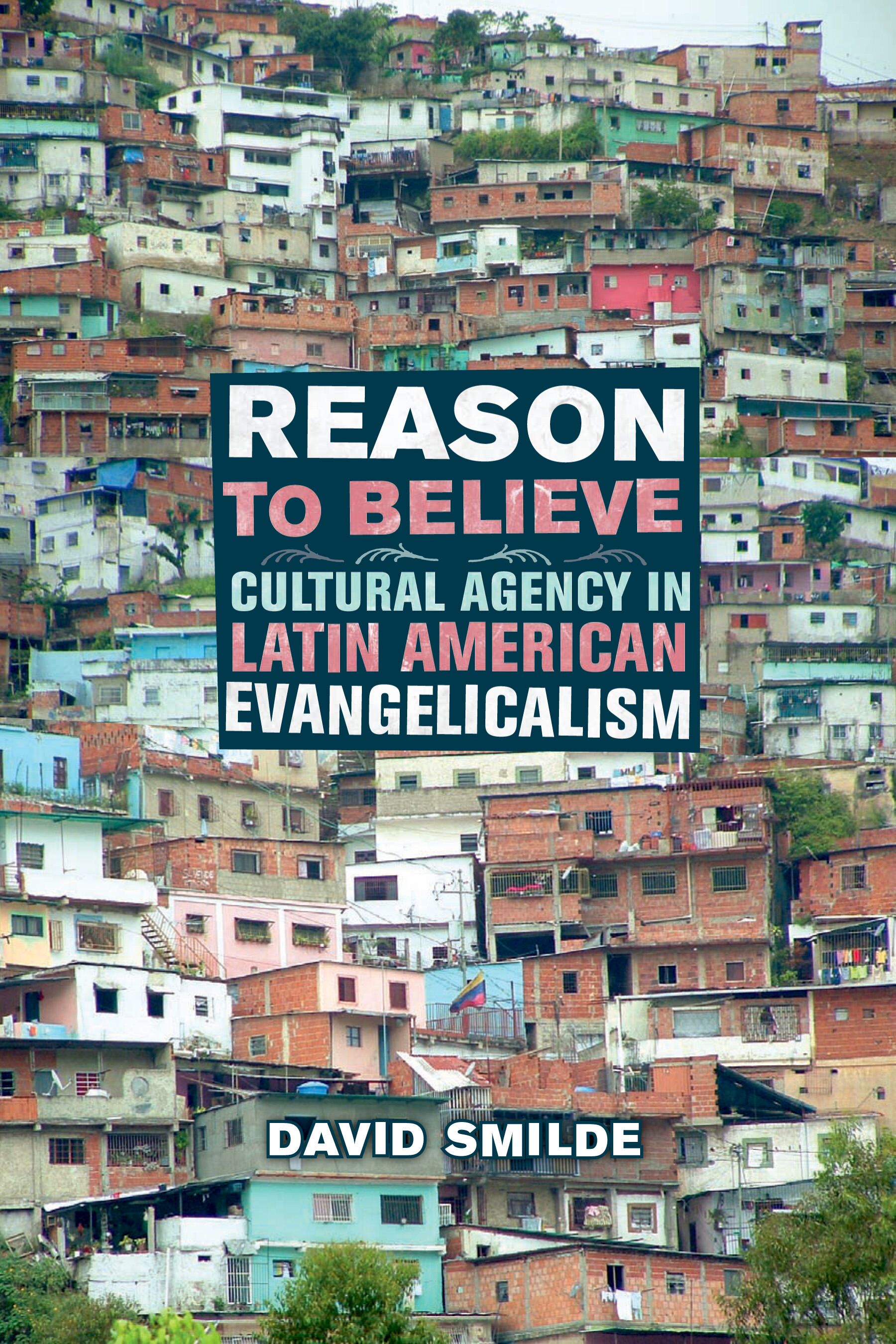
Reason to Believe
Evangelical Protestantism has arguably become the fastest-growing religion in South America, if not the world. For converts, it emphasizes self-discipline and provides a network of communal support, which together have helped many overcome substance abuse, avoid crime and violence, and resolve relationship problems. But can people simply decide to believe in a religion because of the benefits it reportedly delivers? Based on extensive fieldwork among Pentecostal men in Caracas, Venezuela, this rich urban ethnography seeks an explanation for the explosion of Evangelical Protestantism, unraveling the cultural and personal dynamics of Evangelical conversion to show how and why these men make the choice to convert, and how they come to have faith in a new system of beliefs and practices.
eBook
Studying Global Pentecostalism
With its remarkable ability to adapt to many different cultures, Pentecostalism has become the world’s fastest growing religious movement. More than five hundred million adherents worldwide have reshaped Christianity itself. Yet some fundamental questions in the study of global Pentecostalism, and even in what we call \"Pentecostalism,\" remain largely unaddressed. Bringing together leading scholars in the social sciences, history, and theology, this unique volume explores these questions for this rapidly growing, multidisciplinary field of study. A valuable resource for anyone studying new forms of Christianity, it offers insights and guidance on both theoretical and methodological issues. The first section of the book examines such topics as definitions, essentialism, postcolonialism, gender, conversion, and globalization. The second section features contributions from those working in psychology, anthropology, sociology, and history. The third section traces the boundaries of theology from the perspectives of pneumatology, ecumenical studies, inter-religious relations, and empirical theology.
eBook

From jeremiad to jihad
Violence has been a central feature of America’s history, culture, and place in the world. It has taken many forms: from state-sponsored uses of force such as war or law enforcement, to revolution, secession, terrorism and other actions with important political and cultural implications. Religion also holds a crucial place in the American experience of violence, particularly for those who have found order and meaning in their worlds through religious texts, symbols, rituals, and ideas. Yet too often the religious dimensions of violence, especially in the American context, are ignored or overstated—in either case, poorly understood. From Jeremiad to Jihad: Religion, Violence, and America corrects these misunderstandings. Charting and interpreting the tendrils of religion and violence, this book reveals how formative moments of their intersection in American history have influenced the ideas, institutions, and identities associated with the United States. Religion and violence provide crucial yet underutilized lenses for seeing America anew—including its outlook on, and relation to, the world.
eBook