
Catalogue Search | MBRL


Are you sure you want to remove the book from the shelf?

{{itemTitle}}
14,456
result(s) for
"revolutionaries"
Sort by:


The men will talk to me: the Northern interviews
A collection of interviews conducted and recorded by famed Irish republican revolutionary Ernie O'Malley during the 1940s and 1950; an insightful and painstaking reflection of the horror of the Irish War of Independence and Civil War.
eBook
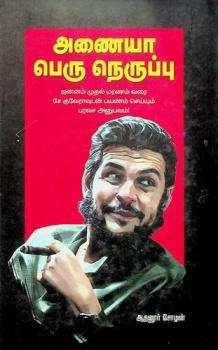
Anaiya peru neruppu : jananam muthal maranam varai Che Guevaravudan payanam saiyum paravasa anupavam
Biography of communist adventurer, Che Guevara.

Revolutionary Pairs
When examining history, one must be careful not to blame rapid political change solely on famine, war, economic inequality, or structural disfunctions alone.These conditions may linger for decades without social upheaval.
eBook


What Fanon Said: A Philosophical Introduction to His Life and Thought
Antiblack racism avows reason is white while emotion, and thus supposedly unreason, is black. Challenging academic adherence to this notion, Lewis R. Gordon offers a portrait of Martinican-turned-Algerian revolutionary psychiatrist and philosopher Frantz Fanon as an exemplar of \"living thought\" against forms of reason marked by colonialism and racism. Working from his own translations of the original French texts, Gordon critically engages everything in Fanon from dialectics, ethics, existentialism, and humanism to philosophical anthropology, phenomenology, and political theory as well as psychiatry and psychoanalysis. Gordon takes into account scholars from across the Global South to address controversies around Fanon's writings on gender and sexuality as well as political violence and the social underclass. In doing so, he confronts the replication of a colonial and racist geography of reason, allowing theorists from the Global South to emerge as interlocutors alongside northern ones in a move that exemplifies what, Gordon argues, Fanon represented in his plea to establish newer and healthier human relationships beyond colonial paradigms.
eBook


Haiti Fights Back
Haiti Fights Back: The Life and Legacy of Charlemagne Péralte is the first US scholarly examination of the politician and caco leader (guerrilla fighter) who fought against the US military occupation of Haiti. The occupation lasted close to two decades, from 1915-1934. Alexis argues for the importance of documenting resistance while exploring the occupation’s mechanics and its imperialism. She takes us to Haiti, exploring the sites of what she labels as resistance zones, including Péralte’s hometown of Hinche and the nation’s large port areas--Port-au-Prince and Cap-Haïtien. Alexis offers a new reading of US military archival sources that record Haitian protests as banditry. Haiti Fights Back illuminates how Péralte launched a political movement, and meticulously captures how Haitian women and men resisted occupation through silence, military battles, and writings. She locates and assembles rare, multilingual primary sources from traditional repositories, living archives (oral stories), and artistic representations in Haiti and the United States. The interdisciplinary work draws on legislation, cacos’ letters, newspapers, and murals, offering a unique examination of Péralte’s life (1885-1919) and the significance of his legacy through the 21st century. Haiti Fights Back offers a new approach to the study of the US invasion of the Americas by chronicling how Caribbean people fought back.
eBook

Empowering Words
Standing outside elite or even middling circles, outsiders who were marginalized by limitations on their freedom and their need to labor for a living had a unique grasp on the profoundly social nature of print and its power to influence public opinion. In Empowering Words, Karen A. Weyler explores how outsiders used ephemeral formats such as broadsides, pamphlets, and newspapers to publish poetry, captivity narratives, formal addresses, and other genres with wide appeal in early America. To gain access to print, outsiders collaborated with amanuenses and editors, inserted their stories into popular genres and cheap media, tapped into existing social and religious networks, and sought sponsors and patrons. They wrote individually, collaboratively, and even corporately, but writing for them was almost always an act of connection. Disparate levels of literacy did not necessarily entail subordination on the part of the lessliterate collaborator. Even the minimally literate and the illiterate understood the potential for print to be life changing, and outsiders shrewdly employed strategies to assert themselves within collaborative dynamics. Empowering Words covers an array of outsiders including artisans; the minimally literate; the poor, indentured, or enslaved; and racial minorities. By focusing not only on New England, the traditional stronghold of early American literacy, but also on southern towns such as Williamsburg and Charleston, Weyler limns a more expansive map of early American authorship.
eBook