
Catalogue Search | MBRL


Are you sure you want to remove the book from the shelf?

{{itemTitle}}
152,997
result(s) for
"risk behavior"
Sort by:


Lonely young adults in modern Britain: findings from an epidemiological cohort study
The aim of this study was to build a detailed, integrative profile of the correlates of young adults' feelings of loneliness, in terms of their current health and functioning and their childhood experiences and circumstances.
Data were drawn from the Environmental Risk Longitudinal Twin Study, a birth cohort of 2232 individuals born in England and Wales in 1994 and 1995. Loneliness was measured when participants were aged 18. Regression analyses were used to test concurrent associations between loneliness and health and functioning in young adulthood. Longitudinal analyses were conducted to examine childhood factors associated with young adult loneliness.
Lonelier young adults were more likely to experience mental health problems, to engage in physical health risk behaviours, and to use more negative strategies to cope with stress. They were less confident in their employment prospects and were more likely to be out of work. Lonelier young adults were, as children, more likely to have had mental health difficulties and to have experienced bullying and social isolation. Loneliness was evenly distributed across genders and socioeconomic backgrounds.
Young adults' experience of loneliness co-occurs with a diverse range of problems, with potential implications for health in later life. The findings underscore the importance of early intervention to prevent lonely young adults from being trapped in loneliness as they age.
Journal Article


Global burden of 87 risk factors in 204 countries and territories, 1990–2019: a systematic analysis for the Global Burden of Disease Study 2019
Rigorous analysis of levels and trends in exposure to leading risk factors and quantification of their effect on human health are important to identify where public health is making progress and in which cases current efforts are inadequate. The Global Burden of Diseases, Injuries, and Risk Factors Study (GBD) 2019 provides a standardised and comprehensive assessment of the magnitude of risk factor exposure, relative risk, and attributable burden of disease.
GBD 2019 estimated attributable mortality, years of life lost (YLLs), years of life lived with disability (YLDs), and disability-adjusted life-years (DALYs) for 87 risk factors and combinations of risk factors, at the global level, regionally, and for 204 countries and territories. GBD uses a hierarchical list of risk factors so that specific risk factors (eg, sodium intake), and related aggregates (eg, diet quality), are both evaluated. This method has six analytical steps. (1) We included 560 risk–outcome pairs that met criteria for convincing or probable evidence on the basis of research studies. 12 risk–outcome pairs included in GBD 2017 no longer met inclusion criteria and 47 risk–outcome pairs for risks already included in GBD 2017 were added based on new evidence. (2) Relative risks were estimated as a function of exposure based on published systematic reviews, 81 systematic reviews done for GBD 2019, and meta-regression. (3) Levels of exposure in each age-sex-location-year included in the study were estimated based on all available data sources using spatiotemporal Gaussian process regression, DisMod-MR 2.1, a Bayesian meta-regression method, or alternative methods. (4) We determined, from published trials or cohort studies, the level of exposure associated with minimum risk, called the theoretical minimum risk exposure level. (5) Attributable deaths, YLLs, YLDs, and DALYs were computed by multiplying population attributable fractions (PAFs) by the relevant outcome quantity for each age-sex-location-year. (6) PAFs and attributable burden for combinations of risk factors were estimated taking into account mediation of different risk factors through other risk factors. Across all six analytical steps, 30 652 distinct data sources were used in the analysis. Uncertainty in each step of the analysis was propagated into the final estimates of attributable burden. Exposure levels for dichotomous, polytomous, and continuous risk factors were summarised with use of the summary exposure value to facilitate comparisons over time, across location, and across risks. Because the entire time series from 1990 to 2019 has been re-estimated with use of consistent data and methods, these results supersede previously published GBD estimates of attributable burden.
The largest declines in risk exposure from 2010 to 2019 were among a set of risks that are strongly linked to social and economic development, including household air pollution; unsafe water, sanitation, and handwashing; and child growth failure. Global declines also occurred for tobacco smoking and lead exposure. The largest increases in risk exposure were for ambient particulate matter pollution, drug use, high fasting plasma glucose, and high body-mass index. In 2019, the leading Level 2 risk factor globally for attributable deaths was high systolic blood pressure, which accounted for 10·8 million (95% uncertainty interval [UI] 9·51–12·1) deaths (19·2% [16·9–21·3] of all deaths in 2019), followed by tobacco (smoked, second-hand, and chewing), which accounted for 8·71 million (8·12–9·31) deaths (15·4% [14·6–16·2] of all deaths in 2019). The leading Level 2 risk factor for attributable DALYs globally in 2019 was child and maternal malnutrition, which largely affects health in the youngest age groups and accounted for 295 million (253–350) DALYs (11·6% [10·3–13·1] of all global DALYs that year). The risk factor burden varied considerably in 2019 between age groups and locations. Among children aged 0–9 years, the three leading detailed risk factors for attributable DALYs were all related to malnutrition. Iron deficiency was the leading risk factor for those aged 10–24 years, alcohol use for those aged 25–49 years, and high systolic blood pressure for those aged 50–74 years and 75 years and older.
Overall, the record for reducing exposure to harmful risks over the past three decades is poor. Success with reducing smoking and lead exposure through regulatory policy might point the way for a stronger role for public policy on other risks in addition to continued efforts to provide information on risk factor harm to the general public.
Bill & Melinda Gates Foundation.
Journal Article
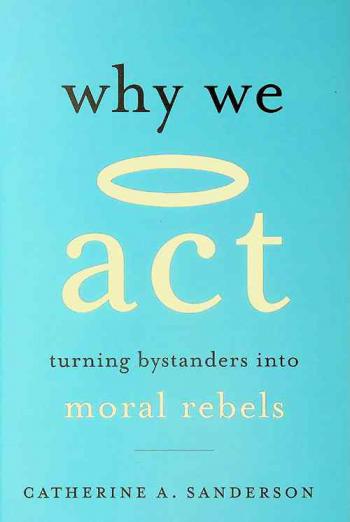
Why we act : turning bystanders into moral rebels
\"Now and then, we hear about everyday heroes riding to the rescue when they see someone suffering or being harassed. But most bystanders don't intervene. Catherine Sanderson turns to cutting-edge research in social psychology and neuroscience to explain why we so often fail to act and offers practical strategies to nudge us into being brave\"-- Provided by publisher.

Multiple health behaviours: overview and implications
More remains unknown than known about how to optimize multiple health behaviour change.
After reviewing the prevalence and comorbidities among major chronic disease risk behaviours for adults and youth, we consider the origins and applicability of high-risk and population strategies to foster multiple health behaviour change.
Findings indicate that health risk behaviours are prevalent, increase with age and co-occur as risk behaviour clusters or bundles.
We conclude that both population and high-risk strategies for health behaviour intervention are warranted, potentially synergistic and need intervention design that accounts for substitute and complementary relationships among bundled health behaviours. To maximize positive public health impact, a pressing need exists for bodies of basic and translational science that explain health behaviour bundling. Also needed is applied science that elucidates the following: (1) the optimal number of behaviours to intervene upon; (2) how target behaviours are best selected (e.g. greatest health impact; patient preference or positive effect on bundled behaviours); (3) whether to increase healthy or decrease unhealthy behaviours; (4) whether to intervene on health behaviours simultaneously or sequentially and (5) how to achieve positive synergies across individual-, group- and population-level intervention approaches.
Journal Article


eHealth Interventions for HIV Prevention in High-Risk Men Who Have Sex With Men: A Systematic Review
While the human immunodeficiency virus (HIV) incidence rate has remained steady in most groups, the overall incidence of HIV among men who have sex with men (MSM) has been steadily increasing in the United States. eHealth is a platform for health behavior change interventions and provides new opportunities for the delivery of HIV prevention messages.
The purpose of this systematic review was to examine the use of eHealth interventions for HIV prevention in high-risk MSM.
We systematically searched PubMed, OVID, ISI Web of Knowledge, Google Scholar, and Google for articles and grey literature reporting the original results of any studies related to HIV prevention in MSM and developed a standard data collection form to extract information on study characteristics and outcome data.
In total, 13 articles met the inclusion criteria, of which five articles targeted HIV testing behaviors and eight focused on decreasing HIV risk behaviors. Interventions included Web-based education modules, text messaging (SMS, short message service), chat rooms, and social networking. The methodological quality of articles ranged from 49.4-94.6%. Wide variation in the interventions meant synthesis of the results using meta-analysis would not be appropriate.
This review shows evidence that eHealth for HIV prevention in high-risk MSM has the potential to be effective in the short term for reducing HIV risk behaviors and increasing testing rates. Given that many of these studies were short term and had other limitations, but showed strong preliminary evidence of improving outcomes, additional work needs to rigorously assess the use of eHealth strategies for HIV prevention in high-risk MSM.
Journal Article

Problematic and risk behaviours in psychosis : a shared formulation approach
\"In spite of improved access to psychosocial interventions, many people with psychosis continue to experience persistent problems which act as significant barriers to their recovery. This book investigates risk and problem behaviours in psychosis including staff and service factors that can impede the delivery of effective care. Working with Problematic Behaviour in Psychosis provides a new approach for assessment formulation and intervention with such problem behaviours in a team context. Of particular interest will be: an outline of the SAFE (Shared Assessment, Formulation and Education) approach an integrative model for understanding risk and problematic behaviour shared risk assessment and management processes the use of CBT in day-to-day interactions with clients a set of formulation driven strategies for managing problematic behaviours case studies and vignettes providing guidance and highlighting the benefits of the approach. This book will have particular appeal to professionals working in residential care for those with complex mental health problems as well as those working in intensive community based services. It is also an excellent resource for those training in psychological therapies for complex mental health problems, risk assessment and management\"--Provided by publisher.
Book

Harms from Other People’s Gambling: Associations with an Individual’s Own Gambling Behaviours, Health Risk Behaviours, Financial Problems, General Health, and Mental Wellbeing
This study aimed to explore relationships between being an ‘affected other’ (AO) and an individual’s own gambling, health risk behaviours, financial problems, poor general health, and low mental wellbeing. A cross-sectional survey using representative and supplementary convenience samples was undertaken with 1234 residents of a British Island aged 16 + years. Being an AO was measured as having a partner or relative who has been gambling regularly in the past 12 months. PGSI was used to assess gambling severity. Health risk behaviours included: poor diet, low physical activity, daily smoking, and binge drinking. Other measures included experiencing financial problems, poor general health, and low mental wellbeing. Analyses were performed using χ
2
and binary logistic regressions. 11.0% of participants were AOs. AOs were more likely to gamble at at-risk/problem-gambling levels and experience financial problems compared to those who were not affected others. The significant relationship between being an AO and low mental wellbeing was mediated by experiencing financial problems. The relationship between being an AO and engaging in two or more health risk behaviours was no longer significant after controlling for sociodemographics and an individual’s own gambling. The relationship between being an AO and poor general health was no longer significant after controlling for sociodemographics, health risk behaviours and an individual’s own gambling. AOs experienced risks to health and wellbeing, with findings not limited to AOs specifically with a relationship to an individual with problem-gambling. Therefore, support for AOs should be more widely available, aiming to address AOs’ needs holistically.
Journal Article