
Catalogue Search | MBRL


Are you sure you want to remove the book from the shelf?

{{itemTitle}}
73,492
result(s) for
"rubber industry"
Sort by:


Growing American Rubber
Growing American Rubberexplores America's quest during tense decades of the twentieth century to identify a viable source of domestic rubber. Straddling international revolutions and world wars, this unique and well-researched history chronicles efforts of leaders in business, science, and government to sever American dependence on foreign suppliers. Mark Finlay plots out intersecting networks of actors including Thomas Edison, Henry Ford, prominent botanists, interned Japanese Americans, Haitian peasants, and ordinary citizensùall of whom contributed to this search for economic self-sufficiency. Challenging once-familiar boundaries between agriculture and industry and field and laboratory, Finlay also identifies an era in which perceived boundaries between natural and synthetic came under review.
Although synthetic rubber emerged from World War II as one solution, the issue of ever-diminishing natural resources and the question of how to meet twenty-first-century consumer, military, and business demands lingers today.
eBook

Bounce! : a scientific history of rubber
\"Follow the scientific history of rubber including who discovered it, where it came from, and how it is made. Back matter includes a timeline and a note about the social and environmental problems with producing rubber\"-- Provided by publisher.
CHILDBOOK

Using a Circular Economy and Supply Chain as a Framework for Remanufactured Products in the Rubber Recycling Industry
The use of a circular economy (CE) in a supply chain is conducive to remanufacturing. It can not only make the supply chain innovative but can also further ease resource consumption and lower pollution, thereby reducing carbon emissions. However, most current research remains focused on the concept of integrating circular economy supply chains (CESCs); few studies have carried out practical research in industry, and research addressing issues regarding the rubber recycling industry is even rarer. Therefore, this study refined the existing framework by screening out key factors that a CESC applies to remanufacturing products. This study conducted an expert questionnaire survey using the FDM to select key factors. Since the 30 respondents selected for this study are all experts in related fields, the reliability and stability of the method and results can be ensured. Meanwhile, this study adopted the fuzzy DEMATEL method to rank the importance of the five selected aspects and nineteen criteria and clarified cause-and-effect relationships between the criteria. The results show that important aspects, including “the circular business model” and “enhancing the resource value in the supply chain”, are both classified as cause groups; there are four main criteria that need to be highlighted, namely, “optimizing the production process”, “effectively tracking and recycling products”, “redesigning remanufactured rubber products”, and “improving resource efficiency”. Therefore, when related industries build CESCs to manufacture remanufactured products, these criteria need to be considered first. This study combined a CESC with remanufactured products, constructed a new framework to expand the related literature, and further analyzed the rubber industry and the underlying rubber recycling industry. Accordingly, related industries can refer to the new framework and key factors to develop production strategies for remanufactured products when implementing a CESC.
Journal Article


Carbon Composite Derived from Spent Bleaching Earth for Rubbery Wastewater Treatment
The industrial production of palm oil generates substantial amounts of Spent Bleaching Earth (SBE), a waste byproduct from the bleaching process. In Malaysia and Indonesia, SBE is typically landfilled, causing environmental risks such as greenhouse gas emissions and contamination. Wastewater from the rubber industry also contains harmful pollutants that require effective treatment. This study proposes a sustainable solution by converting SBE into carbon composites (CCs) for treating rubber industry wastewater. Characterization of CCs using XRD, BET, FESEM, and FTIR revealed its porous structure, high surface area, and functional groups, contributing to excellent adsorption properties. Response Surface Methodology (RSM) optimized treatment conditions, determining 90.56 min of contact time and 0.75 g of adsorbent weight as optimal for maximum chemical oxygen demand (COD) and turbidity removal. Quadratic models showed R2 values of 0.8828 for COD removal and 0.8336 for turbidity reduction, with numerical optimization achieving 90.30% COD reduction and 49.02% turbidity removal. Verification experiments confirmed model reliability with minimal deviation (0.37%). These findings demonstrate the potential of SBE-derived CCs as an eco-friendly solution for environmental challenges in the palm oil and rubber industries.
Journal Article
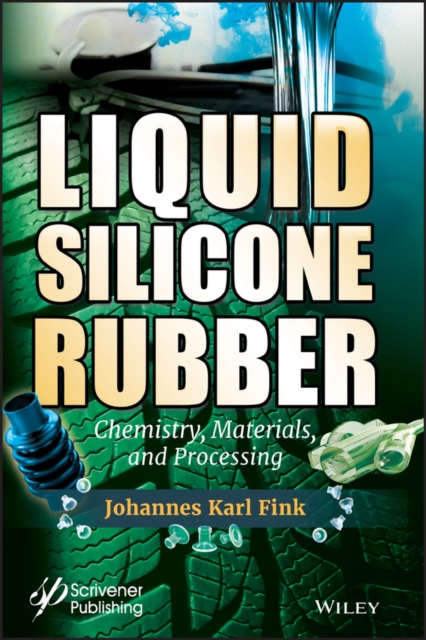
Liquid Silicone Rubber - Chemistry, Materials, and Processing
The scientific literature with respect to liquid silicone rubbers is collected in this monograph. The text focuses on the fundamental issues such as properties, curing methods, special materials, as well as the latest development and provides a broad overview of the materials used therein. In particular, materials and compositions for liquid functional rubbers are discussed. Also, methods of curing and special properties are described, such as tracking and erosion resistance, adhesion properties, storage and thermal stability. Methods of curing are precision casting, hybrid additive manufacturing, peroxide curing, ultraviolet curing, liquid injection molding, or hot embossing. The book includes applications including automotive and underwater applications, electrical and optical uses, as well as medical uses.
eBook

Indigenous Agency in the Amazon
The largest group of indigenous people in the Bolivian Amazon, the Mojos, has coexisted with non-Natives since the late 1600s, when they accepted Jesuit missionaries into their homeland, converted to Catholicism, and adapted their traditional lifestyle to the conventions of mission life. Nearly two hundred years later they faced two new challenges: liberalism and the rubber boom. White authorities promoted liberalism as a way of modernizing the region and ordered the dismantling of much of the social structure of the missions. The rubber boom created a demand for labor, which took the Mojos away from their savanna towns and into the northern rain forests.
Gary Van Valen postulates that as ex-mission Indians who lived on a frontier, the Mojos had an expanded capacity to adapt that helped them meet these challenges. Their frontier life provided them with the space and mind-set to move their agricultural plots and cattle herds, join independent indigenous groups, or move to Brazil. Their mission history gave them the experience they needed to participate in the rubber export economy and the politics of white society. Van Valen argues that the indigenous Mojos also learned how to manipulate liberal discourse to their advantage. He demonstrates that the Mojos were able to survive the rubber boom, claim the right of equality promised by the liberal state, and preserve important elements of the culture they inherited from the missions.
eBook