
Catalogue Search | MBRL


Are you sure you want to remove the book from the shelf?

{{itemTitle}}
164
result(s) for
"ruines"
Sort by:

Lost cities of the ancient world
\"A fascinating tour of cities that have been lost to history--from the Neolithic period to the late Roman Empire--that offers a fresh perspective on the roots of urban life. The ruins of ancient Athens, Luxor, and Rome are familiar cornerstones of world history, visited by travelers from across the globe. But what about the cities that have dropped off the map? That have been submerged under water, or swallowed up by the sands of time? Where are they, and what can they tell us about our past? In this compendium of forgotten cities, Philip Matyszak explores the trials, tribulations, and triumphs these cities faced, revealing how people have embarked on the shared endeavor of living together since we first settled down twelve thousand years ago. Illustrated throughout with important artifacts, ruins, and maps, Lost Cities of the Ancient World brings to life the sites and settlements across Europe, the Middle East, and beyond that time forgot, from the sunken city of Pavlopetri in the Mediterranean to the deep cave dwellings of Derinkuyu in Turkey. Four thousand years of human history are covered in this volume, offering unique insights into forgotten cities and ways of life. Matyszak reveals a dynamic network of peoples and cultures who fought and traded between themselves, exchanging inventions, ideas, and philosophies, with the result that people as far apart as Catalhöyükin Turkey and Skara Brae in Scotland's Orkney Islands shared a common heritage. By examining the motivations that first drew populations to gather and settle together, as well as the challenges that led to their cities' abandonment, this visually striking and often surprising book offers us a fresh perspective on our urban origins.\" -- Amazon.com.
Book

Obsolete Objects in the Literary Imagination
Translated here into English for the first time is a monumental work of literary history and criticism comparable in scope and achievement to Eric Auerbach'sMimesis. Italian critic Francesco Orlando explores Western literature's obsession with outmoded and nonfunctional objects (ruins, obsolete machinery, broken things, trash, etc.). Combining the insights of psychoanalysis and literary-political history, Orlando traces this obsession to a turning point in history, at the end of eighteenth-century industrialization, when the functional becomes the dominant value of Western culture.Roaming through every genre and much of the history of Western literature, the author identifies distinct categories into which obsolete images can be classified and provides myriad examples. The function of literature, he concludes, is to remind us of what we have lost and what we are losing as we rush toward the future.
eBook

Monumental journey : the daguerreotypes of Girault de Prangey
In 1842, the pioneering French photographer Joseph-Philibert Girault de Prangey (1804-1892) set out eastward across the Mediterranean with a custom-built camera to explore ancient lands that were largely unknown to the Western world. This book is the first to fully consider the hundreds of daguerreotypes that resulted from his three-year journey, many of which were made using innovative techniques that fascinate photographers to this day. The images, including the first-known photographic documentation of significant locations, offer tangible evidence of historic sites, many of which have since been destroyed, in places such as Greece, Italy, Egypt, Turkey, Syria, and Jerusalem. They are remarkable and unparalleled portraits of a world gone by. Copiously illustrated and featuring a geographic glossary of the sites and images, Monumental Journey sheds new light on the arc of Girault's career, the vibrant orientalist milieu of 19th-century France that shaped his work, and his inventive contributions to the nascent field of photography. It introduces modern audiences to a brilliant yet enigmatic talent, as well as the stunning images, many published here for the time, that make a major contribution to the histories of both photography and eastern Mediterranean.--Exhibition: The Metropolitan Museum of Art, New York (30.10-12.05.2019); Musâee d'Orsay, Paris, France (17.06-13.10.2019).
BOOK

The Poetics of Ruins in Renaissance Literature
The Renaissance was the Ruin-naissance, the birth of the ruin as a distinct category of cultural discourse, one that inspired voluminous poetic production. For humanists, the ruin became the material sign that marked the rupture between themselves and classical antiquity. In the first full-length book to document this cultural phenomenon, Andrew Hui explains how the invention of the ruin propelled poets into creating works that were self-aware of their absorption of the past as well as their own survival in the future.
eBook

Foundation Myths and Politics in Ancient Ionia
This book examines foundation myths told about the Ionian cities during the archaic and classical periods. It uses these myths to explore the complex and changing ways in which civic identity was constructed in Ionia, relating this to the wider discourses about ethnicity and cultural difference that were current in the Greek world at this time. The Ionian cities seem to have rejected oppositional models of cultural difference which set in contrast East and West, Europe and Asia, Greek and Barbarian, opting instead for a more fluid and nuanced perspective on ethnic and cultural distinctions. The conclusions of this book have far-reaching implications for our understanding of Ionia, but also challenge current models of Greek ethnicity and identity, suggesting that there was a more diverse conception of Greekness in antiquity than has often been assumed.
eBook
Survivre à la fin du monde : anomalie et ruine dans Oscar de profundis de Catherine Mavrikakis
The present study analyzes the representation of the anomalyin Oscar de profundis by Catherine Mavrikakis. This inexplicableevent is paradoxically ever-present and completely absent in endof world literature. In particular, we will examine the role of ruinsin the portrayal of the post-catastrophe scenario. This paper arguesthat the anomaly invites the reader to investigate further. However,they will only find ruins which are a constant reminder of what waslost and not an explanation of how these memories were erasedfrom the collective conscience. The concept of depicting the anomalythrough ruins will allow us to better understand how end of worldliterature may propose a critique of contemporary society.
Journal Article

Counterpreservation
In Berlin, decrepit structures do not always denote urban blight. Decayed buildings are incorporated into everyday life as residences, exhibition spaces, shops, offices, and as leisure space. As nodes of public dialogue, they serve as platforms for dissenting views about the future and past of Berlin. In this book, Daniela Sandler introduces the concept of counterpreservation as a way to understand this intentional appropriation of decrepitude. The embrace of decay is a sign of Berlin’s iconoclastic rebelliousness, but it has also been incorporated into the mainstream economy of tourism and development as part of the city’s countercultural cachet. Sandler presents the possibilities and shortcomings of counterpreservation as a dynamic force in Berlin and as a potential concept for other cities. Counterpreservation is part of Berlin’s fabric: in the city’s famed Hausprojekte (living projects) such as the Køpi, Tuntenhaus, and KA 86; in cultural centers such as the Haus Schwarzenberg, the Schokoladen, and the legendary, now defunct Tacheles; in memorials and museums; and even in commerce and residences. The appropriation of ruins is a way of carving out affordable spaces for housing, work, and cultural activities. It is also a visual statement against gentrification, and a complex representation of history, with the marks of different periods—the nineteenth century, World War II, postwar division, unification—on display for all to see. Counterpreservation exemplifies an everyday urbanism in which citizens shape private and public spaces with their own hands, but it also influences more formal designs, such as the Topography of Terror, the Berlin Wall Memorial, and Daniel Libeskind’s unbuilt redevelopment proposal for a site peppered with ruins of Nazi barracks. By featuring these examples, Sandler questions conventional notions of architectural authorship and points toward the value of participatory environments.
eBook

Pastoral Cosmopolitanism in Edith Wharton's Fiction
One of the goals of this book is to demonstrate that while the pastoral seems to portray troubling fractures between the social self and native soil, Wharton is more struck by how these ostensibly divergent cultural categories superimpose and interpenetrate to form an ecocritical palimpsest.
eBook
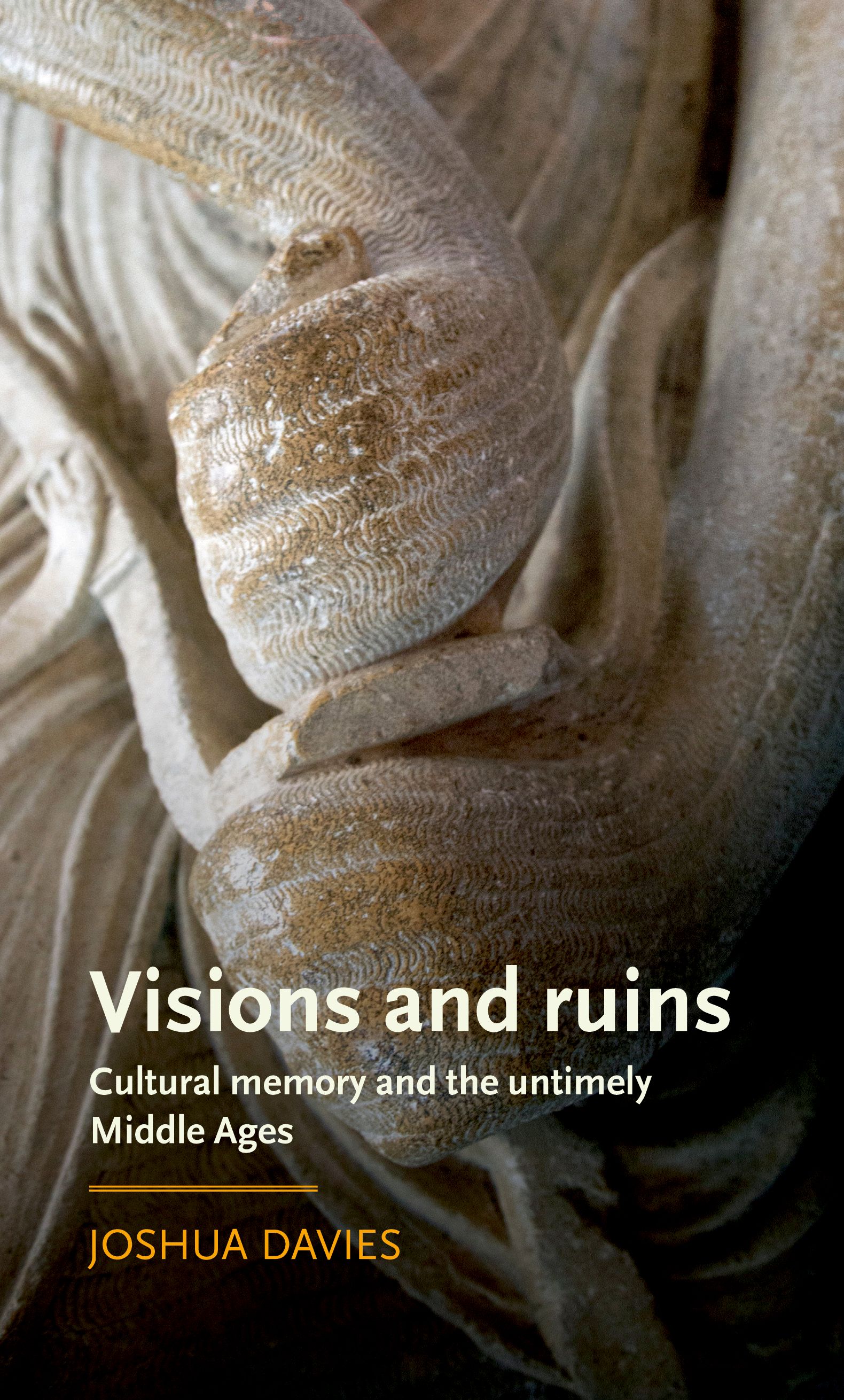
Visions and ruins
Visions and ruins explores the production of cultural memory in the Middle Ages and the uses the medieval past has been put to in modernity. Working with texts in Old English, Middle English and Latin, as well as visual and material culture, it traces connections in time, place, language and media to explore the temporal complexities of cultural production and subject formation. The book interrogates critical, poetic, artistic and political archives to reveal exchanges of cultural energy and influence between past and present, offering new ways of knowing the medieval past and the contemporary moment.
eBook

Borba nad ruinama
U tekstu se analiziraju tri lokacije u Bihaću s napuštenim objektima u kojima su se formalno ili neformalno zadržavali ili se još uvijek zadržavaju migranti. Riječ je o građevinama koje su nekoć bile dio industrijske ili urbane infrastrukture, da bi njihovim napuštanjem i devastacijom postale ruine, a dolaskom migranata i skloništa. Cilj je rada propitati njihovo fizičko i diskurzivno zaposjedanje, metaforičke borbe nad time kome pripadaju, tko ima pravo njihova korištenja i što one znače zajednici u kontekstu afektivnog odnosa spram gradske prošlosti i budućnosti. Rad se temelji na višednevnom boravku u Bihaću u jesen 2022. godine, terenskim bilješkama i fotografijama te na pregledu medijskih napisa vezanih za bihaćke slučajeve. The text analyzes three locations in Bihać with abandoned buildings where migrants are formally or informally sheltered. These are the buildings that were once part of the industrial or urban infrastructure, but today they are abandoned and devastated ruins that have become shelters due to the arrival of migrants. This article seeks to question the struggles over who has the right to use these ruins, to whom they belong, and what they mean to the community in the context of the city’s past and future. The article is based on a multi-day stay in Bihać in the fall of 2022, field notes, photographs, and media articles related to the Bihać cases.
Journal Article