
Catalogue Search | MBRL


Are you sure you want to remove the book from the shelf?

{{itemTitle}}
93,609
result(s) for
"rural education"
Sort by:

Bush tracks : the opportunities and challenges of rural teaching and leadership
Transitioning from place to place has been identified as a key marker of many teachers' lives. Notions of place and transition have been researched for new teachers as they move from university to rural teaching positions; and, for experienced teachers who may move from school to school, town to city, city to rural town. Since 2002, the Bush Tracks Research Group has explored the lived experience of teachers in rural schools. Bush Tracks: The Opportunities and Challenges of Rural Teaching and Leadership is a compilation of more than a decade of research conducted by this multidisciplinary group of academics from the University of New England, New South Wales, Australia. Employing a variety of methodologies, these researchers have worked to understand the intimate lives of teachers working in rural schools - the personal and professional challenges of being in relentlessly close proximity to students and their families; the supports needed to continue professional pathways; and the opportunities for accelerated leadership, all while living in the 'fishbowl' of a rural community. Chapters also explore the working lives of small school principals, specifically, some of the innovative methods they use to circumvent metrocentric policies; how ingenuity can resolve challenging teaching and leadership situations; and, what can be done to reconcile sometimes conflicting roles. This book will be of interest to all teachers who have 'gone bush', or have ever wanted to; and, to teacher educators who want a text that is nuanced in discussing the challenges and opportunities of teaching in rural schools.
Book
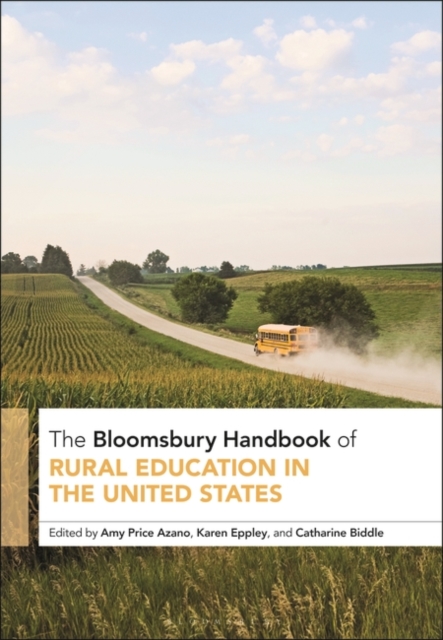
The Bloomsbury Handbook of Rural Education in the United States
This handbook begins with a foundational overview of rural education, examining the ways in which definitions, histories, policies, and demographic changes influence rural schools. This foundational approach includes how corporatization, population changes, poverty, and the role of data affect everyday learning in rural schools. In following sections, the contributors consider how school closures, charter schools, and district governance influence decision making in rural schooling, while also examining the influence of these structures on higher education attainment, rural school partnerships, and school leadership. They explore curriculum studies in rural education, including place-based and trauma-informed pedagogies, rural literacies, rural stereotype threat, and achievement. Finally, they engage with issues of identity and equity in rural schools by providing an overview of the literature related to diverse populations in rural places, including Indigenous, Black, and Latinx communities, and exceptional learners. Importantly, this handbook applies theoretical tools to rural classroom experiences, demonstrating the potential of work centered at the intersection of theory, rurality, and classroom practice. Each section concludes with a response by an international scholar, situating the topics covered within the broader global context.
eBook

Ambiguous childhoods : peer socialisation, schooling and agency in a Zambian village
\"Growing up with social and economic upheaval in the peripheries of global neoliberalism, children in rural Zambia are presented with diverging social and moral protocols across homes, classrooms, church halls, and the street. Mostly unmonitored by adults, they explore the ambiguities of adult life in playful interactions with their siblings and kin across gender and age. Drawing on rich linguistic-ethnographic details of such interactions combined with observations of school and household procedures, the author provides a rare insight into the lives, voices, and learning paths of children in a rural African setting\"-- Provided by publisher.
Book

Practice outcomes for the first decade of Rural Pharmacy Education (RPHARM) Program graduates
Background
The maldistribution of pharmacy services in underserved areas is a national issue. Analysis of data from the 2019 National Pharmacist Workforce Study indicated that 13.9% of pharmacists were working in a rural community. However, the percentage of people living in rural communities in the United States is 20.0%. Currently, there are 20 rural pharmacy programs in the United States, including the Rural Pharmacy Education (RPHARM) Program at University of Illinois Chicago (UIC) College of Pharmacy, which contain both didactic and experiential rural components. This research project examines the practice outcomes of the RPHARM Program graduates.
Methods
Descriptive analysis was used to examine the practice outcome characteristics of RPHARM Program graduates between 2014 and 2023. The characteristics of the RPHARM graduates included the rurality of hometowns, practice locations and populations, and distance of practice locations to hometowns. Rural practice outcomes were described utilizing frequently used rural definitions. The practice locations of 54 of the 61 RPHARM graduates were used in the analysis.
Results
Approximately 41% of the practicing RPHARM graduates were from rural hometowns and two-thirds were female. RPHARM graduates mostly work in either a community setting (44.4%) or a hospital setting (37.0%). Approximately 11% worked in a federal government organization and 5.6% worked in a long-term care pharmacy. When examining job location, 42.6% were working in a rural location based on Rural–Urban Commuting Area Version 3.0 and 35.2% of RPHARM graduates had always worked in a rural location. Approximately 57% of practicing RPHARM graduates are working in a location < 50 miles from their hometown, and 13% are working 50 to 100 miles from their hometown. Approximately 74% of RPHARM graduates are practicing in Illinois.
Conclusions
Approximately 40% of RPHARM graduates practice in rural locations. A significant portion (35.2%) of RPHARM graduates have always practiced in rural locations, and many (57.4%) are practicing near their hometowns. Results indicate that the RPHARM Program is making meaningful contributions to increasing the rural pharmacy workforce. Due to the lack of information on rural pharmacy practice outcomes, all programs with rural pharmacy content are encouraged to track graduates’ practice locations.
Journal Article


Educating the Chinese Individual
In twenty-first-century China, socialist educational traditions have given way to practices that increasingly emphasize the individual. This volume investigates that trend, drawing on Hansen's fieldwork in a rural high school in Zhejiang where students, teachers, and officials of different generations, genders, and social backgrounds form what is essentially a miniature version of Chinese society. Hansen paints a complex picture of the emerging \"neosocialist\" educational system and shows how individualization of students both challenges and reinforces state control of society.
eBook


The Resilient Rural Leader
A practical guide for rural school and district leaders, with tips for maximizing resources and applying innovative solutions to the unique challenges of rural education.
eBook


Interculturality in Latin American Rural Bilingual Education: A Systematic Literature Review
This systematic literature review examines the panorama of interculturality in rural contexts of bilingual education in Latin America. It aims to provide a comprehensive overview of the current state of knowledge in Latin America and identify key themes, challenges, and gaps in the field. The review highlights the importance of recognizing and valuing linguistic and cultural diversity, particularly in marginalized rural communities. It also discusses the lack of adequate resources and educational policies as significant challenges to promoting intercultural bilingual education in these contexts. The findings underscore the need for further research and the development of effective strategies to enhance intercultural understanding and bilingual education in Latin American rural areas.
Journal Article