
Catalogue Search | MBRL


Are you sure you want to remove the book from the shelf?

{{itemTitle}}
187,055
result(s) for
"sediments"
Sort by:


Ancient plant DNA in lake sediments
Recent advances in sequencing technologies now permit the analyses of plant DNA from fossil samples (ancient plant DNA, plant aDNA), and thus enable the molecular reconstruction of palaeofloras.Hitherto, ancient frozen soils have proved excellent in preservingDNAmolecules, and have thus been the most commonly used source of plant aDNA. However, DNA from soil mainly represents taxa growing a fewmetres fromthe sampling point. Lakes have larger catchment areas and recent studies have suggested that plant aDNAfromlake sediments is a more powerful tool for palaeofloristic reconstruction. Furthermore, lakes can be found globally in nearly all environments, and are therefore not limited to perennially frozen areas. Here,we review the latest approaches and methods for the study of plant aDNA from lake sediments and discuss the progressmade up to the present.Weargue that aDNAanalyses add newand additional perspectives for the study of ancient plant populations and, in time, will provide higher taxonomic resolution and more precise estimation of abundance. Despite this, key questions and challenges remain for such plant aDNA studies. Finally, we provide guidelines on technical issues, including lake selection, and we suggest directions for future research on plant aDNA studies in lake sediments.
Journal Article

A look at sand, silt, and mud
\"Describes sand, silt, and mud and their role in the rock cycle\"-- Provided by publisher.
Book

Global-scale human impact on delta morphology has led to net land area gain
River deltas rank among the most economically and ecologically valuable environments on Earth. Even in the absence of sea-level rise, deltas are increasingly vulnerable to coastal hazards as declining sediment supply and climate change alter their sediment budget, affecting delta morphology and possibly leading to erosion
1
–
3
. However, the relationship between deltaic sediment budgets, oceanographic forces of waves and tides, and delta morphology has remained poorly quantified. Here we show how the morphology of about 11,000 coastal deltas worldwide, ranging from small bayhead deltas to mega-deltas, has been affected by river damming and deforestation. We introduce a model that shows that present-day delta morphology varies across a continuum between wave (about 80 per cent), tide (around 10 per cent) and river (about 10 per cent) dominance, but that most large deltas are tide- and river-dominated. Over the past 30 years, despite sea-level rise, deltas globally have experienced a net land gain of 54 ± 12 square kilometres per year (2 standard deviations), with the largest 1 per cent of deltas being responsible for 30 per cent of all net land area gains. Humans are a considerable driver of these net land gains—25 per cent of delta growth can be attributed to deforestation-induced increases in fluvial sediment supply. Yet for nearly 1,000 deltas, river damming
4
has resulted in a severe (more than 50 per cent) reduction in anthropogenic sediment flux, forcing a collective loss of 12 ± 3.5 square kilometres per year (2 standard deviations) of deltaic land. Not all deltas lose land in response to river damming: deltas transitioning towards tide dominance are currently gaining land, probably through channel infilling. With expected accelerated sea-level rise
5
, however, recent land gains are unlikely to be sustained throughout the twenty-first century. Understanding the redistribution of sediments by waves and tides will be critical for successfully predicting human-driven change to deltas, both locally and globally.
A global study of river deltas shows a net increase in delta area by about 54 km
2
yr
−1
over the past 30 years, in part due to deforestation-induced sediment delivery increase.
Journal Article

Australian coastal systems : beaches, barriers and sediment compartments.
This book describes the entire coast and beaches and barrier systems of Australia. It covers the coastal processes and systems that form and impact Australia's 30.000 km coast, 12.000 beaches and 2750 barrier systems. These processes include geology, geomorphology, climate, waves, tides, currents, sediment supply, as well as coastal ecosystems. The coast is divided into tropical northern and southern temperate provinces, within which are seven divisions, 23 regions and 354 coastal sediment compartments each of which is described in detail in the 34 chapters. Within these systems are the full range of wave through tide-dominated beaches and barriers ranging from cheniers to massive transgressive dune systems together with a range of onshore and longshore sand transport systems. This is an up to date reference for the entire coast, its present condition and likely responses to the impacts of climate change.
Book

Potential Future Alternative Resources for Rare Earth Elements: Opportunities and Challenges
Currently, there is an increasing industrial demand for rare earth elements (REE) as these elements are now integral to the manufacture of many carbon-neutral technologies. The depleting REE ores and increasing mining costs are prompting us to consider alternative sources for these valuable metals, particularly from waste streams. Although REE concentrations in most of the alternative resources are lower than current REE ores, some sources including marine sediments, coal ash, and industrial wastes, such as red mud, are emerging as promising with significant concentrations of REE. This review focuses on the alternative resources for REE, such as ocean bottom sediments, continental shelf sediments, river sediments, stream sediments, lake sediments, phosphorite deposits, industrial waste products, such as red mud and phosphogypsum, coal, coal fly ash and related materials, waste rock sources from old and closed mines, acid mine drainage, and recycling of e-waste. Possible future Moon exploration and mining for REE and other valuable minerals are also discussed. It is evident that REE extractions from both primary and secondary ores alone are not adequate to meet the current demand, and sustainable REE recovery from the alternative resources described here is also necessary to meet the growing REE demand. An attempt is made to identify the potential of these alternative resources and sustainability challenges, benefits, and possible environmental hazards to meet the growing challenges of reaching the future REE requirements.
Journal Article
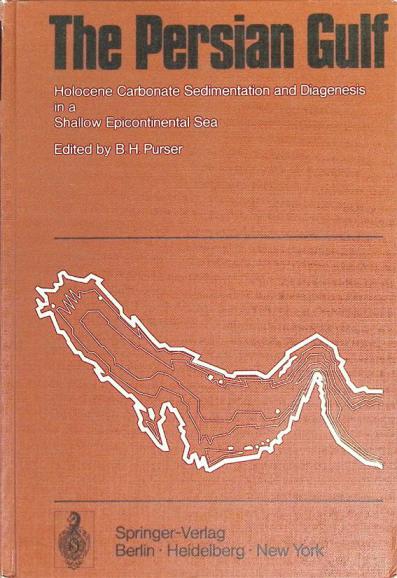
The Persian Gulf : Holocene carbonate sedimentation and diagenesis in a shallow epicontinental sea
This landmark volume, edited by Bruce H. Purser, represents one of the most significant contributions to modern carbonate sedimentology. It provides a comprehensive analysis of the Persian Gulf as a premier contemporary model for a shallow-water epicontinental sea. Through a series of technical papers, the work explores the complex interplay between biological, chemical, and physical processes that govern the formation and alteration of carbonate sediments in a high-salinity, subtropical environment.
BOOK

Selection of a density separation solution to study microplastics in tropical riverine sediment
Microplastics (MPs) are small (< 5 mm) plastic particles that are widely found in marine, freshwater, terrestrial and atmospheric environments. Due to their prevalence and persistence, MPs are considered an emerging contaminant of environmental concern. The separation and quantitation of MPs from freshwater sediments is a challenging and critical issue. It is necessary to identify the fate and sources of MPs in the environment, minimise their release and adverse effects. Compared to marine sediments, standardised methods for extracting and estimating the amount of MPs in freshwater sediments are relatively limited. The present study focuses on MP recovery efficiency of four commonly used salt solutions (NaCl, NaI, CaCl
2
and ZnCl
2
) for isolating MPs during the density separation step from freshwater sediment. Known combinations of artificial MP particles (PS, PE, PVC, PET, PP and HDPE) were spiked into standard river sediment. Extraction using NaI, ZnCl
2
and NaCl solutions resulted in higher recovery rates from 37 to 97% compared to the CaCl
2
solution (28–83%) and varied between polymer types. Low-density MPs (PE, HDPE, PP and PS) were more effectively recovered (> 87%) than the denser polymers (PET and PVC: 37 to 88.8%) using NaCl, NaI and ZnCl
2
solutions. However, the effective flotation of ZnCl
2
and NaI solutions is relatively expensive and unsafe to the environment, especially in the context of developing countries. Therefore, considering the efficiency, cost and environmental criteria, NaCl solution was selected. The protocol was then tested by extracting MPs from nine riverine sediment samples from the Red River Delta. Sediments collected from urban rivers were highly polluted by MPs (26,000 MPs items·kg
−1
DW) compared to sediments located downstream. Using a NaCl solution was found to be effective in this case study and might also be used in long-term and large-scale MP monitoring programmes in Vietnam.
Journal Article


Suspended Sediment Pulses and Sediment‐Discharge Relationships in Earthquake‐Affected Rivers Along the Tibetan Plateau Margins
Large earthquakes along the Tibetan Plateau margins trigger widespread landslides that deliver substantial sediment to river networks, driving intense and long‐lasting landscape change. However, identifying and modeling the fluvial sediment responses to large earthquakes remains challenging. In this study, we develop an earthquake‐affected sediment transport model that couples fluvial transport with time‐varying sediment supply, using multi‐year time series of suspended sediment concentration (SSC) and flow discharge (Q) from three rivers affected by the 2008 Mw 7.9 Wenchuan, 2017 Mw 6.4 Nyingchi, and 2017 Mw 6.5 Jiuzhaigou earthquakes. The model represents enhanced sediment supply by seismic landslide inputs and rainfall‐driven mass movement, and fluvial transport by Q‐based transport capacity and channel sediment scouring and deposition. The results show that incorporating dynamic supply terms is indispensable to reproduce post‐seismic SSC pulses and complex SSC–Q hysteresis. The proposed model explains 78%–90% of long‐term SSC variance and outperforms traditional rating‐curve approaches by 7%–74%. The model framework may have particular relevance for understanding the role of large, long‐lasting seismic landslides in regulating post‐seismic sediment regimes for other earthquake‐affected regions.
Journal Article