
Catalogue Search | MBRL


Are you sure you want to remove the book from the shelf?

{{itemTitle}}
1,180,880
result(s) for
"self"
Sort by:

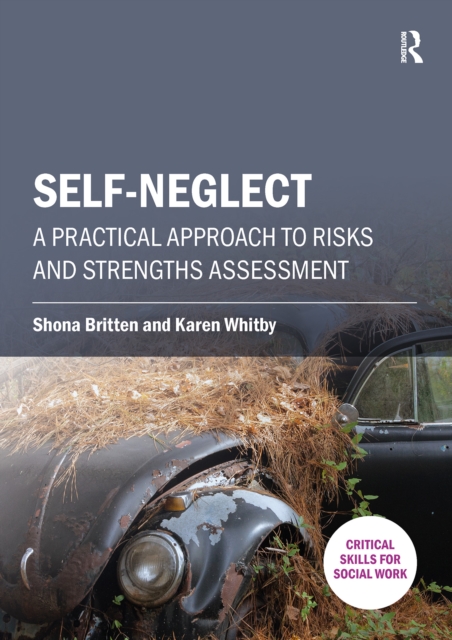
Self-neglect
Self-neglect covers a wide range of behaviours, from neglecting to care for one's personal hygiene and health to one's surroundings; this can include behaviours such as hoarding of objects and/or animals. As presentation of self-neglect cases vary greatly, assessment and support planning should be made on an individualised case by case basis. Self-neglect describes a Risks and Strengths assessment model which has been developed by practitioners as an aid to frontline workers across all sectors, as well as agencies holding responsibilities in Safeguarding Adults. It aims to support and structure the effective, timely and consistent assessment of risk in relation to key social and healthcare factors of self-neglect both on an individual case level and at a strategic level in contributing to community/locality needs analysis and reporting mechanisms; including annual Safeguarding Adults Board Reports.
eBook


Self-Insight
People base thousands of choices across a lifetime on the views they hold of their skill and moral character, yet a growing body of research in psychology shows that such self-views are often misguided or misinformed. Anyone who has dealt with others in the classroom, in the workplace, in the medical office, or on the therapist's couch has probably experienced people whose opinions of themselves depart from the objectively possible.
This book outlines some of the common errors that people make when they evaluate themselves. It also describes the many psychological barriers - some that people build by their own hand - that prevent individuals from achieving self-insight about their ability and character.
The first section of the book focuses on mistaken views of competence, and explores why people often remain blissfully unaware of their incompetence and personality flaws. The second section focuses on faulty views of character, and explores why people tend to perceive they are more unique and special than they really are, why people tend to possess inflated opinions of their moral fiber that are not matched by their deeds, and why people fail to anticipate the impact that emotions have on their choices and actions.
The book will be of great interest to students and researchers in social, personality, and cognitive psychology, but, through the accessibility of its writing style, it will also appeal to those outside of academic psychology with an interest in the psychological processes that lead to our self-insight.
eBook


Mobile App for Improved Self-Management of Type 2 Diabetes: Multicenter Pragmatic Randomized Controlled Trial
As the increasing prevalence of type 2 diabetes mellitus has put pressure on health systems to appropriately manage these patients, there have been a growing number of mobile apps designed to improve the self-management of diabetes. One such app, BlueStar, has been shown to significantly reduce hemoglobin A
(HbA
) levels in small studies and is the first app in the United States to receive Food and Drug Administration approval as a mobile prescription therapy. However, the impact of the app across real-world population among different clinical sites and health systems remains unclear.
The primary objective of this study was to conduct a pragmatic randomized controlled trial of the BlueStar mobile app to determine if app usage leads to improved HbA
levels among diverse participants in real-life clinical contexts. We hypothesized that this mobile app would improve self-management and HbA
levels compared with controls.
The study consisted of a multicenter pragmatic randomized controlled trial. Overall, 110 participants randomized to the immediate treatment group (ITG) received the intervention for 6 months, and 113 participants randomized to the wait-list control (WLC) group received usual care for the first 3 months and then received the intervention for 3 months. The primary outcome was glucose control measured by HbA
levels at 3 months. Secondary outcomes assessed intervention impact on patient self-management, experience of care, and self-reported health utilization using validated scales, including the Problem Areas in Diabetes, the Summary of Diabetes Self-Care Activities, and the EuroQol-5D. Intervention usage data were collected directly from the app.
The results of an analysis of covariance controlling for baseline HbA
levels did not show evidence of intervention impact on HbA
levels at 3 months (mean difference [ITG-WLC] -0.42, 95% CI -1.05 to 0.21; P=.19). Similarly, there was no intervention effect on secondary outcomes measuring diabetes self-efficacy, quality of life, and health care utilization behaviors. An exploratory analysis of 57 ITG participants investigating the impact of app usage on HbA
levels showed that each additional day of app use corresponded with a 0.016-point decrease in participants' 3-month HbA
levels (95% CI -0.03 to -0.003). App usage varied significantly by site, as participants from 1 site logged in to the app a median of 36 days over 14 weeks (interquartile range [IQR] 10.5-124); those at another site used the app significantly less (median 9; IQR 6-51).
The results showed no difference between intervention and control arms for the primary clinical outcome of glycemic control measured by HbA
levels. Although there was low usage of the app among participants, results indicate contextual factors, particularly site, had a significant impact on overall usage. Future research into the patient and site-specific factors that increase app utilization are needed.
Clinicaltrials.gov NCT02813343; https://clinicaltrials.gov/ct2/show/NCT02813343 (Archived by WebCite at https://clinicaltrials.gov/ct2/show/NCT02813343).
Journal Article

The stress management handbook : a practical guide to staying calm, keeping cool, and avoiding blow-ups
\"Shift negativity into positivity in seconds. In our search for happiness, many of us find ourselves pleasing everyone else over ourselves until we end up with feelings of resentment, frustration, and stress. Whether you're looking for love, work, or solutions to a problematic marriage or the pressures of facing an empty nest, The Stress Management Handbook will teach you how to speak and live from a place of love rather than a place of stress. Dr. Eva's laser coach methods will help you: understand stress; calm your madness; uncover your triggers; find your power. Hone in on the cause of your stress and release it to find bliss.\"--Back cover.
Book

How to Thrive at Work
An essential read for anyone experiencing low level anxiety or stress, this book pulls together the various individual strands of business logic, scientific research, self-care, spirituality and common sense to provide a one-stop guide to thriving at work.
The widespread 'more for less' attitude is creating a dramatic rise in work-related stress and a higher ratio of staff sickness. Not only does this create a fiscal impact upon the organisation and the broader economy but it has the potential to create significant long-term mental health issues for employees.
You cannot always alter the demands of your professional or personal lives but, by understanding more about how your brain functions and by actively pursuing well-being techniques, you can enhance the skills that help you manage and succeed at the challenges thrown at you and reduce the risks associated with burnout.
With a focus on improving mindfulness, motivation and productivity, this book offers sound, practical advice and strategies for self-care whatever your working environment and whatever stage you are at in your career.
eBook

Believe in yourself and do what you love
50 bite-sized and practical tips on how to live a more fulfilling and fantastic life! Believe In Yourself and Do What You Love gently guides readers through a series of simple yet impactful steps toward realizing their goals and achieving lives of purpose. A meaningful gift for a friend, family member, or yourself, this little book offers a lifetime of practical wisdom. -- Provided by publisher.
BOOK

Abuse, self-harm and suicidal ideation in the UK during the COVID-19 pandemic
This study explored patterns of abuse, self-harm and thoughts of suicide/self-harm in the UK during the first month of the COVID-19 pandemic using data from the COVID-19 Social Study (n=44 775), a non-probability sample weighted to population proportions. The reported frequency of abuse, self-harm and thoughts of suicide/self-harm was higher among women, Black, Asian and minority ethnic (BAME) groups and people experiencing socioeconomic disadvantage, unemployment, disability, chronic physical illnesses, mental disorders and COVID-19 diagnosis. Psychiatric medications were the most common type of support being used, but fewer than half of those affected were accessing formal or informal support.
Journal Article