
Catalogue Search | MBRL


Are you sure you want to remove the book from the shelf?

{{itemTitle}}
2,582
result(s) for
"self portrait"
Sort by:

In the picture : self-portraits, 1958-2011
Lee Friedlander (b. 1934) has been tackling the challenge of self-portraiture throughout his prolific career. What began as an unorthodox investigation of the genre has become a masterful engagement spanning five decades. In this compilation, which includes hundreds of previously unpublished pictures, we follow the famous photographer through the years as his personal and creative lives unfold and intertwine -- Source other Library of Congress.
BOOK
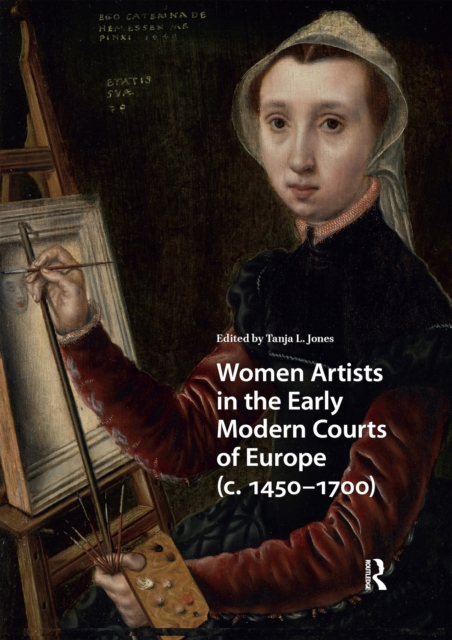
Women Artists in the Early Modern Courts of Europe
Women Artists in the Early Modern Courts of Europe, c. 1450.1700 presents the first collection of essays dedicated to women as producers of visual and material culture in the Early Modern European courts, offering fresh insights into the careers of, among others, Caterina van Hemessen, Sofonisba Anguissola, Luisa Roldán, and Diana Mantuana. Also considered are groups of female makers, such as ladies-in-waiting at the seventeenth-century Medici court. Chapters address works by women who occupied a range of social and economic positions within and around the courts and across media, including paintings, sculpture, prints, and textiles. Both individually and collectively, the texts deepen understanding of the individual artists and courts highlighted and, more broadly, consider the variety of experiences of female makers across traditional geographic and chronological distinctions. The book is also accompanied by the Global Makers: Women Artists in the Early Modern Courts digital humanities project (www.globalmakers.ua.edu), extending and expanding the work begun here.
eBook


Petrarch and Sixteenth-Century Italian Portraiture
The volume presents a wide-ranging investigation of the ways in which Petrarch's legacy informed the relationship between visual and literary portraits in sixteenth-century Italy. Petrarch's vast literary production influenced the intellectual framework in which new models of representation and self-representation developed during the Renaissance. His two sonnets on Laura's portrait by Simone Martini and his ambivalent fascination with the illusionary power of portraiture in his Latin texts - such as the Secretum, the Familiares and De remediis utriusque fortune - constituted the theoretical reference for artists and writers alike. In a century dominated by the rhetorical comparison between art and literature (ut pictura poësis) and by the paragone debate, the interplay between Petrarch's oeuvre, Petrarchism and portraiture shaped the discourse on the relationship between the sitters' physical image and their inner life. The volume brings together diverse interdisciplinary contributions that explore the subject through a rich body of literary and visual sources.
eBook

Self-Portraits for Social Change: Audience Response to a Photovoice Exhibition by Women with Disability
Negative attitudes about and behaviours towards women with disability are harmful and exclusionary, contributing to poorer health, income, educational, and employment outcomes. Our study focused on what audiences learnt, felt, and did (what changed) after viewing self-portraits and stories by women with disability. We questioned whether a public exhibition of their artworks, created through photovoice methodology, could be an effective platform to provoke social change and increase inclusion for people with disability. We collected audience response to our exhibition to address a research gap and to provide an example for other photovoice researchers. We employed interpretive thematic analysis through a generic social processes framework to interrogate responses. Our findings indicate that audiences learnt as much about themselves and their views of disability as they did about the women photographers. The audience described feelings of empathic engagement. They also expressed an unsettling between previously held assumptions around disability and new perspectives gained through the exhibition. Audiences changed how they view women with disability by engaging with the underlying messages of equality in the self-portraits and stories. Audiences thought the exhibition would change other people’s views, too, indicating a pathway to greater inclusion for people with disability.
Journal Article

Visual Culture Approaches to the Selfie
This collection explores the cultural fascination with social media forms of self-portraiture, \"selfies,\" with a specific interest in online self-imaging strategies in a Western context.
This book examines the selfie as a social and technological phenomenon but also engages with digital self-portraiture as representation: as work that is committed to rigorous object-based analysis. The scholars in this volume consider the topic of online self-portraiture-both its social function as a technology-driven form of visual communication, as well as its thematic, intellectual, historical, and aesthetic intersections with the history of art and visual culture.
This book will be of interest to scholars of photography, art history, and media studies.
eBook


Marie-Louise von Motesiczky: Re-negotiating the self-portrait as a woman émigré artist in the Nazi era
Born in Vienna in 1906 to a wealthy, assimilated Jewish family, the painter Marie-Louise von Motesiczky enjoyed a lively social life among the prominent figures of intellectual and cultural Vienna in the closing years of the Habsburg dynasty. She studied at art schools in Vienna, Paris, and the Netherlands, including with German painter Max Beckmann in Frankfurt. The Nazi rise to power cut short Marie-Louise Motesiczky’s career in Central Europe. She fled Vienna for permanent refuge in England. Like her mentor, Beckmann and her contemporary and fellow émigré artist, Oskar Kokoschka, Motesiczky considered the artistic practice of the self-portrait an occasion for self-questioning, self-affirmation, and self-discovery. Unlike her mentors, from early in her career, Motesiczky’s self-portraits had to negotiate the representation of a female subject. This article will investigate the ways in which Motesiczky’s emigration compelled her to reexamine the gendered parameters of the self-portrait and how that reassessment manifests itself specifically in regard to her engagement with the spectatorial gaze. Her position as an émigré artist will not be analyzed as a burden to be overcome but, rather, as the impetus for reexamining techniques and strategies of female self-portraiture.
Journal Article

The Artist as Soldier: Howard Cook’s Self-Portrait in a Foxhole
In the summer of 1943, Taos artist Howard Cook (1901–1980) traveled to the South Pacific to serve as a correspondent in the U.S. Army’s short-lived War Art Unit. During his assignment, Cook produced hundreds of sketches documenting the daily lives of Allied soldiers working there; yet, one group stands out for its subject matter: the artist himself. Collectively titled Self-Portrait in a Foxhole, these works depict Cook taking shelter during an air raid and, together with his writings, offer an invaluable perspective into his interpretation of war through art. This essay explores Cook’s wartime oeuvre by examining the Self-Portrait group’s depiction of vulnerability. Through an expressionistic use of ink and paint and a compositional emphasis on his passivity, Cook offers a personalized interpretation of combat conditions that underscores his sense of exposure. Although his self-representation initially appears distinct from the more assertive soldiers in his other sketches, when viewed together, they collectively demonstrate Cook’s efforts to record a nuanced impression of the war, reflecting a broader tradition of exploring war’s deleterious effects on soldiers. More broadly, Cook’s oeuvre highlights the significance of the War Art Unit and the potential for more scholarship on this initiative.
Journal Article