
Catalogue Search | MBRL


Are you sure you want to remove the book from the shelf?

{{itemTitle}}
931
result(s) for
"self-mutilation"
Sort by:

Self-injury : the ultimate teen guide
\"While some young adults seem to thrive on adversity, others wilt under the strain and opt for less productive means of coping. Millions of American teenagers and college students deliberately injure themselves as a way of handling stress. They cut, burn, break, and poison their bodies, seeking physical pain as a means to avoid emotional pain ... In this book, Cummings defines self-injury as it is understood by the medical community and examines the causes of self-harm\"--Amazon.com.
Book


Willow
Sixteen-year-old Willow, who was driving the car that killed both of her parents, copes with the pain and guilt by cutting herself, until she meets a smart and sensitive boy who's determined to help her stop.
Book

Anxious temperament as a risk factor of suicide attempt
Suicide has been reported to be associated with cyclothymic, irritable, depressive and anxious temperaments. In contrast, hyperthymic temperament has been reported to be protective against suicide. In the present study, we hypothesized that Japanese patients with suicide attempt may have higher scores of cyclothymic, irritable, depressive, and anxious temperaments but lower scores of hyperthymic temperament than non-suicidal patients. In order to examine this hypothesis, we investigated Japanese patients of a university emergency center.
The association of temperament and suicide attempt was investigated in 116 patients referred to a university emergency center for intoxication or injury. Of them, 35 patients of suspected suicide attempt were categorized as 18 patients who intended to die with attempted suicide and suffered from self-inflicted but not fatal injury (Suicide Attempt II), 4 patients whose intention to die were undetermined although they suffered from self-inflicted injury (Undetermined Suicide-Related Behavior II), and 13 patients who had no intention to die although they suffered from self-inflicted injury (Self-Harm II). Logistic regression analyses and multiple regression analyses were used to identify factors associated with the present suicide attempt and the number of suicide attempts, respectively.
Anxious temperament scores were significantly and directly associated with Suicide Attempt II group whereas irritable temperament scores were associated with Self-Harm II group.
The present findings suggest that those with anxious temperament may have more suicide attempts than those with other temperaments, indicating anxious temperament as a risk factor of suicide attempt.
Journal Article


Nonprescribed Hormone Use and Self-Performed Surgeries: “Do-It-Yourself” Transitions in Transgender Communities in Ontario, Canada
Objectives. We examined the extent of nonprescribed hormone use and self-performed surgeries among transgender or transsexual (trans) people in Ontario, Canada. Methods. We present original survey research from the Trans PULSE Project. A total of 433 participants were recruited from 2009 to 2010 through respondent-driven sampling. We used a case series design to characterize those currently taking nonprescribed hormones and participants who had ever self-performed sex-reassignment surgeries. Results. An estimated 43.0% (95% confidence interval = 34.9, 51.5) of trans Ontarians were currently using hormones; of these, a quarter had ever obtained hormones from nonmedical sources (e.g., friend or relative, street or strangers, Internet pharmacy, herbals or supplements). Fourteen participants (6.4%; 95% confidence interval = 0.8, 9.0) reported currently taking nonprescribed hormones. Five indicated having performed or attempted surgical procedures on themselves (orchiectomy or mastectomy). Conclusions. Past negative experiences with providers, along with limited financial resources and a lack of access to transition-related services, may contribute to nonprescribed hormone use and self-performed surgeries. Promoting training initiatives for health care providers and jurisdictional support for more accessible services may help to address trans people’s specific needs.
Journal Article

Healing self-injury : a compassionate guide for parents and other loved ones
\"Parents who discover a teen's self-injurious behavior are gripped by uncertainty and flooded with questions - Why is my child doing this? Is this a suicide attempt? What did I do wrong? What can I do to stop it? And yet basic educational resources for parents with self-injuring children are sorely lacking. Healing after Self-Injury provides desperately-needed guidance to parents and others who love a young person struggling with self-injury\"-- Provided by publisher.
Book

THE MEANINGS AND PRACTICES REGARDING SELF-MUTILATION IN THE BRAZILIAN EDUCATIONAL CONTEXT: A SYSTEMATIC REVIEW
ABSTRACT In this article we sought to describe how self-mutilation is understood by educational institutions and what are the actions taken in the face of the phenomenon, based on a systematic literature review. Searching the BVS Portal, SciELO and the Capes Theses Catalog, using the index terms self-mutilation, self-injury, self-injurious behavior and self-destructive behavior, 20 documents were selected and submitted to content analysis. It was identified that the studies are recent, predominantly qualitative, influenced by Behavior Analysis and Psychoanalysis, and developed with adolescents from public schools. Self-mutilation was understood as resulting from physiological conditions, way of giving meaning to suffering, result of social contagion, communication attempt, manifestation of suicidal ideation and behavior of individuals with atypical development. There are few reports of intervention in the face of the problem, covering clinical, preventive and professional training practices. The need to implement interventions in schools, based on social and collective understandings of self-mutilation, is highlighted. RESUMO Buscou-se descrever como a automutilação é compreendida pelas instituições de ensino e quais são as ações realizadas frente ao fenômeno, a partir de uma revisão sistemática de literatura. Em busca no Portal BVS, SciELO e no Catálogo de Teses da Capes, utilizando os descritores automutilação, autolesão, comportamento autolesivo e comportamento autodestrutivo, selecionou-se 20 documentos que foram submetidos à análise de conteúdo. Identificou-se que os estudos são recentes, predominantemente qualitativos, influenciados pela Análise do Comportamento e Psicanálise, e desenvolvidos junto a adolescentes de escolas públicas. A automutilação foi compreendida como decorrente de condições fisiológicas, forma de dar sentido ao sofrimento, resultado de contágio social, tentativa de comunicação, manifestação de ideação suicida e comportamento de indivíduos com desenvolvimento atípico. Há poucos relatos de intervenção frente ao problema, abarcando práticas clínicas, preventivas e de formação profissional. Destaca-se a necessidade da ampliação de práticas nas escolas compreendendo a automutilação numa perspectiva social e coletiva. RESUMEN Se buscó describir cómo la automutilación es comprendida por las instituciones de enseñanza y cuáles las acciones realizadas frente al fenómeno, a partir de una revisión sistemática de literatura. En búsqueda en el Portal BVS, SciELO y en el Catálogo de Tesis de la Capes, utilizándose los descriptores automutilación, autolesión, comportamiento autolesivo y comportamiento autodestructivo, se seleccionó 20 documentos que se sometieron al análisis de contenido. Se identificó que los estudios son recientes, predominantemente cualitativos, influenciados por el Análisis del Comportamiento y Psicoanálisis, y desarrollados junto a adolescentes de escuelas públicas. La automutilación fue comprendida como resultante de condiciones fisiológicas, forma de dar sentido al sufrimiento, resultado de contagio social, tentativa de comunicación, manifestación de ideación suicida y comportamiento de individuos con desarrollo atípico. Hay pocos relatos de intervención frente al problema, abarcando prácticas clínicas, preventivas y de formación profesional. Se destaca la necesidad de la ampliación de prácticas en las escuelas comprendiendo la automutilación en una perspectiva social y colectiva.
Journal Article

Two or three things I forgot to tell you
\"When their best friend, Tink, dies from an apparent suicide, high school seniors Merissa and Nadia are alienated by their secrets, adrift from each other and from themselves\"--Provided by publisher.
Book
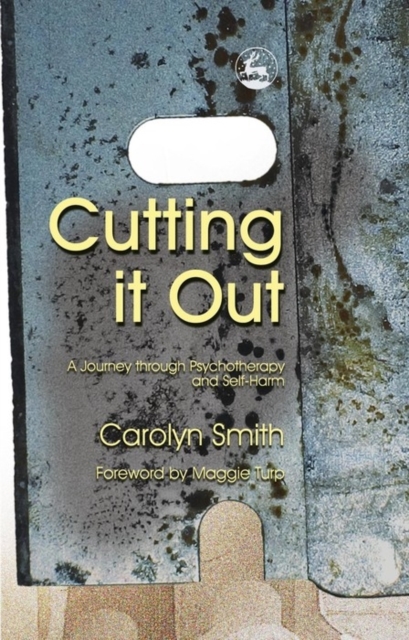
Cutting it out : a journey through psychotherapy and self-harm
The first-person narrative offers a vividly honest voice to the feelings and compulsions that drive someone to harm themselves and explores the conflict between the desire to self-harm and the struggle to control and overcome this addictive, self-destructive behaviour. It also explores the complex nature of her relationship with her therapist.
eBook