
Catalogue Search | MBRL


Are you sure you want to remove the book from the shelf?

{{itemTitle}}
627,817
result(s) for
"settlement"
Sort by:

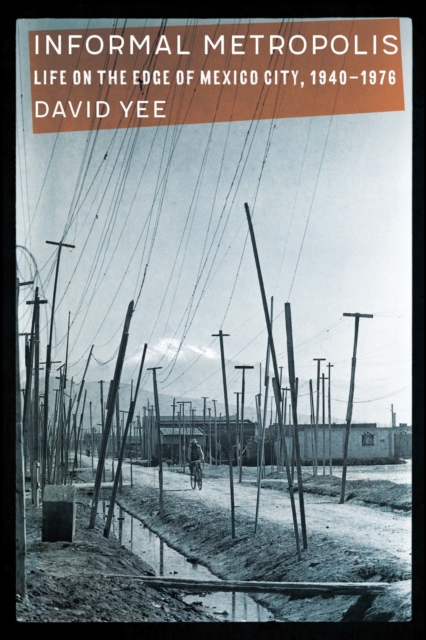
Informal Metropolis
In the 1940s, as Mexican families trekked north to the United
States in search of a better life, tens of millions also left their
towns and villages for Mexico's major cities. In Mexico City
migrant families excluded from new housing programs began to settle
on a dried-out lake bed near the airport, eventually transforming
its dusty plains into an informal city of more than one million
people. In Informal Metropolis David Yee uncovers how this
former lake bed grew into the world's largest shantytown-Ciudad
Nezahualcóyotl-and rethinks the relationship between urban space
and inequality in twentieth-century Mexico. By chronicling the
residents' struggles to build their own homes and gain land rights
in the face of extreme adversity, Yee presents a hidden history of
land fraud, political corruption, and legal impunity underlying the
rise of Mexico City's informal settlements. When urban social
movements erupted across Mexico in the 1970s, Ciudad
Nezahualcóyotl's residents organized to demand land, water, and
humane living conditions. Though guided by demands for basic needs,
these movements would ultimately achieve a more lasting
significance as a precursor to a new urban citizenry in Mexico. In
the first comprehensive history of modern housing in Mexico City,
Yee challenges widely held assumptions about urban inequality and
politics in Mexico.
eBook

The 1713 Peace of Utrecht and Its Enduring Effects
The 1713 Peace of Utrecht and its Enduring Effects, edited by Alfred H.A. Soons, presents an interdisciplinary collection of contributions marking the occasion of the tercentenary of the Peace of Utrecht.
eBook


The moral imagination : the art and soul of building peace
This book poses the question, “How do we transcend the cycles of violence that bewitch our human community while still living in them?” Peacebuilding, in the view of this book, is both a learned skill and an art. Finding this art, this book says, requires a worldview shift. Conflict professionals must envision their work as a creative act — an exercise of what the book terms the “moral imagination.” This imagination must, however, emerge from and speak to the hard realities of human affairs. The peacebuilder must have one foot in what is and one foot beyond what exists. The book is organized around four guiding stories that point to the moral imagination but are incomplete. The book seeks to understand what happened in these individual cases and how they are relevant to large-scale change. The purpose is not to propose a grand new theory; instead it wishes to stay close to the “messiness” of real processes and change, and to recognize the serendipitous nature of the discoveries and insights that emerge along the way. Like most professional peacemakers, the author of this book sees his work as a religious vocation.
eBook


We Are 'Nature' Defending Itself
In 2008, as the storms of the financial crash blew, Isabelle Fremeaux and Jay Jordan deserted the metropolis and their academic jobs, traveling across Europe in search of post-capitalist utopias. They wanted their art activism to no longer be uprooted. They arrived at a place French politicians had declared lost to the republic, otherwise know as the zad (the zone to defend): a messy but extraordinary canvas of commoning, illegally occupying 4,000 acres of wetlands where an international airport was planned. In 2018, the 40-year-long struggle snatched an incredible victory, defeating the airport expansion project through a powerful cocktail that merged creation and resistance. Fremeaux and Jordan blend rich eyewitness accounts with theory, inspired by a diverse array of approaches, from neo-animism to revolutionary biology, insurrectionary writings and radical art history. Published in collaboration with the Journal of Aesthetics & Protest.
eBook

Urban land acquisition and involuntary resettlement : linking innovation and local benefits
Expansion and development of urban areas require acquisition of land, which, in turn, often requires physical relocation of people who own or occupy this land. Land acquisition and resettlement may also be required to improve the lives of the more than 1 billion people who currently live in slums around the world, most of them in developing countries. Therefore, any effort to embark on significant, sustainable urban development needs to ensure that there are adequate processes for land acquisition and, so that resettlement does not become a constraint to much needed urban development. Planners, policy makers and social scientists can try to implement urban development programs in a way that make people who lose their land, houses or livelihoods become equal partners in the development process. The combination of the high price of urban land, presence of creative individuals in close proximity in urban areas, and the ability of urban space to generate innovative solutions, can help convert urban resettlement into a development opportunity for all. The report illustrates how urban resettlement can become a development opportunity. The Mumbai example shows how the private sector can play a key role, to unleash the potential created by high-value land to provide sustainable housing solutions to those adversely affected, at no cost to the government or the resettlers. Examples from Morocco and Pakistan show how well designed and implemented, citizen-driven resettlement can result in enhanced skills and livelihoods, and can promote overall sustainable urban development. The Mauritania example demonstrates how collective approaches with strong community participation can help address difficult challenges related to housing. The Brazil case shows how resettlement practices with demonstrated, strongly positive outcomes and contributions to urban development can influence governments to incorporate them into their own laws and regulations, helping millions of affected people to benefit from them.
Book

Peacemaking in the twenty-first century
This book provides a range of unique insights into the issues surrounding peacebuilding, delivered by major international figures with direct experience in this area at the highest level, including Bertie Ahern, Kofi Annan and Bill and Hillary Clinton. Based on a series of lectures on the theme of peacekeeping and peacebuilding in the contemporary world, each lecture is presented here with an introduction placing it in its proper context within the discourse on peacemaking. Edited and introduced by Nobel Laureate John Hume, this volume makes an invaluable contribution to the study of peace and conflict studies, international history, international relations and international politics.
eBook