
Catalogue Search | MBRL


Are you sure you want to remove the book from the shelf?

{{itemTitle}}
310
result(s) for
"shorter writings"
Sort by:

The Shorter Writings
This book contains new, annotated, and literal yet accessible translations of Xenophon's eight shorter writings, accompanied by interpretive essays that reveal these works to be masterful achievements by a serious thinker of the first rank who raises important moral, political, and philosophical questions.
Five of these shorter writings are unmistakably devoted to political matters. The Agesilaos is a eulogy of a Spartan king, and the Hiero, or the Skilled Tyrant recounts a searching dialogue between a poet and a tyrant. The Regime of the Lacedaemonians presents itself as a laudatory examination of what turns out to be an oligarchic regime of a certain type, while The Regime of the Athenians offers an unflattering picture of a democratic regime. Ways and Means, or On Revenues offers suggestions on how to improve the political economy of Athens' troubled democracy.
The other three works included here-The Skilled Cavalry Commander, On Horsemanship, and The One Skilled at Hunting with Dogs-treat skills deemed appropriate for soldiers and leaders, touching on matters of political importance, especially in regard to war. By bringing together Xenophon's shorter writings, this volume aims to help those interested in Xenophon to better understand the core of his thought, political as well as philosophical.
Interpretive essays by: Wayne Ambler, Robert C. Bartlett, Amy L. Bonnette, Susan D. Collins, Michael Ehrmantraut, David Levy, Gregory A. McBrayer, Abram N. Shulsky.
eBook

SOPHOCLES, THYESTES FR. 260A RADT
Two conjectures are proposed on Sophocles’ Thyestes (fr. 260a Radt) which restore Sophoclean language and metre.
Journal Article
NAPE VERTIT: A NOTE ON OVID, AMORES 1.12
The hairdresser who carries Ovid's invitation to his puella in Amores 1.11 is almost immediately blamed for his rejection in 1.12, before that blame is transferred to the tablets carrying that invitation. Nape (the enslaved hairdresser of the puella) has been linked to the character Dipsas, appearing in 1.7, specifically through the descriptor sobria. By focussing on the use of the verb uerto, the reference to the mythical strix, and curses related to the old age of both Dipsas and the tablets in 1.7 and 1.12, this note demonstrates that the supernatural word choice further connects Nape with Dipsas.
Journal Article

Forbidden Love in the Andes
The coauthored indigenous tale about two lovers--an Inca ñusta (princess), Chuquillanto, and a humble shepherd, Acoytapra--was recorded around the turn of the seventeenth century in colonial Peru. The story's meaning is layered, having been written and illustrated by two people of vastly different backgrounds: the drawings by a native Andean man and the writing by a Spanish friar. Although the images complement the text by illuminating events in the written tale, the artist applies his knowledge of the native Andean belief system and Inca visual culture by inserting additional meanings into the illustrations and communicating visually what the Spanish author cannot. A summary of the tale Ficción y suçesso de un famosso pastor llamado el gran Acoytapra con la hermossa y discreta Chuquillanto, ñusta, hija del sol is presented.
Journal Article
WHEN ENOUGH IS ENOUGH: AN UNNOTICED TELESTICH IN HORACE (SATIRES 1.4.14–18)
In these lines from the fourth poem of his first collection of satires (1.4.9–18), Horace defines his poetic identity against the figures of his satiric predecessor Lucilius and his contemporary Stoic rival Crispinus. Horace emerges as the poet of Callimachean restraint and well-crafted writing in contrast to the chatty, unpolished prolixity of both Lucilius and Crispinus. A proponent of the highly wrought miniature over the sprawling scale of Lucilius, Horace knows when enough is enough. And, owing to a playful link between what is satis (‘enough’) and satura (‘satire’), this makes Horace not only a skilful poet but also the consummate satirist. I suggest that this programmatic message is both emphasized and illustrated by a piece of wordplay beginning in line 14. In a previously unnoticed telestich, the last letters of lines 14–18 spell out the word satis (‘enough’). Moreover, this hidden word—made possible only by the particular arrangement of words in all five of its lines—anticipates and deepens the poem's later interest in the matter of compositio, or artful word-arrangement. While this may be unique as an example of a Horatian telestich, Horace does engage in various forms of wordplay elsewhere, and could look not only to Hellenistic poets but also to Lucretius as a predecessor in this regard. In the Satires, a collection in which problems of libertas make forms of implication and veiled speech especially significant, a wide range of hidden words and wordplay has been detected and suggested. The instance observed here reaffirms Horace's interest in wordplay, while its uniqueness as a telestich is, as I hope to show, particularly suited to its context in this poem.
Journal Article

The Justis International Law & Technology Writing Competition 2020
On the 6 March 2020, after judging by a panel of celebrity judges and industry experts, the overall winner for the Justis International Law & Technology Writing Competition was announced as a student from the University of Bologna, alongside three Best in Category articles, all from UK universities. Winning articles focussed on the role of online courts, the question of responsibility around personal data, smart contracts, and the risks of bias in algorithmic decision making. The competition organisers, Dr Matthew Terrell and David Hand of vLex Justis, share their thoughts on this year's competition and their hopes for the next competition, alongside the winning articles.
Journal Article

Henry Monnier's Letters from London in 1825
French artist Henry Monnier traveled to London, England, in the 1820s. Little is known about his time there, when he continued to work as a draughtsman and lithographer. Monnier specialized in portraying contemporary society satirically. His correspondence while in London is examined. The letters provide insight into his view of London, his personal life, the art scene there, and his business transactions.
Journal Article
THE DIVINITY OF THE PHARAOH IN GREEK SOURCES
It has long been known that the Egyptian pharaoh was regarded as divine in Egyptian culture. He was the son of Re and the mediator between the gods and humankind. During the royal coronation, he was transformed into a manifestation of the god Horus. He could be referred to as a ntr (‘divine being’, ‘god’), and was regularly described in inscriptions as ‘the good god’ or ‘perfect god’ (ntr nfr). By the New Kingdom period, the king's divinity was believed to be imbued by his possession of a divine manifestation of the god Amun-Re called the ‘living royal ka’, which came upon him at his coronation, and which was also renewed during the yearly opet festival held in the Luxor temple in Thebes. As late as the period of Persian domination over Egypt in the fifth century b.c., Egyptian temple texts continued to describe their foreign king Darius I as a divine being, owing to the ‘living royal ka’. This hieroglyphic formula proclaiming the king's divinity continues for Alexander the Great and even in Ptolemaic temple reliefs.
Journal Article
Rare Drawings for Prints by Francesco Antonio Bufalini
Two newly discovered preparatory drawings of prints by Francesco Antonio Bufalini are examined. These drawings depict an orthogonal view of St. Peter's Basilica. Their style and subject matter date them to the mid 17th century. The drawings are greasy and translucent. The drawings were oiled so that the designs could be transferred onto plates for printing.
Journal Article
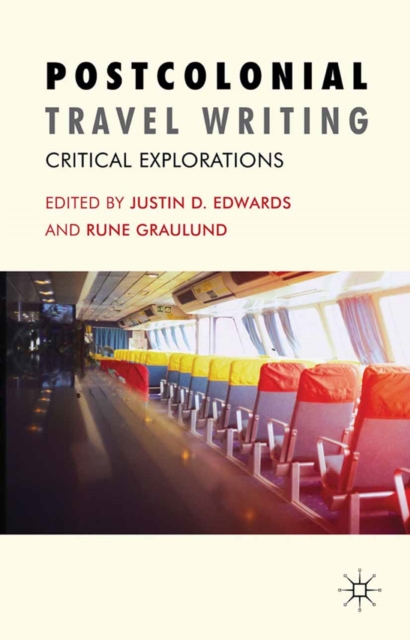
Postcolonial travel writing : critical explorations
With its inclusion of original essays challenging the view of travel writing as a Eurocentric genre, this book will stand as a benchmark study of future inquiries in the field. It will revitalize the critical debate, sparking a much needed rethinking of a vibrant and highly popular but also volatile genre that has seen many changes in recent years.
eBook