
Catalogue Search | MBRL


Are you sure you want to remove the book from the shelf?

{{itemTitle}}
3,567
result(s) for
"sicilia"
Sort by:

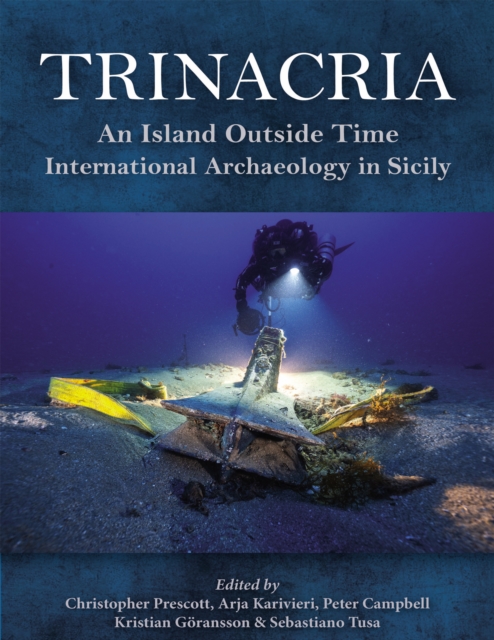
Trinacria, 'An Island Outside Time'
Trinacria, the ancient name for Sicily extending back to Homeric Greek, has understandably been the focus of decades of archaeological research. Recognizing Sicily’s rich prehistory and pivotal role in the history of the Mediterranean, Sebastiano Tusa - professor, head of heritage agencies and councillor for Cultural Heritage for the Sicilian Region - promoted the exploration of the island’s heritage through international collaboration. His decades of fostering research initiatives not only produced rich archaeological results spanning the Palaeolithic to the modern era but brought scholars from a range of schools and disciplines to work together in Sicily. Through his efforts, uniquely productive methodological, theoretical and interpretative networks were created. Their impact extends far beyond Sicily and Italy. To highlight these networks and their results, the Institutum Romanum Finlandiae, the Swedish Institute in Rome, the Norwegian Institute in Rome, the British School at Rome and the Assessorato dei Beni Culturali of Sicily, with generous support from the Swedish Riksbankens Jubileumsfond, assembled this anthology of papers. The aim is to present a selection of the work of and results from contemporary, multi-national research projects in Sicily. The collaboration between the Sicilian and international partners, often in an interdisciplinary framework, has generated important results and perspectives. The articles in this volume present research projects from throughout the island. The core of the articles is concerned with the Archaic through to the Roman period, but diachronic studies also trace lines back to the Stone Age and up to the contemporary era. A range of methods and sources are explored, thus creating an up-to-date volume that is a referential gateway to contemporary Sicilian archaeology.
eBook

Sicily and The Enlightenment
Dominico Caracciolo was an important figure on the eighteenth-century European stage, holding high office as a diplomat in London, Turin and Paris, and as viceroy and prime minister in the Two Sicilies. He was an inveterate letter-writer and his huge correspondence, with his diplomatic despatches and other official writing, is a unique original source, providing a detailed and vivid picture of the eighteenth-century European elite with all its extravagance and scandalous behaviour but, even more importantly, it is an account of an Enlightenment struggle against the increasingly outdated clerical and feudal rule in Sicily. Caracciolo was an abrasive and combative official and politician and vigorous scion of the Enlightenment. In this book, Angus Campbell provides a detailed portrait of Caracciolo and of the political, social, economic, legal and cultural context in which he lived and worked. In doing so, he provides a unique vantage point on the European diplomatic culture of the eighteenth century.
eBook

Urbanism and Empire in Roman Sicily
Sicily has been the fulcrum of the Mediterranean throughout history. The island’s central geographical position and its status as ancient Rome’s first overseas province make it key to understanding the development of the Roman Empire. Yet Sicily’s crucial role in the empire has been largely overlooked by scholars of classical antiquity, apart from a small number of specialists in its archaeology and material culture. Urbanism and Empire in Roman Sicily offers the first comprehensive English-language overview of the history and archaeology of Roman Sicily since R. J. A. Wilson’s Sicily under the Roman Empire (1990). Laura Pfuntner traces the development of cities and settlement networks in Sicily in order to understand the island’s political, economic, social, and cultural role in Rome’s evolving Mediterranean hegemony. She identifies and examines three main processes traceable in the archaeological record of settlement in Roman Sicily: urban disintegration, urban adaptation, and the development of alternatives to urban settlement. By expanding the scope of research on Roman Sicily beyond the bounds of the island itself, through comparative analysis of the settlement landscapes of Greece and southern Italy, and by utilizing exciting evidence from recent excavations and surveys, Pfuntner establishes a new empirical foundation for research on Roman Sicily and demonstrates the necessity of including Sicily in broader historical and archaeological studies of the Roman Empire.
eBook
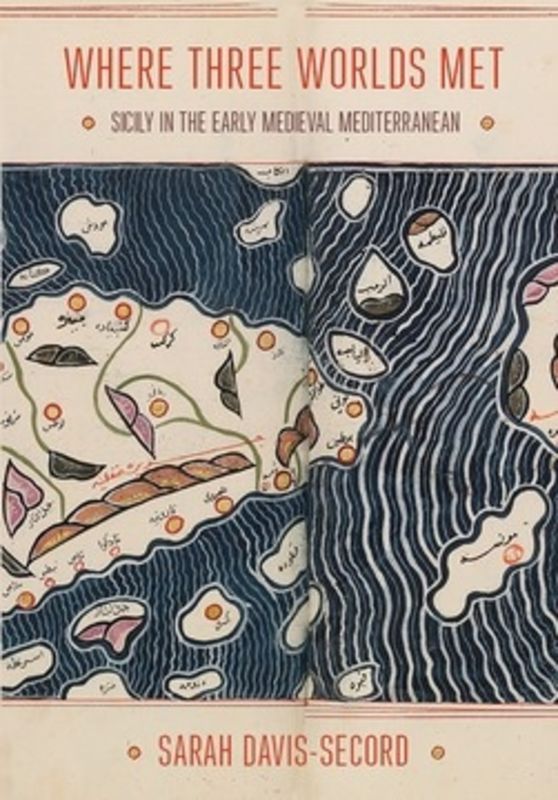
Where Three Worlds Met
In Where Three Worlds Met, Sarah Davis-Secord investigates Sicily's place within the religious, diplomatic, military, commercial, and intellectual networks of the Mediterranean by tracing the patterns of travel, trade, and communication among Christians (Latin and Greek), Muslims, and Jews. By looking at the island across this long expanse of time and during the periods of transition from one dominant culture to another, Davis-Secord uncovers the patterns that defined and redefined the broader Muslim-Christian encounter in the Middle Ages.
eBook

The Normans
A bold new history of the rise and expansion of the Norman
Dynasty across Europe from Byzantium to England In the
eleventh century the climate was improving, population was growing,
and people were on the move. The Norman dynasty ranged across
Europe, led by men who achieved lasting fame like William the
Conqueror and Robert Guiscard. These figures cultivated an image of
unstoppable Norman success and their victories make for a great
story, but how much of it is true? In this insightful history,
Judith Green challenges old certainties and explores the reality of
Norman life across the continent. There were many soldiers of
fortune, but their successes were down to timing, good luck, and
ruthless leadership. Green shows the Normans' profound impact, from
drastic change in England to laying the foundations for unification
in Sicily, to their contribution to the First Crusade. Going beyond
the familiar, she looks at personal dynastic relationships and the
important part women played in what at first sight seems a
resolutely masculine world.
eBook

Factions, Friends and Feasts
Drawing on field research in Malta, Sicily and among Italian emigrants in Canada, this book explores the social influence of the Mediterranean climate and the legacy of ethnic and religious conflict from the past five decades. Case studies illustrate the complexity of daily life not only in the region but also in more remote academe, by analysing the effects of fierce family loyalty, emigration and the social consequences of factionalism, patronage and the friends-of-friends networks that are widespread in the region. Several chapters discuss the social and environmental impact of mass tourism, how locals cope, and the paradoxical increase in religious pageantry and public celebrations. The discussions echo changes in the region and the related development of the author's own interests and engagement with prevailing issues through his career.
eBook

Testimonio de lo inefable. Técnica narrativa y retórica en El deshabitado (2016), de Javier Sicilia 1
Il deshabitado (Grijalbo, 2016) puede estudiarse como un testimonio novelado, porque es un relato complejo y sobrecogedor en primera persona, escrito por el poeta Javier Sicilia, quien se representa como protagonista y testigo de las terribles causas sociales de la muerte de su hijo Juanelo, y de las consecuencias que tuvo sobre Sicilia ese fatídico hecho. En la lectura, asistimos al recuento del duelo del escritor y a la rememoración de la posterior fundación del Movimiento por la Paz con Justicia y Dignidad, manifestación civil contra la llamada Guerra contra el Narco gubernamental en México entre 2006 y 2012. Hecho social y memoria íntima se funden en el libro analizado. La hipótesis de esta investigación es que se pueden reconocer elementos retóricos y técnicos usados para construir un testimonio de lo inefable. ¿Cómo logra Sicilia la fusión entre técnica lírica y testimonio, para configurar un punto equilibrado entre lo afectivo, lo artístico y lo mnemónico? ¿Cuáles son las implicaciones estéticas de este singular ejercicio literario? En la medida que el autor del corpus de estudio se afirma como un testigo-memorialista que revisa un momento álgido de la historia mexicana, la narración, obviamente, se convierte en un testimonio-memoria de primera mano del periodo. Asimismo, la conciencia histórica, pero sobre todo la conciencia literaria y la sospecha de la palabra al (d)escribir tanto su dolor como padre como la posición sociológica de Sicilia, permiten problematizar las relaciones entre escritura y violencia, entre arte y tiempo presente. Tales fueron los objetivos aquí.
Journal Article

The Real Life of the Parthenon
Ownership battles over the marbles removed from the Parthenon by Lord Elgin have been rumbling into invective, pleading, and counterclaims for two centuries.The emotional temperature around them is high, and steering across the vast past to safe anchor in a brilliant heritage is tricky. The stories around antiquities become distorted by the pull.
eBook

Medieval Sicily, al-Andalus, and the Maghrib
This volume explores a millennium of multilingual literary exchanges among the peoples of Sicily, the Iberian Peninsula, and North Africa: the Maghrib, or westernmost strongholds of medieval Islam. Beginning in the seventh century, Muslim expansion into the western Mediterranean initiated a new phase in the layering of heterogeneous peoples and languages in this perennial contact zone: Arabs and Berbers, Christians and Jews, Sunnī and Shīʿa Muslims, Greeks and Latins all shaped, shared, and contested identities, hybrid genealogies of knowledge, and fragile but vital political alliances. Waves of migration and the movement of scholars and poets transmitted and expanded canonical and convergent literary forms while facilitating the rise of new vernaculars and the adoption of foreign cultural practices and themes. These essays excavate the complexities of the literary artefacts produced in these times of turmoil, offering new perspectives on the intellectual networks and traditions that proved instrumental in overcoming the often traumatic transitions among political and/or religious regimes.
eBook