
Catalogue Search | MBRL


Are you sure you want to remove the book from the shelf?

{{itemTitle}}
3,365
result(s) for
"sicily"
Sort by:


Urbanism and Empire in Roman Sicily
Sicily has been the fulcrum of the Mediterranean throughout history. The island’s central geographical position and its status as ancient Rome’s first overseas province make it key to understanding the development of the Roman Empire. Yet Sicily’s crucial role in the empire has been largely overlooked by scholars of classical antiquity, apart from a small number of specialists in its archaeology and material culture. Urbanism and Empire in Roman Sicily offers the first comprehensive English-language overview of the history and archaeology of Roman Sicily since R. J. A. Wilson’s Sicily under the Roman Empire (1990). Laura Pfuntner traces the development of cities and settlement networks in Sicily in order to understand the island’s political, economic, social, and cultural role in Rome’s evolving Mediterranean hegemony. She identifies and examines three main processes traceable in the archaeological record of settlement in Roman Sicily: urban disintegration, urban adaptation, and the development of alternatives to urban settlement. By expanding the scope of research on Roman Sicily beyond the bounds of the island itself, through comparative analysis of the settlement landscapes of Greece and southern Italy, and by utilizing exciting evidence from recent excavations and surveys, Pfuntner establishes a new empirical foundation for research on Roman Sicily and demonstrates the necessity of including Sicily in broader historical and archaeological studies of the Roman Empire.
eBook

Morning sea
Desperate to escape the chaos and violence as Gaddafi clings to power, Farid and his mother dash through the streets of Tripoli to the sea, hoping to secure safe passage to Sicily. But as they hunker down in the battered, overcrowded boat, the terrifying vastness of the sea - and journey - begins to dawn. Meanwhile, Vito wanders the Sicilian beaches, scanning the rocks for debris from boats lost at sea. Vito's parents left Libya when Gaddafi came to power, but his mother has never adjusted to life in Italy - or let go of her childhood love, an Arab boy whom she was forced to leave to a fate very different from her own.
Book

Sicily and The Enlightenment
Dominico Caracciolo was an important figure on the eighteenth-century European stage, holding high office as a diplomat in London, Turin and Paris, and as viceroy and prime minister in the Two Sicilies. He was an inveterate letter-writer and his huge correspondence, with his diplomatic despatches and other official writing, is a unique original source, providing a detailed and vivid picture of the eighteenth-century European elite with all its extravagance and scandalous behaviour but, even more importantly, it is an account of an Enlightenment struggle against the increasingly outdated clerical and feudal rule in Sicily. Caracciolo was an abrasive and combative official and politician and vigorous scion of the Enlightenment. In this book, Angus Campbell provides a detailed portrait of Caracciolo and of the political, social, economic, legal and cultural context in which he lived and worked. In doing so, he provides a unique vantage point on the European diplomatic culture of the eighteenth century.
eBook


The Muslims of medieval Italy
This is a general historical introduction to the Muslims of medieval Italy which presents specific information regarding social, religious, administrative, political, cultural, artistic and intellectual questions.
eBook
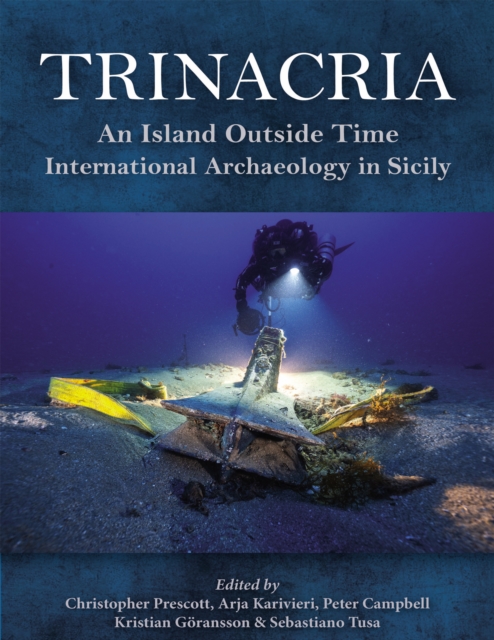
Trinacria, 'An Island Outside Time'
Trinacria, the ancient name for Sicily extending back to Homeric Greek, has understandably been the focus of decades of archaeological research. Recognizing Sicily’s rich prehistory and pivotal role in the history of the Mediterranean, Sebastiano Tusa - professor, head of heritage agencies and councillor for Cultural Heritage for the Sicilian Region - promoted the exploration of the island’s heritage through international collaboration. His decades of fostering research initiatives not only produced rich archaeological results spanning the Palaeolithic to the modern era but brought scholars from a range of schools and disciplines to work together in Sicily. Through his efforts, uniquely productive methodological, theoretical and interpretative networks were created. Their impact extends far beyond Sicily and Italy. To highlight these networks and their results, the Institutum Romanum Finlandiae, the Swedish Institute in Rome, the Norwegian Institute in Rome, the British School at Rome and the Assessorato dei Beni Culturali of Sicily, with generous support from the Swedish Riksbankens Jubileumsfond, assembled this anthology of papers. The aim is to present a selection of the work of and results from contemporary, multi-national research projects in Sicily. The collaboration between the Sicilian and international partners, often in an interdisciplinary framework, has generated important results and perspectives. The articles in this volume present research projects from throughout the island. The core of the articles is concerned with the Archaic through to the Roman period, but diachronic studies also trace lines back to the Stone Age and up to the contemporary era. A range of methods and sources are explored, thus creating an up-to-date volume that is a referential gateway to contemporary Sicilian archaeology.
eBook