
Catalogue Search | MBRL


Are you sure you want to remove the book from the shelf?

{{itemTitle}}
19,922
result(s) for
"sisters"
Sort by:

Zoe's room (no sisters allowed)
\"Queen\" Zoe protests having her sister Addie move from their parents' room into her realm, but on the fourth night she has reason to be glad for a roommate.
Book

Women of Faith: The Chicago Sisters of Mercy and the Evolution of a Religious Community
When the Sisters of Mercy lost their foundress Sister Catherine McAuley in 1841, stories of Mother Catherine passed from one generation of sisters to the next. McAuley's Rule and Constitutions along with her spiritual writings and correspondence communicated the Mercys' founding charism. Each generation of Sisters of Mercy who succeeded her took these words and her spirit with them as they established new communities or foundations across the United States and around the world. In Women of Faith, Mary Beth Fraser Connolly traces the paths of the women who dedicated their lives to the Sisters of Mercy Chicago Regional Community, the first Congregation of Catholic Sisters in Chicago. More than the story of the institutions that defined the territory and ministries of the women of this Midwestern region, Women of Faith presents a history of the women who made this regional community, whether as foundresses of individual communities in Wisconsin, Iowa, and Illinois in the nineteenth and early twentieth centuries or as the teachers, nurses, and pastoral ministers who cared for and educated generations of Midwestern American Catholics. Though they had no immediate connection with McAuley, these women inherited her spirit and vision for religious life. Focusing on how the Chicago Mercys formed a community, lived their spiritual lives, and served within the institutional Catholic Church, this three-part perspective addresses community, spirituality, and ministry, providing a means by which we can trace the evolution of these women of faith as the world around them changed. The first part of this study focuses on the origins of the Sisters of Mercy in the Midwest from the founding of the Chicago South Side community in 1846 through the amalgamation and creation of the Chicago Province in 1929. The second part examines how the Mercys came together as one province through the changes of Vatican II from 1929 to the 1980s. Part III examines life after the dramatic changes of Vatican II in the 1990s and 2000s. Presenting rich examples of how faith cannot be separated from identity, Women of Faith provides an important new contribution to the scholarship that is shaping our collective understanding of women religious.
eBook

The sisters. 2, Doing it our way
A follow-up to Just Like Family finds sibling rivals Wendy and Marine continuing their sisterly shenanigans while trying to remember that they actually love one another.
Book

Princely Brothers and Sisters
InPrincely Brothers and Sisters, Jonathan R. Lyon takes a fresh look at sibling networks and the role they played in shaping the practice of politics in the Middle Ages. Focusing on nine of the most prominent aristocratic families in the German kingdom during the Staufen period (1138-1250), Lyon finds that noblemen-and to a lesser extent, noblewomen-relied on the cooperation and support of their siblings as they sought to maintain or expand their power and influence within a competitive political environment. Consequently, sibling relationships proved crucial at key moments in shaping the political and territorial interests of many lords of the kingdom.
Family historians have largely overlooked brothers and sisters in the political life of medieval societies. As Lyon points out, however, siblings are the contemporaries whose lives normally overlap the longest. More so than parents and children, husbands and wives, or lords and vassals, brothers and sisters have the potential to develop relationships that span entire lifetimes. The longevity of some sibling bonds therefore created opportunities for noble brothers and sisters to collaborate in especially potent ways. As Lyon shows, cohesive networks of brothers and sisters proved remarkably effective at counterbalancing the authority of the Staufen kings and emperors. Well written and impeccably researched,Princely Brothers and Sistersis an important book not only for medieval German historians but also for the field of family history.
eBook

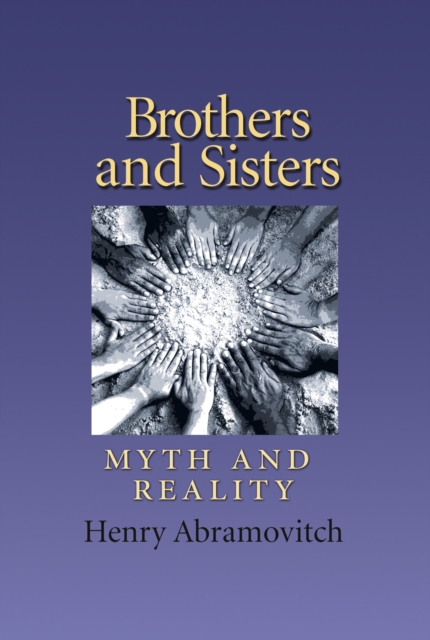
Brothers and Sisters
Growing up, we typically spend more time with our brothers and sisters than we do with our parents. In an age of divorce, mobility, and alienation, the sibling bond is often the only one that really lasts.Given that brothers and sisters are such a fundamental aspect of human existence, it is remarkable that they have received so little in-depth attention in the field of psychology.Henry Abramovitch's Brothers and Sisters explores the tension between the myth and reality of brothers and sisters in a variety of cultures and through the poignant brother-sister stories in the Bible. Abramovitch looks at the developmental sequence in the sibling relationship as brothers or sisters struggle to find their place with each other, concluding with a very personal account of his own relationship with his brother and sister.
eBook


A Sister Mary Joseph’s nodule in fallopian tube cancer: exploring the metastatic pathway through gene expression profiling—a case report
Background
A Sister Mary Joseph’s nodule is an umbilical metastasis from an intra-abdominal or pelvic malignancy, associated with a poor prognosis. Three possible metastatic pathways for Sister Mary Joseph’s nodule have been postulated: hematogenous spread, lymphatic dissemination, and direct invasion. However, detailed analyses of these metastatic pathways, particularly those involving gene expression profiling, are lacking in literature. We investigated the metastatic patterns of Sister Mary Joseph’s nodule by performing RNA microarray analysis of the primary tumor and each metastatic site in a case of fallopian tube cancer presenting with Sister Mary Joseph’s nodule and inguinal lymph node metastases.
Case presentation
A 48-year-old Japanese woman presented with swelling in an inguinal lymph node. Positron emission tomography-computed tomography imaging revealed multiple lymph node metastases, right ovarian tumor, umbilical metastasis, and peritoneal dissemination. The patient underwent a laparoscopic right adnexal resection, left inguinal lymph node biopsy, and umbilical resection. Pathological examination confirmed the diagnosis of primary high-grade serous carcinoma of the right fallopian tube. Metastatic high-grade serous carcinoma was identified in the lymph nodes and umbilical tissue. Tumor tissue samples were collected from the primary lesion, umbilical metastasis, and inguinal lymph node metastasis for RNA microarray analysis. The results showed that genes involved in cell adhesion, migration, and stromal remodeling associated with the metastatic processes were more highly expressed in both inguinal lymph node metastasis and Sister Mary Joseph’s nodule than in the primary lesion. Interestingly, distinct differences in gene expression profiles were observed between umbilical and lymph node metastases, suggesting different metastatic mechanisms.
Conclusion
Our findings suggest differences in the RNA expression patterns between Sister Mary Joseph’s nodule and lymph node metastases in fallopian tube cancer, indicating the possibility of distinct metastatic mechanisms. Further examination of similar cases and longitudinal studies are necessary to elucidate the metastatic patterns of Sister Mary Joseph’s nodule. This case highlights the potential value of molecular profiling for understanding the complex metastatic processes in gynecological malignancies.
Journal Article

Friendship bread : a novel
Still reeling from a personal tragedy that left her estranged from the sister who was once her best friend, Julia Evarts remains at a loss as to how to move on with her life until she receives an anonymous gift of Amish Friendship Bread with instructions on how to make the bread herself, and a request to share it with others.
Book

Rooting the Animal Tree of Life
Identifying our most distant animal relatives has emerged as one of the most challenging problems in phylogenetics. This debate has major implications for our understanding of the origin of multicellular animals and of the earliest events in animal evolution, including the origin of the nervous system. Some analyses identify sponges as our most distant animal relatives (Porifera-sister hypothesis), and others identify comb jellies (Ctenophora-sister hypothesis). These analyses vary in many respects, making it difficult to interpret previous tests of these hypotheses. To gain insight into why different studies yield different results, an important next step in the ongoing debate, we systematically test these hypotheses by synthesizing 15 previous phylogenomic studies and performing new standardized analyses under consistent conditions with additional models. We find that Ctenophora-sister is recovered across the full range of examined conditions, and Porifera-sister is recovered in some analyses under narrow conditions when most outgroups are excluded and site-heterogeneous CAT models are used. We additionally find that the number of categories in site-heterogeneous models is sufficient to explain the Porifera-sister results. Furthermore, our cross-validation analyses show CAT models that recover Porifera-sister have hundreds of additional categories and fail to fit significantly better than site-heterogenuous models with far fewer categories. Systematic and standardized testing of diverse phylogenetic models suggests that we should be skeptical of Porifera-sister results both because they are recovered under such narrow conditions and because the models in these conditions fit the data no better than other models that recover Ctenophora-sister.
Journal Article