
Catalogue Search | MBRL


Are you sure you want to remove the book from the shelf?

{{itemTitle}}
24,897
result(s) for
"sketch"
Sort by:

In Living Color
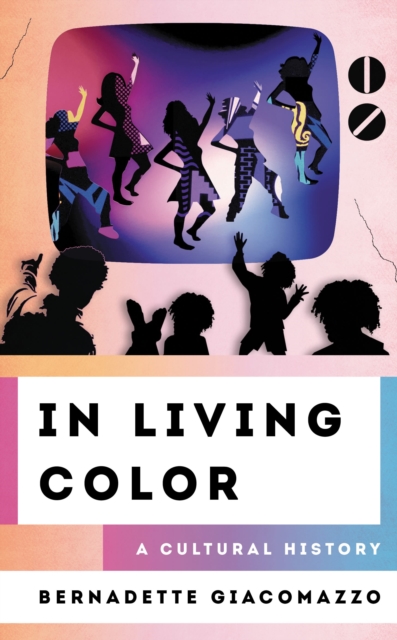
An entertaining yet candid examination of the popular sketch show In Living Color. When the pilot for In Living Color aired for the first time on April 15, 1990, America had never seen anything like it. And they loved it. Over five seasons, the show broke racial, cultural, and comedy boundaries, creating unforgettable sketches that dealt almost exclusively with Black subject matter. In Living Color: A Cultural History celebrates the iconic show and its creators, while also providing a conscientious examination of the sketches themselves. Bernadette Giacomazzo reveals how the show successfully tackled topics that are still salient today, from diversity in Hollywood and workplace racism to mass incarceration and \"blackfishing,\" while other sketches have not aged quite so well. Giacomazzo also looks at how the show helped break the careers of Jamie Foxx, Jim Carrey, and David Alan Grier, amongst others, and how its most infamous sketches—such as Fire Marshall Bill, Homey the Clown, East Hollywood Squares, and Men on Film—helped shape comedy in the twenty-first century. In Living Color was one of the few sketch shows of the 1990s that effectively tackled racial and social issues with humor. It did so more successfully than Saturday Night Live ever did, because, unlike the long-standing late-night show, In Living Color had a largely Black writer's room. This cultural history finally gives the influential show and its creators the recognition they deserve for their role in changing the face of television.
eBook

25 years of 22 minutes : an unauthorized oral history of this hour has 22 minutes, as told by cast members, staff, and guests
\"The final chaotic season of Codco had just wrapped when Mary Walsh sat down at a Toronto bistro with George Anthony, then creative head of CBC TV's arts programming. She'd been thinking about a news-based comedy show-did he think that would fly? He did. That was the early '90s. Twenty-five seasons later, hundreds of thousands of Canadians continue to tune in weekly to This Hour Has 22 Minutes for its unashamedly Canadian, bitingly satirical take on politics and power. 25 Years of 22 Minutes takes readers backstage to hear first-hand accounts of the show's key moments-in the words of the writers, producers, and cast members who were there. Readers will have a front-row seat to the birth of the show-including a crisis that had producers scrambling in the very first episode-and an insider's take on the highs, the lows and the daily grind behind the scenes at 22 Minutes.\"-- Provided by publisher.
Book

Sketchformer++: A Hierarchical Transformer Architecture for Vector Sketch Representation
With the rising ubiquity of digital touch devices and sketch-based interfaces, freehand sketching has become an essential mode of visual communication. Nevertheless, interpreting these often ambiguous and sparse sketches poses challenges for computers. This paper presents Sketchformer++, a hierarchical transformer architecture for the neural representation of vector sketches. It treats a vector sketch as a three-level structure, at sketch level, stroke level, and segment level. Three self-attention modules are adopted in the network architecture, corresponding to the sketch hierarchy. The semantics of sketches are aggregated from local to global levels, resulting in neural representations of sketches. Extensive experiments show that Sketchformer++ helps to achieve superior performance in various downstream tasks, including sketch reconstruction, sketch recog-nition, sketch semantic segmentation, and sketch retrieval, demonstrating its robustness and effectiveness as a means of sketch representation. Code is available at https://github.com/BHR7/SketchformerPlus.
Journal Article

Sketch-a-Net: A Deep Neural Network that Beats Humans
We propose a deep learning approach to free-hand sketch recognition that achieves state-of-the-art performance, significantly surpassing that of humans. Our superior performance is a result of modelling and exploiting the unique characteristics of free-hand sketches, i.e., consisting of an ordered set of strokes but lacking visual cues such as colour and texture, being highly iconic and abstract, and exhibiting extremely large appearance variations due to different levels of abstraction and deformation. Specifically, our deep neural network, termed Sketch-a-Net has the following novel components: (i) we propose a network architecture designed for sketch rather than natural photo statistics. (ii) Two novel data augmentation strategies are developed which exploit the unique sketch-domain properties to modify and synthesise sketch training data at multiple abstraction levels. Based on this idea we are able to both significantly increase the volume and diversity of sketches for training, and address the challenge of varying levels of sketching detail commonplace in free-hand sketches. (iii) We explore different network ensemble fusion strategies, including a re-purposed joint Bayesian scheme, to further improve recognition performance. We show that state-of-the-art deep networks specifically engineered for photos of natural objects fail to perform well on sketch recognition, regardless whether they are trained using photos or sketches. Furthermore, through visualising the learned filters, we offer useful insights in to where the superior performance of our network comes from.
Journal Article
Generative Sketch Healing
To perceive and create a whole from parts is a prime trait of the human visual system. In this paper, we teach machines to perform a similar task by recreating a vectorised human sketch from its incomplete parts, dubbed as sketch healing. This is fundamentally different to prior works on image completion since (i) sketches exhibit a severe lack of visual cues and are of a sequential nature, and more importantly (ii) we ask for an agent that does not just fill in a missing part, but to recreate a novel sketch that closely resembles the partial input from scratch. We identify two key facets of sketch healing that are fundamental for effective learning. The first is encoding the incomplete sketches in a graph model that leverages the sequential nature of sketches to associate key visual parts centred around stroke junctions. The intuition is then that message passing within the graph topology will naturally provide the healing power when it comes to missing parts (nodes and edges). Second we show healing is a trade-off process between global semantic preservation and local structure reconstruction, and that it can only be effectively solved when both are taken into account and optimised together. Both qualitative and quantitative results suggest that the proposed method significantly outperforms the state-of-the-art alternatives on sketch healing. Last but not least, we show that sketch healing can be re-purposed to support the interesting application of sketch-based creativity assistant, which aims at generating a novel sketch from two partial sketches even without specifically trained so.
Journal Article

Sketch-based interaction and modeling: where do we stand?
Sketching is a natural and intuitive communication tool used for expressing concepts or ideas which are difficult to communicate through text or speech alone. Sketching is therefore used for a variety of purposes, from the expression of ideas on two-dimensional (2D) physical media, to object creation, manipulation, or deformation in three-dimensional (3D) immersive environments. This variety in sketching activities brings about a range of technologies which, while having similar scope, namely that of recording and interpreting the sketch gesture to effect some interaction, adopt different interpretation approaches according to the environment in which the sketch is drawn. In fields such as product design, sketches are drawn at various stages of the design process, and therefore, designers would benefit from sketch interpretation technologies which support these differing interactions. However, research typically focuses on one aspect of sketch interpretation and modeling such that literature on available technologies is fragmented and dispersed. In this paper, we bring together the relevant literature describing technologies which can support the product design industry, namely technologies which support the interpretation of sketches drawn on 2D media, sketch-based search interactions, as well as sketch gestures drawn in 3D media. This paper, therefore, gives a holistic view of the algorithmic support that can be provided in the design process. In so doing, we highlight the research gaps and future research directions required to provide full sketch-based interaction support.
Journal Article

Stroke-based semantic segmentation for scene-level free-hand sketches
Sketching is a simple and efficient way for humans to express their perceptions of the world. Sketch semantic segmentation plays a key role in sketch understanding and is widely used in sketch recognition, sketch-based image retrieval, or editing. Due to modality difference between images and sketches, existing image segmentation methods may not perform best, which overlook the sparse nature and stroke-based representation in sketches. The existing sketch semantic segmentation methods are mainly designed for single-instance sketches. In this paper, we present a new stroke-based sequential-spatial neural network (S
3
NN) for scene-level free-hand sketch semantic segmentation, which leverages a bidirectional LSTM and graph convolutional network to capture the sequential and spatial features of sketches. In order to address the data lacking issue, we propose the first scene-level free-hand sketch dataset (SFSD). SFSD is composed of 12K sketch-photo pairs over 40 object categories, where the sketches were completely hand-drawn and each contains 7 objects on average. We conduct comparative and ablative experiments on SFSD to evaluate the effectiveness of our method. The experimental results demonstrate that our method outperforms state-of-the-art methods. The code, models, and dataset will be made public after acceptance.
Journal Article


From rays to waves and beyond: Light propagation in historical perspective
This paper sketches selected episodes from the history of research about the nature of light in the nineteenth and twentieth century. It begins with the discovery of “invisible rays from the Sun” and ends with the advent of the so-called wave-particle duality. In doing so the paper asks how far the question of the nature of light after many years of discussions and discoveries may be regarded as answered or not.
Journal Article