
Catalogue Search | MBRL


Are you sure you want to remove the book from the shelf?

{{itemTitle}}
1,086,305
result(s) for
"social service"
Sort by:


A policy travelogue
An ethnography of the development and travel of the New Zealand model of neoliberal welfare reform, this study explores the social life of policy, which is one of process, motion, and change. Different actors, including not only policy elites but also providers and recipients, engage with it in light of their own resources and knowledge. Drawing on two analytic frameworks of the contemporary anthropology of policy-translation and assemblage-Kingfisher situates policy as an artifact and architect of cultural meaning, as well as a site of power struggles. All points of engagement with policy are approached as sites of policy production that serve to transform it as well as reproduce it. As such,
A Policy Travelogueprovides an antidote to theorizations of policy as a-cultural, rational, and straightforwardly technical.
eBook


The other invisible hand
How can we ensure high-quality public services such as health care and education? Governments spend huge amounts of public money on public services such as health, education, and social care, and yet the services that are actually delivered are often low quality, inefficiently run, unresponsive to their users, and inequitable in their distribution. In this book, Julian Le Grand argues that the best solution is to offer choice to users and to encourage competition among providers. Le Grand has just completed a period as policy advisor working within the British government at the highest levels, and from this he has gained evidence to support his earlier theoretical work and has experienced the political reality of putting public policy theory into practice. He examines four ways of delivering public services: trust; targets and performance management; \"voice\"; and choice and competition. He argues that, although all of these have their merits, in most situations policies that rely on extending choice and competition among providers have the most potential for delivering high-quality, efficient, responsive, and equitable services. But it is important that the relevant policies be appropriately designed, and this book provides a detailed discussion of the principal features that these policies should have in the context of health care and education. It concludes with a discussion of the politics of choice.
eBook


Saving America?
On January 29, 2001, President George W. Bush signed an executive order creating the White House Office of Faith-Based and Community Initiatives. This action marked a key step toward institutionalizing an idea that emerged in the mid-1990s under the Clinton administration--the transfer of some social programs from government control to religious organizations. However, despite an increasingly vocal, ideologically charged national debate--a debate centered on such questions as: What are these organizations doing? How well are they doing it? Should they be supported with tax dollars?--solid answers have been few.
eBook

Reflective practice in social work
Reflective practice is a key learning and development process on social work courses. This title looks at the concept of reflection and reflective social work practice from a critical stance, and in accessible ways involving case material and practical tasks.
Book
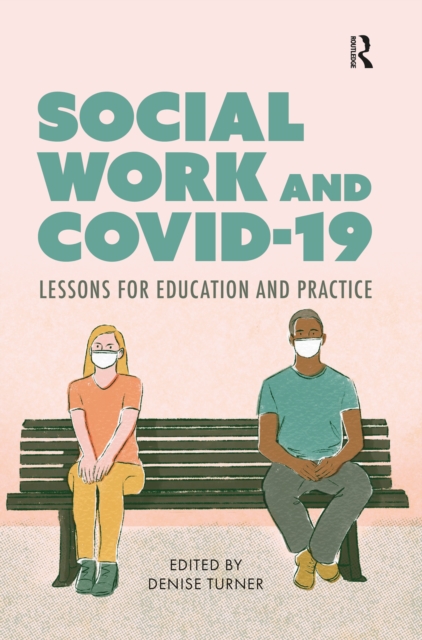
Social Work and Covid-19
Captures the unique moment in time created by the Covid-19 pandemic and uses this as a lens to explore contemporary issues for social work education and practice.
The 2020 coronavirus pandemic provided an unprecedented moment of global crisis, which placed health and social care at the forefront of the national agenda. The lockdown, social distancing measures and rapid move to online working created multiple challenges and safeguarding concerns for social work education and practice, whilst the unparalleled death rate exacerbated pre-existing problems with communicating openly about death and bereavement. Many of these issues were already at the surface of social work practice and education and this book examines how the health crisis has exposed these, whilst acting as a potential catalyst for change.
This book acts as a testament to the historical moment whilst providing a forum for drawing together discussion from contemporary educators, practitioners and users of social work services.
eBook

Practice research partnerships in social work : making a difference
\"Practice Research Partnerships in Social Work can make a significant difference to social work service delivery. This comprehensive, accessibly written resource is designed to help students and practitioners to actively engage with research through their frontline work. Through clear practice scenarios, critical questions and examples from research the text guides researchers, students, educators, practice managers, funders and practitioners to creatively explore partnerships in creating, contributing, consuming, commissioning or critiquing evidence in and for social work practice. The text encourages collaborative practice by demonstrating the transformative nature of knowledge networks to 'make a difference' in social work practice. An essential text for students undertaking professional training at all levels as well as meeting the needs of qualified staff for continued professional development\"--Jacket.
Book

Catching a Case
Influenced by news reports of young children brutalized by their parents, most of us see the role of child services as the prevention of severe physical abuse. But as Tina Lee shows inCatching a Case, most child welfare cases revolve around often ill-founded charges of neglect, and the parents swept into the system are generally struggling but loving, fighting to raise their children in the face of crushing poverty, violent crime, poor housing, lack of childcare, and failing schools.
Lee explored the child welfare system in New York City, observing family courts, interviewing parents and following them through the system, asking caseworkers for descriptions of their work and their decision-making processes, and discussing cases with attorneys on all sides. What she discovered about the system is troubling. Lee reveals that, in the face of draconian budget cuts and a political climate that blames the poor for their own poverty, child welfare practices have become punitive, focused on removing children from their families and on parental compliance with rules. Rather than provide needed help for families, case workers often hold parents to standards almost impossible for working-class and poor parents to meet. For instance, parents can be accused of neglect for providing inadequate childcare or housing even when they cannot afford anything better. In many cases, child welfare exacerbates family problems and sometimes drives parents further into poverty while the family court system does little to protect their rights.
Catching a Caseis a much-needed wake-up call to improve the child welfare system, and to offer more comprehensive social services that will allow all children to thrive.
eBook