
Catalogue Search | MBRL


Are you sure you want to remove the book from the shelf?

{{itemTitle}}
7,239
result(s) for
"specific learning difficulty"
Sort by:
Classroom behavior, contexts, and interventions
Intended to be of interest to clinicians, teachers, researchers, graduate students, and others who work with students with learning and behavioral disabilities, this book focuses on identify and review issues and outcomes associated with behavioral concerns of students with learning and behavioral disabilities.
eBook
Literacy and learning
Inhalt: Response to intervention: treatment validity and implementation challenges in the primary and middle grades / Stephanie Al Otaiba, Mary Beth Calhoon and Jeanne Wanzek -- The role of context in the assessment of \"unresponsiveness\" within responsiveness-to-intervention: the \"relative slope-difference discrepancy model\" (RSDDM) / Georgios D. Sideridis, Susana Padeliadu and Faye Antoniou -- Literacy supports for adolescent struggling readers: taking action through comprehension instruction / Michael Faggella-Luby and Patricia Sampson Graner -- Developmental dyslexia in a transparent orthography: a study of Spanish dyslexic children / Manuel Soriano and Ana Miranda -- Reading comprehension: unanswered questions and reading instruction challenges / Solveig-Alma Halaas Lyster -- A longitudinal study of the impact of effective beginning reading instruction for English learners: literacy, language, and learning disabilities / Anne W. Graves -- Writing: underutilized for young children with disabilities? / M. Susan Burns, Julie K. Kidd and Tamara Genarro -- Teaching students with LD to use reading comprehension strategies / Alison Gould Boardman, Janette K. Klingner, Amy L. Boele and Elizabeth Swanson -- Persuading students with emotional disabilities to write: a design study / Margo A. Mastropieri, Thomas E. Scruggs, Yojanna Cuenca-Sanchez, Narcy Irby, Sara Mills, Linda Mason and Richard Kubina -- Components affecting expressive writing in typical and disabled writers / Cesare Cornoldi, Francesco Del Prete, Anna Gallani, Francesco Sella and Anna Maria Re -- Dyslexia: a categorical falsehood without validity or utility / Simon Gibbs and Julian Elliott -- The study of human exceptionality: how it informs our knowledge of learning and cognition / Margo A. Mastropieri and Thomas E. Scruggs.
eBook
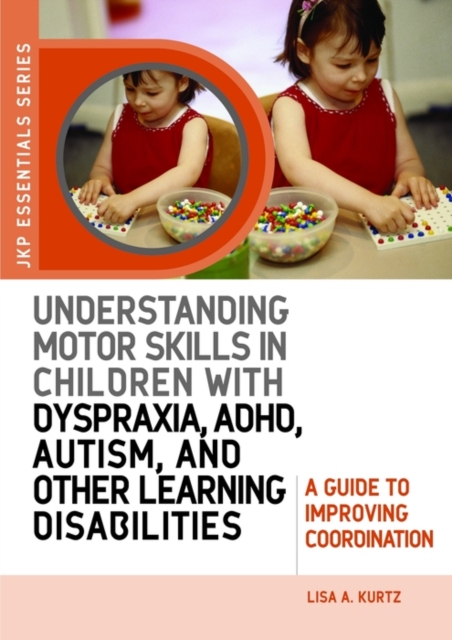
Understanding motor skills in children with dyspraxia, ADHD, autism, and other learning disabilities : a guide to improving coordination
The book is user-friendly and includes clear diagrams in each section, along with tables to outline key points. I found these very useful and they are an easy reference/ reminder, for example, they include a normal development chart, what assessments are available and their main aims.' - National Association of Paediatric Occupational Therapists Coordination problems often make everyday activities a challenge for children with learning disabilities. This accessible manual offers practical strategies and advice for helping children with coordination difficulties. The author explains how to recognize normal and abnormal motor development, when and how to seek help, and includes specific teaching strategies to help children with coordination difficulties succeed in the classroom, playground, and home. She describes a wide range of therapeutic methods and provides a comprehensive list of resources. Full of practical help, this is essential reading for anyone caring for, or working with, children with developmental motor concerns.
eBook

Brief Report: The Impact of COVID-19 on Parental Stress and Learning Challenges for Chinese Children with SpLD
The pandemic induced a radical shift to online learning with increased parental involvement. This study investigates the challenges that students with specific learning difficulties (SpLD) encountered during the pandemic and the mediating role of parental stress. A total of 294 parents of children with SpLD (mean age = 10.6;
SD
= 1.5) were recruited. Parents reported concerns over their children’s difficulties maintaining learning routines, lack of suitable environment for online classes, and ineffective remote learning. Results of mediation analysis showed that online learning challenges, SpLD symptoms, and emotional and behavioral difficulties positively predicted parental stress. In turn, parental stress negatively predicted children’s self-esteem and family quality of life. The study implies that parents of children with SpLD need both psychological and technical support under suspension of face-to-face teaching.
Journal Article
Working with Teaching Assistants and Other Support Staff for Inclusive Education
Volume 4 in this series investigates ways that staff can work effectively with Teaching Assistants and other support staff when implementing inclusive educational practices in schools. Consideration is given to the perspectives of a variety of stakeholders.
eBook

Developing Adaptive Serious Games for Children With Specific Learning Difficulties: A Two-phase Usability and Technology Acceptance Study
Specific learning difficulties (SpLD) include several disorders such as dyslexia, dyscalculia, and dysgraphia, and the children with these SpLD receive special education. However, the studies and the educational material so far focus mainly on one specific disorder.
This study's primary goal is to develop comprehensive training material for different types of SpLD, with five serious games addressing different aspects of the SpLD. The second focus is measuring the impact of adaptive difficulty level adjustment in the children's and their educators' usability and technology acceptance perception. Receiving feedback from the children and their educators, and refining the games according to their suggestions have also been essential in this two-phase study.
A total of 10 SpLD educators and 23 children with different types of SpLD tested the prototypes of the five serious games (ie, Word game, Memory game, Category game, Space game, and Math game), gave detailed feedback, answered the System Usability Scale and Technology Acceptance Model (TAM) questionnaires, and applied think-aloud protocols during game play.
The games' standard and adaptive versions were analyzed in terms of average playtime and the number of false answers. Detailed analyses of the interviews, with word clouds and player performances, were also provided. The TAM questionnaires' average and mean values and box plots of each data acquisition session for the children and the educators were also reported via System Usability Scale and TAM questionnaires. The TAM results of the educators had an average of 8.41 (SD 0.87) out of 10 in the first interview and an average of 8.71 (SD 0.64) out of 10 in the second interview. The children had an average of 9.07 (SD 0.56) out of 10 in the first interview.
Both the educators and the children with SpLD enjoyed playing the games, gave positive feedback, and suggested new ways for improvement. The results showed that these games provide thorough training material for different types of SpLD with personalized and tailored difficulty systems. The final version of the proposed games will become a part of the special education centers' supplementary curriculum and training materials, making new enhancements and improvements possible in the future.
Journal Article

Ecological Pathways to Inclusion: Mesosystemic School-University Transition Partnerships for Students With Specific Learning Difficulties
Students with Specific Learning Difficulties (SpLD) often experience uneven transitions into higher education (HE), shaped less by individual capacity than by how institutions coordinate responsibility. Despite national inclusion reforms in Saudi Arabia, little is known about how secondary schools and universities work together at the point of transition. This qualitative study examines educators’ perceptions of barriers and opportunities shaping school-university transition pathways for students with SpLD. Fourteen semi-structured interviews were conducted with secondary-school teachers and university academics. Data were analyzed using thematic analysis informed by Ecological Systems Theory and Kohler’s Taxonomy of Transition Programming (KTTP). Findings reveal an absence of shared data systems, paper-based transition planning, and episodic school-university partnerships, resulting in fragmented responsibility at entry to HE. This study contributes a mesosystemic account of transition as institutional boundary work, revealing how institutional responsibility for SpLD transition fragments at the school-university boundary (SUB) and highlighting the need for accountable, cross-sector transition mechanisms. In highlighting where targeted structural investment could strengthen transition coherence, the findings have vital implications in terms of improving the quality of life and education attainment of students with SpLD. When Schools and Universities Don’t Connect: Transition Barriers for Students With Specific Learning Difficulties in Saudi Arabia Students with Specific Learning Difficulties often face extra challenges when moving from high school to university. These challenges are not only about study skills or motivation. They are also linked to how well schools and universities work together to pass on information and support. This study explored how educators in Saudi Arabia understand the difficulties and possible improvements at this transition stage. We interviewed 14 educators, including high-school teachers and university staff, from Riyadh, Jeddah, and Abha. Instead of assuming that experiences were the same across settings, we focused on differences and gaps in how transition support was provided. Educators explained that information about students’ learning needs often does not move smoothly from school to university. Records are usually paper-based, and universities do not receive a clear or consistent transition document. As a result, students and families often have to explain learning needs again from the beginning, which can delay or disrupt support. Participants also said that transition planning in high schools varies widely and often depends on individual teachers who already have heavy workloads and limited support. Contact between schools and universities was described as occasional and general, with little clear guidance for students with learning difficulties, such as who to contact or how to request support. Although recent policy changes have made university entry easier, educators felt that support systems had not developed at the same pace. Overall, the study suggests that transition support is often uneven and poorly coordinated. Improving communication between schools and universities, using shared documents, and clarifying roles and responsibilities could reduce confusion and help students with learning difficulties adjust more successfully to university.
Journal Article

A Qualitative Investigation into the Experiences of Students with Developmental Coordination Disorder (DCD/Dyspraxia) in Higher Education
Developmental coordination disorder (DCD/Dyspraxia) is a commonly misunderstood and under-recognized specific learning difficulty (SpLD) in educational settings. This lifelong condition affects fine and gross motor coordination and significantly interferes with many activities of daily living, academic achievement, and employment opportunities. However, most Higher Education Institutions (HEIs) are unaware of its prevalence within their context, even though 5% of the general population have DCD and the enrolment of students in UK Higher Education with a known disability has increased by 42.4% between 2018 and 2023. Thus, understanding the lived experiences of students with DCD within Higher Education in the UK remains a considerable gap in knowledge. Through the use of focus groups, the lived experiences of 10 students with DCD at two UK HEIs were investigated. The thematic analysis identified four main themes: ‘Awareness of DCD’, ‘Participation in Higher Education for individuals with DCD’, ‘Wellbeing’, and ‘Everyday living’. Students shared that HEIs appeared to lack awareness of DCD and felt they had an inability to specify the correct support at university. Importantly, whilst the students in the study were not always confident in identifying the specific support they needed, they shared the strategies they used to aid their university experience. The students described the physical toll that many everyday living tasks can take, which subsequently negatively impact academic participation and wellbeing. On a positive note, many of the students discussed positive experiences at university, such as enjoying their own autonomy (and flexibility) to be independent and inform strategies for their own learning. Importantly, the findings from this work highlight the complexity and heterogeneity of DCD and the need for a tailored approach to supporting individuals with this condition. Given the importance of educational qualifications to enter the workplace, and the contribution of employment to quality of life, these findings help signpost areas where HEIs can improve the experiences of students with DCD that may also enhance academic success.
Journal Article

Assessing L2 Students with Learning and Other Disabilities
This edited volume discusses the theoretical, ethical and practical considerations involved in the assessment of Second Language Learners (SLLs) with Specific Language Learning Disorders (SpLD), such as dyslexia and Attention Deficit and Hyperactivity Disorder, and with other disabilities like visual and hearing impairments. The volume contains 14 chapters. These explore various theoretical models and research findings that identify and evaluate the language and special needs of SLLs with SpLD and other disabilities and evaluate the effectiveness of the accommodation practices employed so far. The studies involve both high-stakes tests and classroom-based assessments conducted by professionals and researchers working in the areas of psychology, special education and second/foreign language testing and assessment from various countries around the globe, including the USA, Canada, New Zealand and European countries such as Italy, UK, Greece, Germany, and Slovenia. The volume accommodates high-quality submissions that cover a gap in a research area that has long been in need of theoretical and empirical attention. This volume will become a valuable point of reference and springboard for future research initiatives.
eBook
Handwritten Versus Digitally Supported Computer-Based Writing in Students with Specific Learning Difficulties: Writing Anxiety, Confidence, Frustration, and Perceived Ease
Writing is both a cognitive–linguistic activity and an emotional academic experience. For students with Specific Learning Difficulties (SLDs), written production may involve tension, anticipated failure, reduced confidence, and frustration, especially when handwriting demands compete with idea generation, spelling control, and text organization. These emotional responses are educationally important because they may influence persistence, written productivity, revision behavior, and academic participation. This study examined emotional responses to handwritten and digitally supported computer-based writing among 60 secondary education students, including 40 students with formally diagnosed SLD and 20 students without learning difficulties. Each participant completed two writing tasks, one handwritten and one digitally supported computer-based, in a counterbalanced order. The computer-based condition functioned as a digitally supported writing environment, with spell-checking and grammar-checking enabled. After each condition, students completed the Writing Emotional Response Scale (WERS), a 12-item study-specific instrument assessing writing anxiety, writing confidence, writing frustration, and perceived ease. The WERS was developed as a preliminary measure of immediate, task-specific emotional responses. Students with SLD reported lower anxiety, lower frustration, higher confidence, and higher perceived ease during digitally supported writing. The study contributes to educational psychology by linking writing modality, SLD, and emotional accessibility.
Journal Article