
Catalogue Search | MBRL


Are you sure you want to remove the book from the shelf?

{{itemTitle}}
589,377
result(s) for
"strategic OR"
Sort by:

Resource Redeployment and Corporate Strategy
This volume examines the differences between resource sharing and resource redeployment, and the subsequent effects on firm value creation and industry evolution.
eBook

Strategy as practice : an activity-based approach
For higher Ed market: The basis of this book is an in-depth empirical study of strategy and strategizing in universities. It provides insights into how strategies of research, teaching and commercial income are shaped over time, as well as considering the problems of size and scope faced by modern universities. Theoretically, the study is robustly framed within the strategy literature, while the detailed empirical analysis makes a clear contribution to our understanding of putting strategy into practice in both the university and wider contexts. Many practical stories and exhibits about doing strategy in universities are included that will be evocative and thought-provoking for those researching, studying or managing higher education institutions. With its unusual combination of a strong strategy framework and rich empirical insights into strategizing in universities, this book is of interest to students of higher education management, as well as to practising managers in higher education. ′This volume will appeal to researchers, students and those engaged in strategic management in higher education. The case study material provides a detailed portrait of the ways in which senior managers engage in strategic development. Overall, the volume provides rich insights on strategic management in higher education′ -Professor Bob Burgess, Vice-Chancellor, University of Leicester ′This is a completely original account of three contrasting universities′ approach to creating and managing strategy in modern conditions. The problem of multiple strategies which interact with one another will be recognised by every practitioner but have not been described in this way before.\" Strategy as Practice\" represents an important contribution to higher education literature because it theorises decisions and strategies which are for the most part
instinctive responses to external realities′ - Professor Michael Shattock was Registrar of the University of Warwick before taking up his Visiting Professorship at the Institute of Education, University of London, where he is Director of the MBA in Higher Education Management. ′Strategy is something all organizations are encouraged to have. Many that do get it wrong. Their strategies are empty black box ′diamonds′ or other modish schemes. In this book Jarzabkowski argues, cogently, that strategy should be seen in terms of practice - in terms of what it is that organizations and strategic actors do when they do strategy. The book signals a major re-orientation and intellectual maturation of a field that is too important for organizations to leave to the odd blend of occasional scholarship, analysis based on aggregate data, and inspired prescription that has characterized much of strategy to present. In addition, it charts how organizations in one of the most important institutional areas of contemporary societies, the universities, actually do strategy′ Stewart Clegg, University of Technology, Sydney, Australia.
eBook
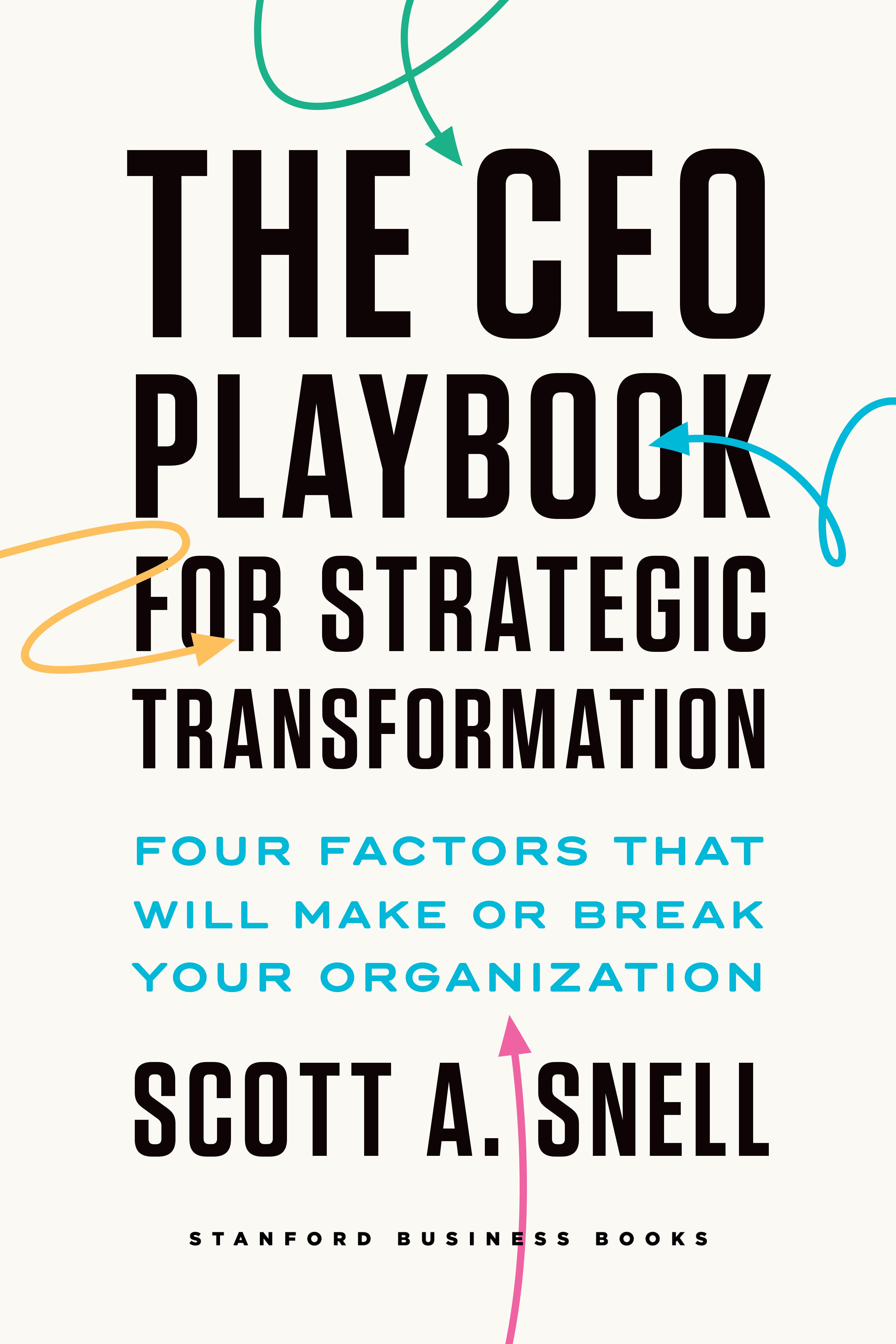
The CEO Playbook for Strategic Transformation
There is no CEO task more significant than leading change in an organization whose old business model needs updating. Large-scale change involves rethinking how to engage customers, partners and suppliers with new technology and hard decisions about how to reorganize internal operations—plus the challenges of executing the transformation. The stakes are high, filled with risk and reward obvious to all...and it often fails. Why? Most organizations aren't built for change—they're designed for stability, scale, and repetition. Too many things can go wrong, from natural organizational resistance and inertia, to lack of strategic focus, to execution problems. And yet, organizations today must be more dynamic than ever before. Strategy is dynamic, not static, and requires agility, nimbleness, rapid resource deployment, and organizational change. This practical playbook helps CEOs and other key leaders reduce the risks and see through the overwhelming complexity of a major change in organizational strategy. Unlike many other books on leading change that focus narrowly on overcoming resistance, The CEO Playbook for Strategic Transformation offers a comprehensive framework involving 4 major tasks for leaders: 1) Establish and Communicate the Urgent Need; 2) Engage Stakeholders; 3) Mobilize the Organization; and 4) Develop Organizational Agility. Leaders who guide their organizations through these stages are far more likely to succeed than those who lack a playbook. Professor Scott Snell shares insights based on years of experience working with organizations undergoing change. He also provides a set of self-assessments, frameworks for action, and interventions to help senior leaders succeed at their most challenging and important task.
eBook

Strategic Management Practices and Strategic Plans
As a continuous process, strategic management addresses the entrepreneurial dimension of organizations, organizational renewal and progress, and, in particular, developing and implementing strategies to create competitive advantages. This includes tracking and improving current programs and operations to ensure the strategic plan is on track. The outcomes of the nature and practice of the strategic management process are presented for a sample of 314 enterprises in Kosovo. The findings show that only 10.2% of Kosovan enterprises apply strategic management as a whole process, whereas 31.2% have five-yearstrategic plans. The results of the research showed that there is a significant relationship between the strategic management process and strategic tools. However, there is no significant relationship between strategic plans and strategic tools. We contribute theoretically by distinguishing written plans from active process engagement and by showing that process engagement, rather than mere plan possession, better predicts tool adoption in a transitional economy. This studythus provides important insights for those policymakers, practitioners, and academics looking to improve strategic management processes in similar environments. Strateški se menadžment kontinuirano bavi poduzetničkom dimenzijom organizacija, organizacijskom obnovom i napretkom, a posebno razvojem i provedbom strategija za stvaranje konkurentskih prednosti. To uključuje praćenje i poboljšanje trenutnih programa i operacija kako bi se osigurao ispravan put strateškog plana. Rezultati o prirodi i praksi procesa strateškog upravljanja prikazani su na uzorku od 314 poduzeća na Kosovu. Nalazi ukazuju na činjenicu da samo 10,2% kosovskih poduzeća primjenjuje strateško upravljanje kao cjeloviti proces, dok 31,2% ima petogodišnje strateške planove. Rezultati istraživanja pokazali su da postoji značajna veza između procesa strateškog upravljanja i strateških alata. Međutim, ne postoji značajna veza između strateških planova i strateških alata. Naš teoretski doprinos je u razlikovanju pisanih planova od aktivnog sudjelovanja u procesima, dokazujući da aktivno sudjelovanje u procesima, a ne samo posjedovanje plana, bolje predviđa prihvaćanje alata u tranzicijskom gospodarstvu. Stoga,ova studija pruža važne uvide kreatorima politika, praktičarima i akademicima koji su usmjereni na poboljšanje procesa strateškog upravljanja u sličnim okruženjima.
Journal Article
Strategic Planning and Policy
The strategy is the best plan opted from a number of plans, in order to achieve the organizational goals and objectives. This book explores the fundamental principles and practices of strategic planning and policy development. It offers practical insights and tools that can help organizations to develop effective strategies and policies that align with their goals and objectives. With its clear and concise writing style and real-world examples, this book is an invaluable resource for anyone involved in strategic planning and policy development.
eBook

International Trade and Developing Countries
A keen analysis of how and why countries bargain together in groups in world affairs, and why such coalitions are crucial to individual developing nations. It also reveals the effects these negotiating blocs are having on world affairs.
Successful coalition building has proven to be a difficult and expensive process. Allies are often not obvious and need to be carefully identified. Large numbers do not necessarily entail a proportionate increase in influence. And the weak have the choice of teaming up against or jumping on the bandwagon with the strong. Even after it has been organised, collective action entails costs of many kinds.
This book investigates the relevance and workability of coalitions as instruments of bargaining power for the weak. More specifically, this analyzes the coalition strategies of developing countries at the inter-state level, particularly in the context of international trade.
Given the nature of this enquiry, this new study uses theoretical and empirical methods to complement each other. The theoretical approach draws from a plethora of writings: formal theories of clubs and coalitions, theories of domestic political economy and theories of international relations. The empirical analysis of comparable coalitions becomes necessary to assist in this theorising, so the greater part of the book focuses mainly (though not exclusively) on coalitions involving developing countries on the issue-area of trade in services. Through the case-studies of the Uruguay Round and an analytical overview of more recent coalitions, this text fills an important gap in the literature of international political economy and international relations where most GATT/WTO-based coalitions have eluded record.
This book will be of great interest to all students of international relations, politics and globalization.
eBook


A Retrospective and Foresight: Bibliometric Review of International Research on Strategic Management for Sustainability, 1991–2019
Over the past 30 years, scholars have been calling for modern management theory and research to consider how strategic management tools could be applied to enhance corporate sustainability. While strategic management for sustainability has emerged as a multidisciplinary field, the existing knowledge base has yet to be systematic reviewed. This paper responded to the literature gap by conducting a bibliometric review of strategic management for sustainability. The paper aimed to document the landscape and composition of this literature through the analysis of 988 relevant Scopus-indexed documents. Data analyses found that the strategic management for sustainability knowledge base remained an emergent field with increasing interests from diverse groups of international scholars in various fields, particularly in environmental science, engineering, and strategic business management. Over the past three decades, the literatures have been continuously grown from a few publications in the early 1990s to almost 1000 documents to date. The review found that the most influential journals and authors of this knowledge base were international in scope but predominately from Western developed countries. Five Schools of Thought from author co-citation analysis revealed the intellectual clustering composition of the knowledge base on strategic management for sustainability: corporate sustainability strategy, sustainable waste management, strategic sustainability systems, strategic sustainability management and entrepreneurship, and sustainability assessment strategy. Key topics addressed in this research include the distribution of documents across the most highly cited journals, reflecting the breadth, quality and influential scholars in the strategic management for sustainability knowledge domain, naming of the influential scholars in the field and identification of contemporary foci and research front in the existing literature through the keyword co-occurrence analysis and co-word map. The strategic management for sustainability field has evolved from the key topics related to the green movement at the policy-driven macro level (i.e., ecological or environmental protection/impact, water/waste management and natural resource conservation) to the practicality in organizations with the topics related to social strategic responsibility and business management issues (i.e., corporate strategy, project management, supply chain management, information management, adaptive management, corporate sustainability). In addition to a retrospective, insightful prospective interpretation, practical implication, limitations and future research direction are discussed.
Journal Article

Corporate Strategy (Remastered) II
Since the onset of the Fourth Industrial Revolution numerous corporations have found that traditional ‘strategic planning’ is ineffectual in responding to, or capitalising on, unforeseen or unexpected change. In recognition of this and associated symptoms of inertia, bankruptcy or worse, this fieldbook was written for the purpose of guiding strategy practitioners through their intended or unintended journey into the future by providing meaningful strategy practices that enable responses to disruption and more importantly, better strategy practices overall. With a focus on strategy practice (‘doing’ strategy), this book represents a ‘how-to’ of Third Wave Strategy as defined in detail in the introductory book Corporate Strategy (Remastered) I.
In addition to a description of methods that contribute to the philosophy of Third Wave Strategy, readers will witness the experiences of a virtual illustrative company that is travailing the same journey of organisational transformation and renewal that the methodologies described in this book also seek to address. The overall value of the book, therefore, is its ability to relate theory to practice in a factual and experiential format.
A key part of the use of the virtual case study based on the illustrative Third Wave Industries (T-wI) Corporation is the blending of the system and process mechanisms that are a part of Third Wave Strategy and its framework, the strategy tools and techniques that are drawn from new and existing strategy practice and the soft issues that are represented by the human responses to change, as well as the management of change enacted in a corporate environment.
eBook

Pursuing Impact
Drive meaningful change, align your mission and vision, and achieve your nonprofit's goals with this in-depth, six-stage strategic planning guide for nonprofits.
In Pursuing Impact, scholar and former nonprofit executive director Alicia Schatteman shares her unique experience and expertise to help organizations navigate the complexities of strategic planning effectively. Going beyond the typical step-by-step manuals, Schatteman addresses the nuances that nonprofit leaders face during the planning and implementation stages and emphasizes the cyclical nature of planning while acknowledging the need for flexibility and adaptability.
Tailored to small and medium-sized nonprofits, this guide recognizes the challenges they may encounter with limited capacity and resources. Schatteman's comprehensive six-stage strategic planning cycle offers practical insights and strategies to guide nonprofit leaders from readiness to implementation. Drawing on her academic background and real-world experience, Schatteman presents a blend of research and practical application to take you through the process of identifying stakeholders, gathering data, involving the board, putting a plan together, and allocating resources. Through relatable stories and lessons learned from various nonprofits, she demystifies the process and empowers you to create strategic plans with impact.
Pursuing Impact will help you transform your organization's future by providing the tools, insights, and resources you need to drive meaningful change, align your mission and vision, and achieve your goals. Strategic planning is not just a destination—it's an ongoing journey to success.
eBook